180 posters, 53 videos, 29 audios, 5 topics, 304 authors, 182 institutions
ePostersLive by SciGen Technologies S.A. All rights reserved.
7th Commonwealth Chemistry Posters
24-25 June, 2026 | Online

P18
Pharmacists as Champions in Environmental Antimicrobial Stewardship:Reducing Antibiotic Waste and Disposal Impact
Poster Presenter
Part of Topic
Good Health and Wellbeing (SDG 3)
Video
Audio
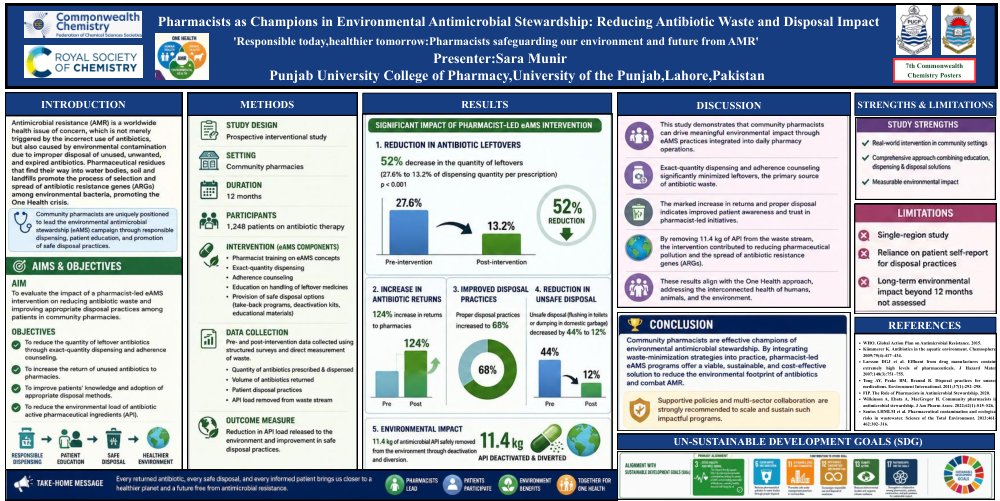
"Pharmacists as Champions in Environmental Antimicrobial Stewardship: Reducing Antibiotic Waste and Disposal Impact."
Antimicrobial resistance, or AMR, is one of the most significant global public health challenges. While inappropriate antibiotic use is a major contributor to AMR, environmental contamination resulting from improper disposal of unused and expired antibiotics also plays a critical role. Antibiotic residues entering water bodies, soil, and landfills can promote the development and spread of antibiotic resistance genes, creating a serious One Health concern. The aim of this study was to evaluate the effectiveness of a pharmacist-led Environmental Antimicrobial Stewardship, or eAMS, intervention in reducing antibiotic waste and improving safe disposal practices among community pharmacy patients. A prospective interventional study was conducted over a period of 12 months in selected community pharmacies. Pharmacists received specialized training on environmental antimicrobial stewardship, exact-quantity dispensing, adherence counseling, management of leftover medicines, and safe disposal methods such as medication take-back programs and deactivation kits.Patients receiving antibiotic therapy were provided with educational materials and guidance regarding proper medication use and disposal. Data were collected before and after the intervention using structured surveys and direct measurement of antibiotic waste. Environmental impact was assessed by measuring the reduction in active pharmaceutical ingredient, or API, load entering the waste stream. A total of 1,248 patients participated in the study. The results demonstrated a significant positive impact of the pharmacist-led intervention. Antibiotic leftovers decreased by 52%, dropping from 27.6% to 13.2% of the dispensed quantity per prescription. Pharmacy returns of unused antibiotics increased by 124%, indicating improved patient engagement in proper disposal practices. Furthermore, safe disposal practices increased to 68%, while unsafe disposal methods, such as flushing antibiotics down toilets or discarding them in household garbage, decreased from 44% to only 12%.Importantly, approximately 11.4 kilograms of antimicrobial active pharmaceutical ingredients were safely collected, deactivated, and diverted from the environment, reducing the risk of pharmaceutical pollution and the spread of antibiotic resistance genes. These findings highlight the crucial role community pharmacists can play in environmental antimicrobial stewardship. Through responsible dispensing, patient education, and accessible disposal programs, pharmacists can significantly reduce antibiotic waste and environmental contamination. This research also aligns strongly with the United Nations Sustainable Development Goals, particularly SDG 3: Good Health and Well-Being, by helping combat antimicrobial resistance. It additionally supports SDG 6: Clean Water and Sanitation, SDG 12: Responsible Consumption and Production, and SDG 15: Life on Land by reducing pharmaceutical pollution and promoting sustainable healthcare practices. In conclusion, pharmacist-led environmental antimicrobial stewardship represents a practical, cost-effective, and sustainable strategy to minimize antibiotic waste, protect environmental health, and support the global fight against antimicrobial resistance through a One Health approach.