372 posters, 1 audios, 13 topics, 29 sessions, 1,035 authors, 449 institutions
ePostersLive by SciGen Technologies S.A. All rights reserved.
51st Annual Regional Anesthesiology and Acute Pain Medicine Meeting
April 16 - 18, 2026 | Phoenix, Arizona

2316160
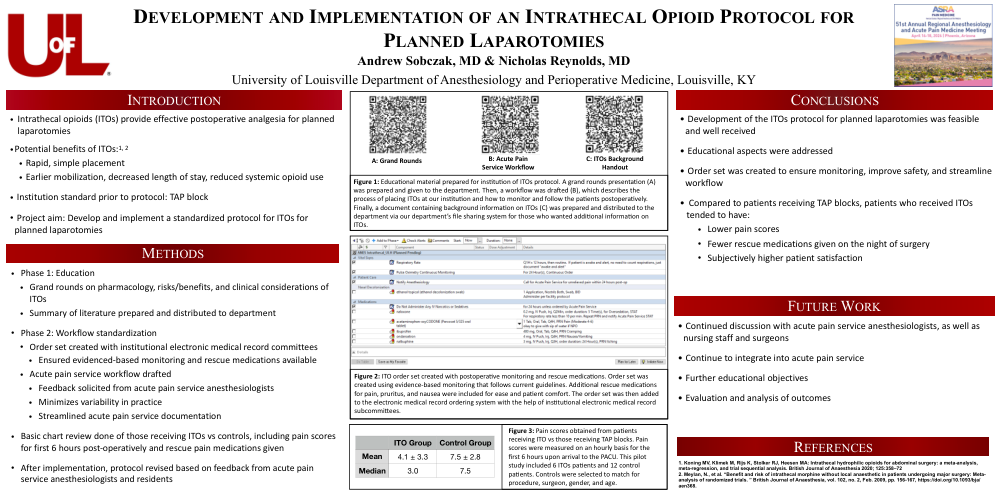
Development and Implementation of an Intrathecal Opioid Protocol for Planned Laparotomies
Poster Presenter
Authors
Affiliations
Part of Topic
Safety/QA/QI Projects
- Intrathecal opioids (ITOs) provide effective postoperative analgesia for planned laparotomies
- Potential benefits of ITOs:1, 2
- Rapid, simple placement
- Earlier mobilization, decreased length of stay, reduced systemic opioid use
- Institution standard prior to protocol: TAP block
- Project aim: Develop and implement a standardized protocol for ITOs for planned laparotomies
-
- Phase 1: Education
- Grand rounds on pharmacology, risks/benefits, and clinical considerations of ITOs
- Summary of literature prepared and distributed to department
- Phase 2: Workflow standardization
- Order set created with institutional electronic medical record committees
- Ensured evidenced-based monitoring and rescue medications available
- Acute pain service workflow drafted
- Feedback solicited from acute pain service anesthesiologists
- Minimizes variability in practice
- Streamlined acute pain service documentation
- Basic chart review done of those receiving ITOs vs controls, including pain scores for first 6 hours post-operatively and rescue pain medications given
- After implementation, protocol revised based on feedback from acute pain service anesthesiologists and residents
-
Figure 1: Educational material prepared for institution of ITOs protocol. A grand rounds presentation (A) was prepared and given to the department. Then, a workflow was drafted (B), which describes the process of placing ITOs at our institution and how to monitor and follow the patients postoperatively. Finally, a document containing background information on ITOs (C) was prepared and distributed to the department via our department’s file sharing system for those who wanted additional information on ITOs.
Figure 2: ITO order set created with postoperative monitoring and rescue medications. Order set was created using evidence-based monitoring that follows current guidelines. Additional rescue medications for pain, pruritus, and nausea were included for ease and patient comfort. The order set was then added to the electronic medical record ordering system with the help of institutional electronic medical record subcommittees.
Figure 3: Pain scores obtained from patients receiving ITO vs those receiving TAP blocks. Pain scores were measured on an hourly basis for the first 6 hours upon arrival to the PACU. This pilot study included 6 ITOs patients and 12 control patients. Controls were selected to match for procedure, surgeon, gender, and age.
- Development of the ITOs protocol for planned laparotomies was feasible and well received
- Educational aspects were addressed
- Order set was created to ensure monitoring, improve safety, and streamline workflow
- Compared to patients receiving TAP blocks, patients who received ITOs tended to have:
- Lower pain scores
- Fewer rescue medications given on the night of surgery
- Subjectively higher patient satisfaction
-
- Continued discussion with acute pain service anesthesiologists, as well as nursing staff and surgeons
- Continue to integrate into acute pain service
- Further educational objectives
- Evaluation and analysis of outcomes