383 posters, 2 videos, 1 audios, 8 topics, 28 sessions, 328 authors, 225 institutions
ePostersLive by SciGen Technologies S.A. All rights reserved.
50th Annual Regional Anesthesiology and Acute Pain Medicine Meeting
May 1 - 3, 2025 | Orlando, Florida

6463
EDUCATION VS. SEDATION AMONG PATIENTS WITH HIGH AND LOW PAIN CATASTROPHIZING DURING REGIONAL ANESTHESIA: A QUALITATIVE ANALYSIS
Poster Presenter
Authors
Affiliations
Part of Topic
Scientific Abstracts > Regional Anesthesia
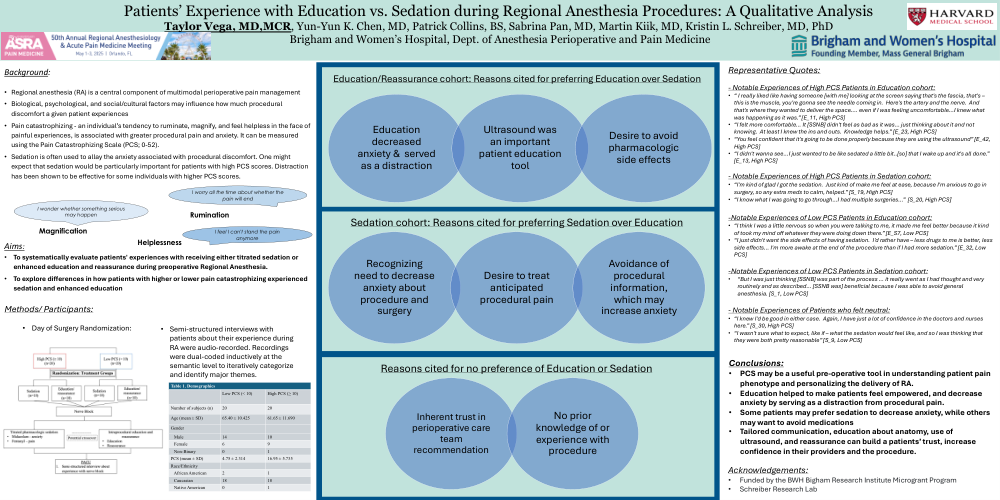
Background:
-
Regional anesthesia(RA) is a central component of multimodal perioperative pain management
-
Biological, psychological,and social/cultural factors may influence how much procedural discomfort a given patient experiences
-
Pain catastrophizing-an individual’s tendency to ruminate, magnify, and feel helpless in the face of painful experiences, is associated with greater procedural pain and anxiety. It can be measured using the Pain Catastrophizing Scale (PCS; 0-52).
-
Sedation is often used to allay the anxiety associated with procedural discomfort.One might expect that sedation would be particularly important for patients with high PCS scores. Distraction has been shown to be effective for some individuals with higher PCS scores.
-
To systematically evaluate patients' experiences with receiving either titrated sedation or enhanced education and reassurance during preoperative Regional Anesthesia.
-
To explore differences in how patients with higher or lower pain catastrophizing experienced sedation and enhanced education
-
Semi-structured interviews with patients about their experience during RA were audio-recorded. Recordings were dual-coded inductively at the semantic level to iteratively categorize and identify major themes.
Main Findings:
Education/Reassurance cohort: Reasons cited for preferring Education over Sedation
1. Education decreased anxiety & served as a distraction
2. Ultrasound was an important patient education tool
3. Desire to avoid pharmacologic side effects
Sedation cohort: Reasons cited for preferring Sedation over Education
1. Recognizing need to decrease anxiety about procedure and surgery
2. Desire to treat anticipated procedural pain
3. Avoidance of procedural information, which may increase anxiety
Reasons cited for no preference of Education or Sedation
1. Inherent trust in perioperative care team recommendation
2. No prior knowledge of or experience with procedure
Conclusions:
-
PCS may be a useful pre-operative tool in understanding patient pain phenotype and personalizing the delivery of RA.
-
Education helped to make patients feel empowered, and decrease anxiety by serving as a distraction from procedural pain.
-
Some patients may prefer sedation to decrease anxiety, while others may want to avoid medications
-
Tailored communication, education about anatomy, use of ultrasound, and reassurance can build a patients’ trust, increase confidence in their providers and the procedure.