383 posters, 2 videos, 1 audios, 8 topics, 28 sessions, 328 authors, 225 institutions
ePostersLive by SciGen Technologies S.A. All rights reserved.
50th Annual Regional Anesthesiology and Acute Pain Medicine Meeting
May 1 - 3, 2025 | Orlando, Florida

6571
THORACIC REGIONAL TECHNIQUES FOR THE CARDIOTHORACIC INTENSIVE CARE UNIT - AN EDUCATIONAL TOOL
Poster Presenter
Part of Topic
Scientific Abstracts > Education
Thoracic Regional Techniques for the Cardiothoracic Intensive Care Unit – An Educational Tool
In critically ill patients, undertreated pain is linked to higher mortality, poor wound healing and increased sympathetic stress (1-2). Most ICUs favor opioid-heavy management, which comes with significant side effects including respiratory depression, ileus and delirium. The role of regional anesthesia in the ICU remains an underutilized analgesic modality within a larger multimodal approach (3) and there is a relative dearth of providers caring for ICU patients who are knowledgeable and competent in performing these procedures. Based on work from our institution, we have constructed an educational model to educate ICU providers about the most common regional procedures that could benefit surgical patients.
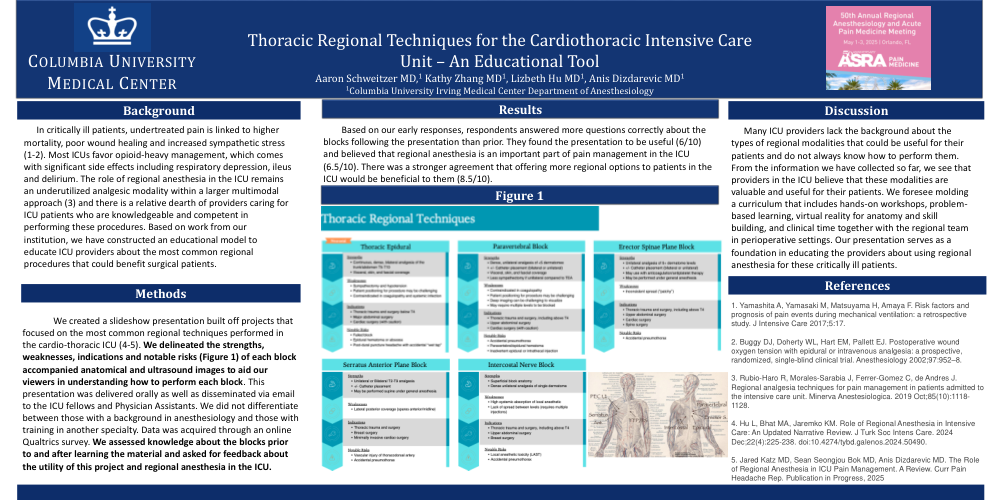
We created a slideshow presentation built off projects that focused on the most common regional techniques performed in the cardio-thoracic ICU (4-5). We delineated the strengths, weaknesses, indications and notable risks (Figure 1) of each block accompanied anatomical and ultrasound images to aid our viewers in understanding how to perform each block. This presentation was delivered orally as well as disseminated via email to the ICU fellows and Physician Assistants. We did not differentiate between those with a background in anesthesiology and those with training in another specialty. Data was acquired through an online Qualtrics survey. We assessed knowledge about the blocks prior to and after learning the material and asked for feedback about the utility of this project and regional anesthesia in the ICU.
Based on our early responses, respondents answered more questions correctly about the blocks following the presentation than prior. They found the presentation to be useful (6/10) and believed that regional anesthesia is an important part of pain management in the ICU (6.5/10). There was a stronger agreement that offering more regional options to patients in the ICU would be beneficial to them (8.5/10).
Many ICU providers lack the background about the types of regional modalities that could be useful for their patients and do not always know how to perform them. From the information we have collected so far, we see that providers in the ICU believe that these modalities are valuable and useful for their patients. We foresee molding a curriculum that includes hands-on workshops, problem-based learning, virtual reality for anatomy and skill building, and clinical time together with the regional team in perioperative settings. Our presentation serves as a foundation in educating the providers about using regional anesthesia for these critically ill patients.