383 posters, 2 videos, 1 audios, 8 topics, 28 sessions, 328 authors, 225 institutions
ePostersLive by SciGen Technologies S.A. All rights reserved.
50th Annual Regional Anesthesiology and Acute Pain Medicine Meeting
May 1 - 3, 2025 | Orlando, Florida

6722
CAUDAL DEXMEDETOMIDINE VS. FENTANYL WITH BUPIVACAINE IN PEDIATRIC INFRAUMBILICAL SURGERIES: A META-ANALYSIS
Poster Presenter
Authors
Affiliations
Sγo Luiz Hospital – ITAIM / Rede D’Or – CMA Anesthesia group
Part of Topic
Scientific Abstracts > Regional Anesthesia
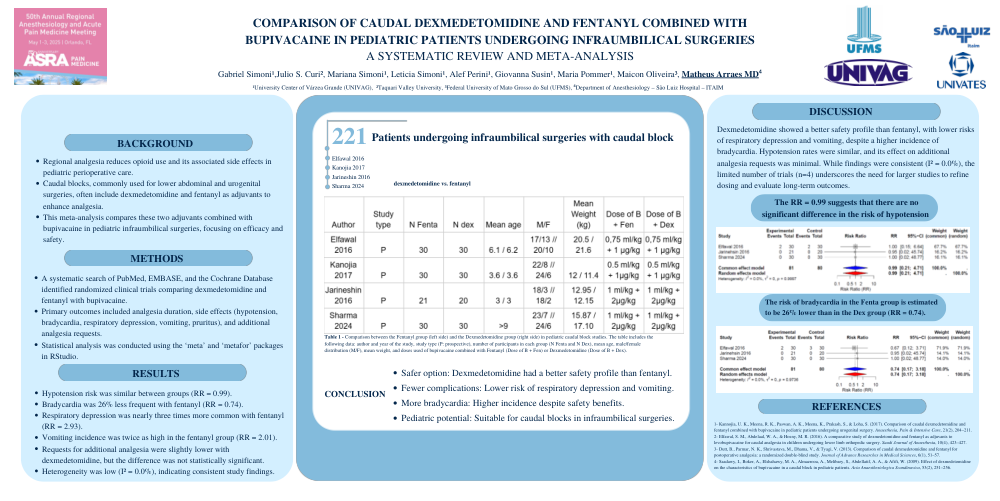
Comparison of caudal dexmedetomidine and fentanyl combined with bupivacaine in pediatric patients undergoing infraumbilical surgeries: A systematic review and meta-analysis.
Introduction
Regional analgesia is essential in pediatric perioperative care, reducing the need for systemic opioids and their associated side effects. Caudal block, commonly used for lower abdominal and urogenital surgeries, often incorporates adjuvants like dexmedetomidine and fentanyl to improve analgesia. Dexmedetomidine, an α-2 adrenergic agonist, and fentanyl, an opioid analgesic, have distinct effects on efficacy and safety. This meta-analysis compared these two adjuvants combined with bupivacaine in pediatric undergoing infraumbilical surgeries.
Methods
A systematic search of PubMed, EMBASE, and the Cochrane Database identified randomized clinical trials comparing dexmedetomidine and fentanyl with bupivacaine. Primary outcomes included analgesia duration, side effects (hypotension, bradycardia, respiratory depression, vomiting, pruritus), and requests for additional analgesia. Statistical analysis was performed using the 'meta' and 'metafor' packages in RStudio.
Results
Four trials met the inclusion criteria. Hypotension risks were similar between the groups (RR = 0.99). Bradycardia occurred 26% less frequently in the fentanyl group (RR = 0.74), while respiratory depression (RR = 2.93) and vomiting (RR = 2.01) were more likely with fentanyl. Study heterogeneity was low (I² = 0.0%), indicating consistent results. Requests for additional analgesia were slightly reduced in the dexmedetomidine group, but the difference was not statistically significant.
Conclusion
Dexmedetomidine demonstrated a more favorable safety profile, with lower risks of respiratory depression and vomiting compared to fentanyl, despite a higher incidence of bradycardia. These findings suggest dexmedetomidine may be a safer option for caudal blocks in pediatric undergoing infraumbilical surgeries. Further large-scale trials are needed to confirm these results and guide optimal adjuvant selection.