383 posters, 2 videos, 1 audios, 8 topics, 28 sessions, 328 authors, 225 institutions
ePostersLive by SciGen Technologies S.A. All rights reserved.
50th Annual Regional Anesthesiology and Acute Pain Medicine Meeting
May 1 - 3, 2025 | Orlando, Florida

6765
CONTINUOUS ADDUCTOR CANAL CATHETER VERSUS SINGLE-SHOT BLOCK WITH PERINEURAL DEXAMETHASONE FOR TOTAL KNEE ARTHROPLASTY
Poster Presenter
Authors
Affiliations
Part of Topic
Scientific Abstracts > Regional Anesthesia
Introduction
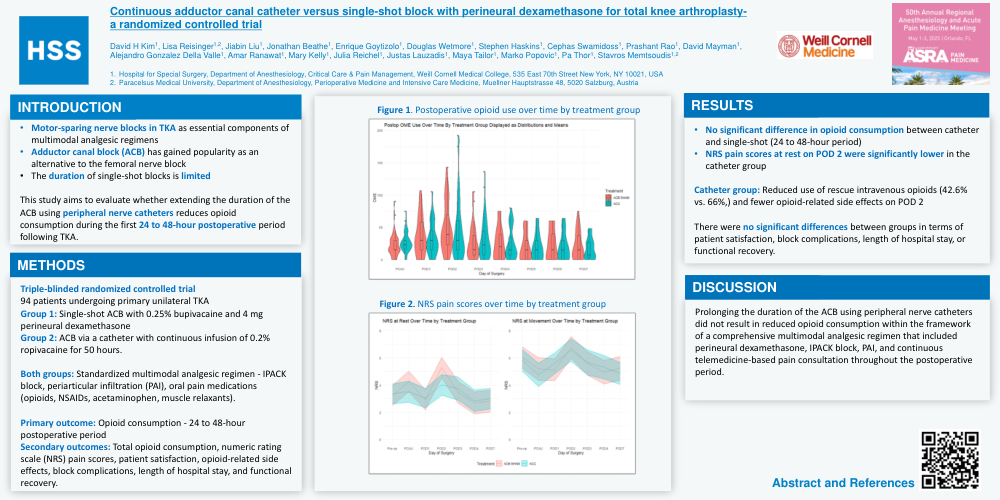
This study aims to evaluate whether extending the duration of the ACB using peripheral nerve catheters reduces opioid consumption during the first 24 to 48-hour postoperative period following TKA.
Methods
Triple-blinded randomized controlled trial
94 patients undergoing primary unilateral TKA
Group 1: Single-shot ACB with 0.25% bupivacaine and 4 mg perineural dexamethasone
Group 2: ACB via a catheter with continuous infusion of 0.2% ropivacaine for 50 hours.
Both groups: Standardized multimodal analgesic regimen - IPACK block, periarticular infiltration (PAI), oral pain medications (opioids, NSAIDs, acetaminophen, muscle relaxants).
Primary outcome: Opioid consumption - 24 to 48-hour postoperative period
Secondary outcomes: Total opioid consumption, numeric rating scale (NRS) pain scores, patient satisfaction, opioid-related side effects, block complications, length of hospital stay, and functional recovery.
Results
Catheter group: Reduced use of rescue intravenous opioids (42.6% vs. 66%,) and fewer opioid-related side effects on POD 2
There were no significant differences between groups in terms of patient satisfaction, block complications, length of hospital stay, or functional recovery.
Discussion
Prolonging the duration of the ACB using peripheral nerve catheters did not result in reduced opioid consumption within the framework of a comprehensive multimodal analgesic regimen that included perineural dexamethasone, IPACK block, PAI, and continuous telemedicine-based pain consultation throughout the postoperative period.