383 posters, 2 videos, 1 audios, 8 topics, 28 sessions, 328 authors, 225 institutions
ePostersLive by SciGen Technologies S.A. All rights reserved.
50th Annual Regional Anesthesiology and Acute Pain Medicine Meeting
May 1 - 3, 2025 | Orlando, Florida

6630
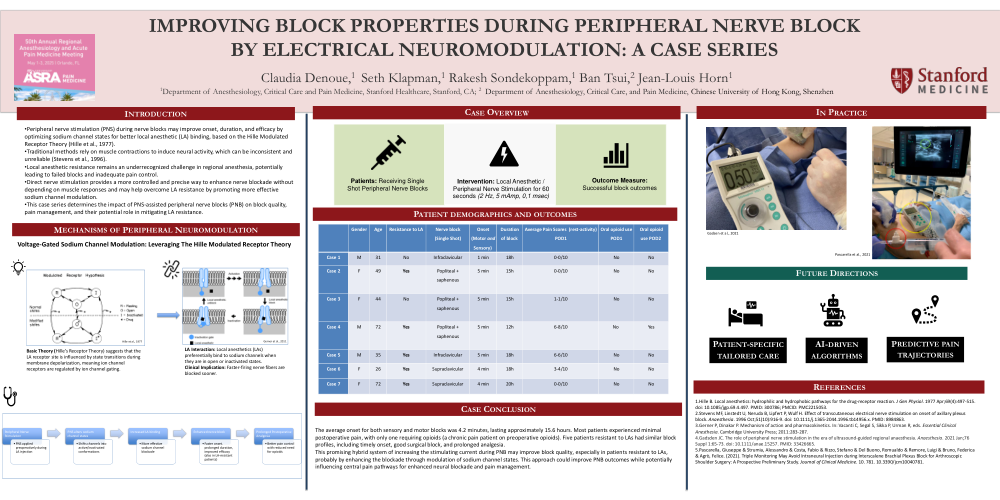
IMPROVING BLOCK PROPERTIES DURING PERIPHERAL NERVE BLOCK BY ELECTRICAL NEUROMODULATION: A CASE SERIES
Poster Presenter
Authors
Affiliations
Part of Topic
Scientific Abstracts > Regional Anesthesia
IMPROVING BLOCK PROPERTIES DURING PERIPHERAL NERVE BLOCK BY ELECTRICAL NEUROMODULATION: A CASE SERIES
The average onset for both sensory and motor blocks was 4.2 minutes, lasting approximately 15.6 hours. Most patients experienced minimal postoperative pain, with only one requiring opioids (a chronic pain patient on preoperative opioids). Five patients resistant to LAs had similar block profiles, including timely onset, good surgical block, and prolonged analgesia.
This promising hybrid system of increasing the stimulating current during PNB may improve block quality, especially in patients resistant to LAs, probably by enhancing the blockade through modulation of sodium channel states. This approach could improve PNB outcomes while potentially influencing central pain pathways for enhanced neural blockade and pain management.