425 posters, 1 videos, 9 audios, 8 topics, 53 sessions, 340 authors, 286 institutions
ePostersLive by SciGen Technologies S.A. All rights reserved.
22nd Annual Pain Medicine Meeting 2023
November 10 - 11, 2023 | New Orleans Marriott | New Orleans, Louisiana, USA

4561
ADDRESSING THE EFFECTS OF CHRONIC PAIN MEDICATIONS ON CARDIOVASCULAR HEALTH: A SYSTEMATIC REVIEW
Poster Presenter
Authors
Affiliations
Part of Topic
Chronic Pain
Chronic pain is a significant health concern affecting over 100 million American adults and costing healthcare around $635 billion annually. Research shows a notable increase in cardiovascular events among chronic pain patients. The link between chronic pain and the cardiovascular system involves various nervous system interactions, including pain modulation, opioid receptors, and feedback loops like hypertension-related pain reduction. Prescription medications like NSAIDs, opioids, and antidepressants impact these pathways and can affect cardiovascular health. Our study aims to explore these interactions and improve treatment strategies for better clinical guidelines and evidence-based initiatives to address this health issue.
A thorough literature review was conducted on databases such as PubMed, Google Scholar, and ScienceDirect, up until April 2023. The selection excluded abstracts, case reports, and animal studies, focusing solely on benchmark research. Title and abstract screening was independently executed by two authors, resulting in a total of 48 studies.
Each study was sorted based on the class of pain medication assessed. The collated data and subsequent synthesis of evidence are outlined in the following sections and Table 1. Pain medications scrutinized in this review comprise non-steroidal anti-inflammatory drugs, acetaminophen, tramadol, opioids, intra-articular corticosteroids(IACI), antidepressants, gabapentinoids, and medical marijuana.
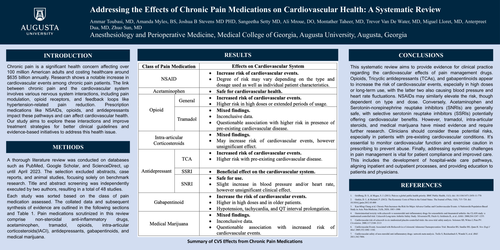
This systematic review aims to provide evidence for clinical practice regarding the cardiovascular effects of pain management drugs. Opioids, Tricyclic antidepressants (TCAs), and gabapentinoids appear to increase the risk of cardiovascular events, especially in high doses or long-term use, with the latter two also causing blood pressure and heart rate fluctuations. NSAIDs may similarly elevate the risk, though dependent on type and dose. Conversely, Acetaminophen and Serotonin-norepinephrine reuptake inhibitors (SNRIs) are generally safe, with selective serotonin reuptake inhibitors (SSRIs) potentially offering cardiovascular benefits. However, tramadol, intra-articular steroids, and medical marijuana have mixed evidence and require further research. Clinicians should consider these potential risks, especially in patients with pre-existing cardiovascular conditions. It's essential to monitor cardiovascular function and exercise caution in prescribing to prevent abuse. Finally, addressing systemic challenges in pain management is vital for patient compliance and improved care. This includes the development of hospital-wide care pathways, aligning inpatient and outpatient processes, and providing education to patients and physicians.