425 posters, 1 videos, 9 audios, 8 topics, 53 sessions, 340 authors, 286 institutions
ePostersLive by SciGen Technologies S.A. All rights reserved.
22nd Annual Pain Medicine Meeting 2023
November 10 - 11, 2023 | New Orleans Marriott | New Orleans, Louisiana, USA

4559
INTEGRATING THE BIOPSYCHOSOCIAL MODEL WITH A NEUROHEALTH PHILOSOPHY LEADS TO VALUE-BASED INTERVENTIONAL PAIN CARE
Poster Presenter
Authors
Affiliations
Part of Topic
Chronic Pain
Integration of the Biopsychosocial Model with a NeuroHealth Philosophy leads to Value-Based Interventional Pain Care
Keilana McGreevy1, Aureanne McGreevy, BS1, Kai McGreevy, MD1
1McGreevy NeuroHealth, St. Augustine, FL, kmcgreevy@mcgreevyneurohealth.com
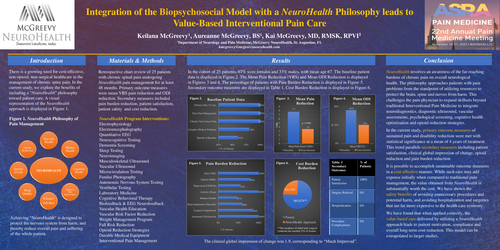
Introduction. There is a growing need for cost-effective, non-opioid, non-surgical healthcare in the management of chronic spine pain. In the current study, we explore the benefits of including a “NeuroHealth” philosophy toward patient care. A visual representation of the NeuroHealth approach is displayed in Figure 1.
Materials and Methods. Retrospective chart review of 25 patients with chronic spinal pain undergoing NeuroHealth pain management for at least 48 months.
Primary outcome measures were mean VRS pain reduction and ODI reduction. Secondary measures included pain burden reduction, patient satisfaction, patient safety and cost reduction.
NeuroHealth Program Interventions include Neurodiagnostics, MSK ultrasound, Vascular ultrasound, Cognitive Behavioral Therapy, EEG Neurofeedback, HRV Biofeedback, Interventional Pain Management, Vascular Health Education/Risk Factor Reduction, Weight Management Program, Fall Risk Reduction, Opioid Reduction
Results. In the cohort of 25 patients, 67% were females and 33% males, with mean age 67. Nearly 100% of patients at baseline had chronic non-cancer spine pain with prior interventional pain management, complex medical problems and opioid-dependence (Figure 2). Following the implementation of NeuroHealth, Primary outcome measures of Mean Pain Reduction (VRS) and Mean ODI Reduction (%) were statistically significant at 4 years (p<0.001) (Figures 3 and 4). Greater than 50% of patients achieved Pain Burden Reduction in opioid use, depression, anxiety, imbalance, sleep dysfunction, autonomic dysfunction and cognitive impairment (Figure 5). Mean Cost Burden for spinal fusion was $65,874 compared to $21,363 for NeuroHealth (Figure 6).
Conclusion. NeuroHealth involves an awareness that the burden of chronic pain is far-reaching. The philosophy expands beyond the biopsychosocial model with an emphasis on protecting the nervous system from harm. This involves expanding skillsets to include identification and management of comorbid disorders through diagnostics, vascular assessments, psychological screening, cognitive heath optimization and opioid reduction strategies.
In the current study, primary outcome measures of sustained pain and disability reduction were met with statistical significance at a mean of 4 years of treatment. This trend parallels secondary measures including patient satisfaction, clinical global impression of change, opioid reduction and pain burden reduction.
It is possible to accomplish sustainable outcome measures in a cost-effective manner. While such care may add expense initially when compared to traditional pain management, the value obtained from NeuroHealth is substantially worth the cost. We have shown the safety benefits of avoiding unnecessary procedures and potential harm, and avoiding hospitalization and surgeries that are far more expensive to the health care economy.
We have found that when applied correctly, the value-based care delivered by utilizing a NeuroHealth approach leads to patient motivation, compliance and overall long-term cost-reduction. This model can be extrapolated to larger studies.
While Interventional Pain Medicine is rapidly evolving with refined skillsets, the pain intervention itself is only a subset of the entire care delivered to suffering patients. Healing pain and suffering requires more.