425 posters, 1 videos, 9 audios, 8 topics, 53 sessions, 340 authors, 286 institutions
ePostersLive by SciGen Technologies S.A. All rights reserved.
22nd Annual Pain Medicine Meeting 2023
November 10 - 11, 2023 | New Orleans Marriott | New Orleans, Louisiana, USA

4934
HIP AND WAIST CIRCUMFERENCE AS PREDICTORS OF CHRONIC PAIN DISORDERS
Poster Presenter
Authors
Affiliations
Part of Topic
Chronic Pain
Hip and waist circumference correlations with demographic factors and pain intensity in patients with chronic pain
Frank A. Trujillo, BS2; Hannah A. Thomas1; Deepak Berwal, PhD1; Nikhil Rajulapati, BS1; Marisa DiMarzio, PhD1; Julie G. Pilitsis, MD, PhD, MBA1 1Charles E. Schmidt College of Medicine, Florida Atlantic University, Boca Raton, (FL), USA
2Albany Medical College, Albany, (NY), USA
INTRODUCTION
-
Chronic pain is a major global health problem, affecting over 1.7 billion people worldwide, and having a significant impact on a patient's mental health, sleep habits, and physical state.
-
Obesity and overweight status are associated with severe and debilitating chronic pain conditions. However, there is mixed evidence regarding the relationship between chronic pain and anthropometric measurements, such as BMI.
-
Waist circumference (WC) and hip circumference (HC) are better indicators of obesity than BMI. Data has shown a strong positive association between larger WC and HC and the increased risk of chronic illnesses, including chronic pain.
HYPOTHESIS
We hypothesize that there will be a positive correlation between hip and waist circumference and the severity of
chronic pain experienced in adults.
Data was collected from the NIH’s All of Us database which provides patient data representative of the US population
• Data includes electronic health records, standardized measurements, and patient-reported outcomes
-
We retrospectively examined all participants 18 years and older who had measurements of HC
and WC
-
Waist hip ratio (WHR) was calculated
-
Patients were divided into cohorts based on their status of chronic pain and pain
severity
-
-
Mean, SD, and ranges were compiled for each cohort
-
ANCOVA analysis was used to determine the differences between cohorts and to determine if demographical variables were influencing the data including sex, age and ethnicity/race
RESULTS
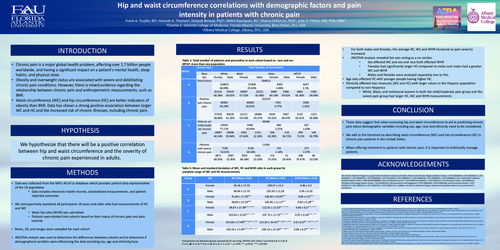
Table 1: Total number of patients and percentiles in each cohort based on race and sex MT1P- more than one population
Table 2: Mean and standard deviation of WC, HC and WHR ratio in each group for complete range of WC and HC measurements
Comparisons are between groups accounting for sex using ANOVA with Tukey’s correction; #: A vs B; $: A vs C; @: A vs D; ^: B vs C; &: B vs D; +: C vs D; *: p <0.05; **: p<0.01; ***: p<0.001
For both males and females, the average HC, WC and WHR increased as pain severity increased
ANCOVA analysis revealed Sex was acting as a co-variate.
-
Sex affected WC and sex and race both affected WHR
-
Females had significantly larger HC compared to males and males had a greater
WC and WHR
-
Males and Females were analyzed separately due to this.
Age only affected HC with younger people having higher HC.
Ethnicity affected two measures (WC and HC) with larger values in the Hispanic population compared to non-Hispanics
• White, Black, and multiracial women in both the mild/moderate pain group and the severe pain group had larger HC, WC and WHR measurements
CONCLUSION
-
These data suggest that when assessing hip and waist circumference to aid in predicting chronic pain status demographic variables including sex, age, race and ethnicity need to be considered.
-
We add to the literature by describing waist circumference (WC) and hip circumference (HC) in chronic pain patients in the United States.
-
When offering treatment to patients with chronic pain, it is important to holistically manage patients.
ACKNOWLEDGEMENTS
The All of Us Research Program is supported by the National Institutes of Health, Office of the Director: Regional Medical Centers: 1 OT2 OD026549; 1 OT2 OD026554; 1 OT2 OD026557; 1 OT2 OD026556; 1 OT2 OD026550; 1 OT2 OD 026552; 1 OT2 OD026553; 1 OT2 OD026548; 1 OT2 OD026551; 1 OT2 OD026555; IAA #: AOD 16037; Federally Qualified Health Centers: HHSN 263201600085U; Data and Research Center: 5 U2C OD023196; Biobank: 1 U24 OD023121; The Participant Center: U24 OD023176; Participant Technology Systems Center: 1 U24 OD023163; Communications and Engagement: 3 OT2 OD023205; 3 OT2 OD023206; and Community Partners: 1 OT2 OD025277; 3 OT2 OD025315; 1 OT2 OD025337; 1 OT2 OD025276. In addition, the All of Us Research Program would not be possible without the partnership of its participants.
REFERENCES
1. Yong RJ, Mullins PM, Bhattacharyya N. Prevalence of chronic pain among adults in the United States. Pain. 2022 Feb 1;163(2):e328-e332. doi: 10.1097/j.pain.0000000000002291. PMID: 33990113.
2. Cieza A, Causey K, Kamenov K, Hanson SW, Chatterji S, Vos T. Global estimates of the need for rehabilitation based on the Global Burden of Disease study 2019: a systematic analysis for the Global Burden of Disease Study 2019. Lancet. 2021 Dec 19;396(10267):2006-2017. doi: 10.1016/S0140-6736(20)32340-0. Epub 2020 Dec 1. Erratum in: Lancet. 2020 Dec 4;: PMID: 33275908; PMCID: PMC7811204.
3. Mills SEE, Nicolson KP, Smith BH. Chronic pain: a review of its epidemiology and associated factors in population-based studies. Br J Anaesth. 2019 Aug;123(2):e273-e283. doi: 10.1016/j.bja.2019.03.023. Epub 2019 May 10. PMID: 31079836; PMCID: PMC6676152.
4. Nijs J, D'Hondt E, Clarys P, Deliens T, Polli A, Malfliet A, Coppieters I, Willaert W, Tumkaya Yilmaz S, Elma Ö, Ickmans K. Lifestyle and Chronic Pain across the Lifespan: An Inconvenient Truth? PM R. 2020 Apr;12(4):410-419. doi: 10.1002/pmrj.12244. Epub 2019 Oct 21. PMID: 31437355.
5. Cameron AJ, Magliano DJ, Shaw JE, Zimmet PZ, Carstensen B, Alberti KG, Tuomilehto J, Barr EL, Pauvaday VK, Kowlessur S, Söderberg S. The influence of hip circumference on the relationship between abdominal obesity and mortality. Int J Epidemiol. 2012 Apr;41(2):484-94. doi: 10.1093/ije/dyr198. Epub 2012 Jan 22. PMID: 22266094; PMCID: PMC3324456.
6. Snijder MB, Dekker JM, Visser M, Bouter LM, Stehouwer CD, Kostense PJ, Yudkin JS, Heine RJ, Nijpels G, Seidell JC. Associations of hip and thigh circumferences independent of waist circumference with the incidence of type 2 diabetes: the Hoorn Study. Am J Clin Nutr. 2003 May;77(5):1192-7. doi: 10.1093/ajcn/77.5.1192. PMID: 12716671.
7. You Q, Jiang Q, Li D, Wang T, Wang S, Cao S. Waist circumference, waist-hip ratio, body fat rate, total body fat mass and risk of low back pain: a systematic review and meta-analysis. Eur Spine J. 2022 Jan;31(1):123-135. doi: 10.1007/s00586-021-06994-y. Epub 2021 Sep 24. PMID: 34561729.
8. Okifuji A, Hare BD. The association between chronic pain and obesity. J Pain Res. 2015 Jul 14;8:399-408. doi: 10.2147/JPR.S55598. PMID: 26203274; PMCID: PMC4508090.
9. Heuch I, Heuch I, Hagen K, Zwart JA. 2015 Oct 27;10(10):e0141268. PMID: 26506618; PMCID: PMC4623972.
10. Chen X, Tang H, Lin J, Zeng R. Front Endocrinol (Lausanne). 2022 Aug 23;13:971997. PMID: 36082069; PMCID: PMC9445165.
11. Stokes AC, Xie W, Lundberg DJ, Hempstead K, Zajacova A, Zimmer Z, Glei DA, Meara E, Preston SH. Increases in BMI and chronic pain for US adults in midlife, 1992 to 2016. SSM Popul Health. 2020 Aug 10;12:100644. doi: 10.1016/j.ssmph.2020.100644. PMID: 33134473; PMCID: PMC7585155.
12. Dario AB, Loureiro Ferreira M, Refshauge K, Luque-Suarez A, Ordoñana JR, Ferreira PH. Obesity does not increase the risk of chronic low back pain when genetics are considered. A prospective study of Spanish adult twins. Spine J. 2017 Feb;17(2):282-290. doi: 10.1016/j.spinee.2016.10.006. Epub 2016 Oct 14. PMID: 27751965.
M13. Hooten WM. Chronic Pain and Mental Health Disorders: Shared Neural Mechanisms, Epidemiology, and Treatment. ayo Clin Proc. 2016 Jul;91(7):955-70. doi: 10.1016/j.mayocp.2016.04.029. Epub 2016 Jun 22. PMID: 27344405.