425 posters, 1 videos, 9 audios, 8 topics, 53 sessions, 340 authors, 286 institutions
ePostersLive by SciGen Technologies S.A. All rights reserved.
22nd Annual Pain Medicine Meeting 2023
November 10 - 11, 2023 | New Orleans Marriott | New Orleans, Louisiana, USA

5034
ERECTOR SPINAE PLANE BLOCK FOR CANCER RELATED BRACHIAL PLEXUS PAIN - A NEW ROLE FOR REGIONAL ANESTHESIA IN NORA?
Poster Presenter
Authors
Affiliations
Part of Topic
Regional Anesthesia
Introduction:
Erector spinae plane (ESP) blocks are a more recent approach for both acute and chronic pain performed in the perioperative setting often performed using ultrasound-guided technique. The ESP block is generally used for surgical procedures in the thoracic and abdominal areas.
There have been fewer reports of regional anesthesia techniques like ESP blocks being utilized in the non-operating room anesthesia setting. We discuss here the case of a 81-year-old male with brachial plexus related pain secondary to recurrent stage IV lung cancer who subsequently reported substantial analgesia after ESP block.
Case description:
Erector spinae plane (ESP) blocks are a more recent approach for both acute and chronic pain performed in the perioperative setting often performed using ultrasound-guided technique. The ESP block is generally used for surgical procedures in the thoracic and abdominal areas.
There have been fewer reports of regional anesthesia techniques like ESP blocks being utilized in the non-operating room anesthesia setting. We discuss here the case of a 81-year-old male with brachial plexus related pain secondary to recurrent stage IV lung cancer who subsequently reported substantial analgesia after ESP block.
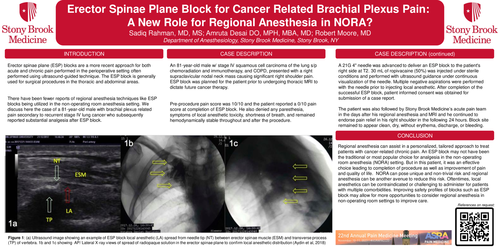
A 21G 4" needle was advanced to deliver an ESP block to the patient's right side at T2. 30 mL of ropivacaine (50%) was injected under sterile conditions and performed with ultrasound guidance under continuous visualization of the needle. Multiple negative aspirations were performed with the needle prior to injecting local anesthetic. After completion of the successful ESP block, patient informed consent was obtained for submission of a case report.
The patient was also followed by Stony Brook Medicine’s acute pain team in the days after his regional anesthesia and MRI and he continued to endorse pain relief in his right shoulder in the following 24 hours. Block site remained to appear clean, dry, without erythema, discharge, or bleeding.
Conclusion:
Regional anesthesia can assist in a personalized, tailored approach to treat patients with cancer-related chronic pain. An ESP block may not have been the traditional or most popular choice for analgesia in the non-operating room anesthesia (NORA) setting. But in this patient, it was an effective choice leading to completion of procedure as well as improvement of pain and quality of life. NORA can pose unique and non-trivial risk and regional anesthesia can be another avenue to reduce this risk. Oftentimes, local anesthetics can be contraindicated or challenging to administer for patients with multiple comorbidities. Improving safety profiles of blocks such as ESP block may allow for more opportunities to consider regional anesthesia in non-operating room settings to improve care.