126 posters, 2 topics, 27 sessions, 324 authors, 82 institutions
ePostersLive by SciGen Technologies S.A. All rights reserved.
2025 ACP Annual Session
October 22 - 25, 2025 | New Orleans, US

89
A Diagnostic and Therapeutic Roadmap for Hereditary Dentin Disorders: What Every Prosthodontist Should Know
Poster Presenter
Authors
Affiliations
Part of Topic
A Diagnostic and Therapeutic Roadmap for Hereditary Dentin Disorders: What Every Prosthodontist Should Know.
David Qin, DDS Candidate; Amerian Sones, DMD, MS, FACP; Marco Bergamini, DDS, MSD
Texas A&M College of Dentistry
Introduction
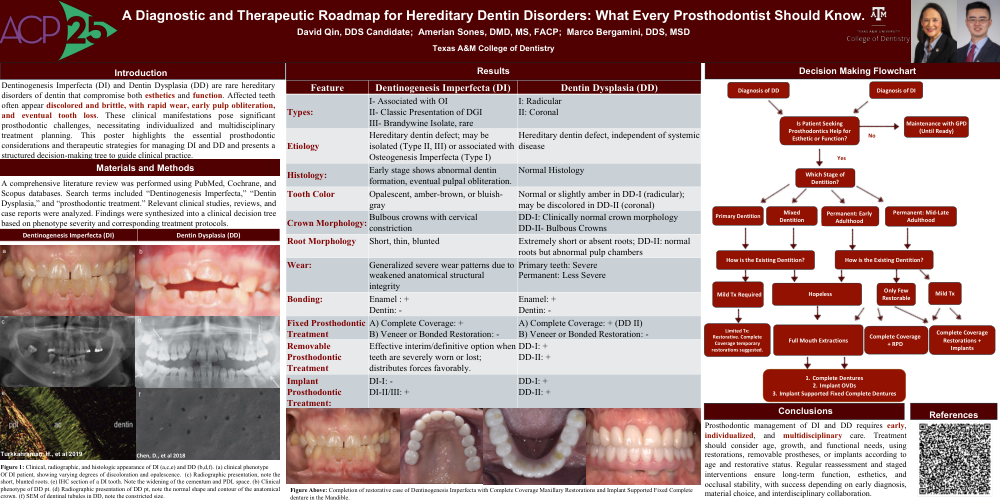
Dentinogenesis Imperfecta (DI) and Dentin Dysplasia (DD) are rare hereditary disorders of dentin that compromise both esthetics and function. Affected teeth often appear discolored and brittle, with rapid wear, early pulp obliteration, and eventual tooth loss. These clinical manifestations pose significant prosthodontic challenges, necessitating individualized and multidisciplinary treatment planning. This poster highlights the essential prosthodontic considerations and therapeutic strategies for managing DI and DD and presents a structured decision-making tree to guide clinical practice.
Materials and Methods
A comprehensive literature review was performed using PubMed, Cochrane, and Scopus databases. Search terms included “Dentinogenesis Imperfecta,” “Dentin Dysplasia,” and “prosthodontic treatment.” Relevant clinical studies, reviews, and case reports were analyzed. Findings were synthesized into a clinical decision tree based on phenotype severity and corresponding treatment protocols.
Figure 1: Clinical, radiographic, and histologic appearance of DI (a,c,e) and DD (b,d,f). (a) clinical phenotype
Of DI patient, showing varying degrees of discoloration and opalescence. (c) Radiographic presentation, note the short, blunted roots. (e) IHC section of a DI tooth. Note the widening of the cementum and PDL space. (b) Clinical phenotype of DD pt. (d) Radiographic presentation of DD pt, note the normal shape and contour of the anatomical crown. (f) SEM of dentinal tubules in DD, note the constricted size.
Results
Decision Making Flowchart
Conclusions
Prosthodontic management of DI and DD requires early, individualized, and multidisciplinary care. Treatment should consider age, growth, and functional needs, using restorations, removable prostheses, or implants according to age and restorative status. Regular reassessment and staged interventions ensure long-term function, esthetics, and occlusal stability, with success depending on early diagnosis, material choice, and interdisciplinary collaboration.