206 posters, 13 topics, 5 sessions, 713 authors, 293 institutions
ePostersLive by SciGen Technologies S.A. All rights reserved.
AAPS 104th Annual Meeting
May 2-5, 2026 | Lihue, HI

PC40
Pediatric Tmr/rpni Improves Patient-reported Pain And Reduces Narcotic Use: Temporal Trends And Comparison With Adults
Poster Presenter
Part of Topic
General Reconstruction
Background: Targeted muscle reinnervation (TMR) is an established technique for reducing postamputation pain in adults, but its role in pediatric oncologic amputees remains undefined. This study represents the largest comparative evaluation of TMR outcomes between pediatric and adult oncologic patients.
Methods: A retrospective review was conducted of patients undergoing primary oncologic amputation with targeted muscle reinnervation. Twelve pediatric patients (11%) were compared with 94 adults (89%). Long-term pain and medication use were assessed using both patient-reported outcomes (Numeric Pain Scale; PROMIS Pain Intensity, Interference, and Behavior) and prescription records for opioids, benzodiazepines/pregabalin, and gabapentin. Longitudinal data were analyzed with linear and generalized mixed-effects models to account for repeated measures and variable follow-up intervals.
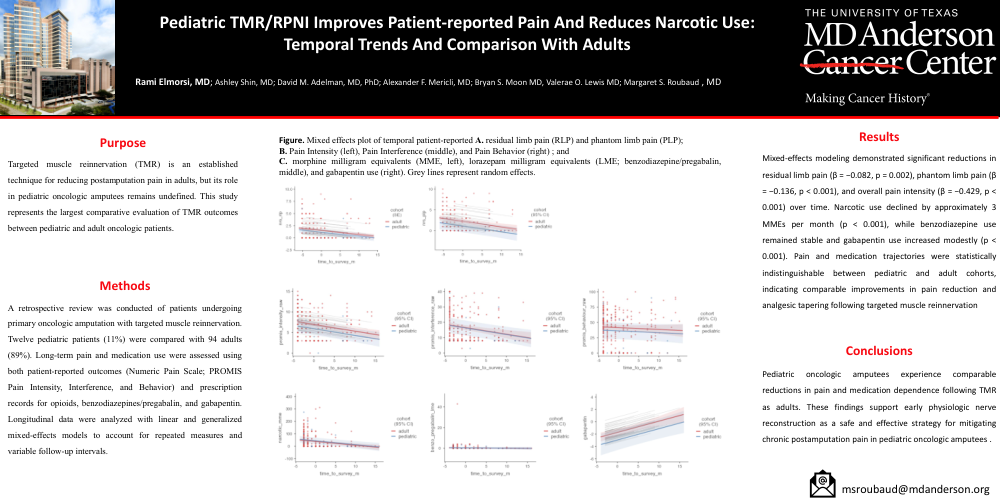
Results: Mixed-effects modeling demonstrated significant reductions in residual limb pain (β = −0.082, p = 0.002), phantom limb pain (β = −0.136, p < 0.001), and overall pain intensity (β = −0.429, p < 0.001) over time. Narcotic use declined by approximately 3 MMEs per month (p < 0.001), while benzodiazepine use remained stable and gabapentin use increased modestly (p < 0.001). Pain and medication trajectories were statistically indistinguishable between pediatric and adult cohorts, indicating comparable improvements in pain reduction and analgesic tapering following targeted muscle reinnervation.
Conclusions: Pediatric oncologic amputees experience comparable reductions in pain and medication dependence following TMR as adults. These findings support early physiologic nerve reconstruction as a safe and effective strategy for mitigating chronic postamputation pain in pediatric oncologic amputees.