203 posters, 14 topics, 5 sessions, 817 authors, 256 institutions
ePostersLive by SciGen Technologies S.A. All rights reserved.
The AAPS 102nd Annual Meeting
May 18-21, 2024 | The Westin Copley Place, Boston, MA

D29
Post-bariatric Panniculectomy: Postoperative Complications By Weight Loss Surgery Type
Poster Presenter
Authors
Joseph Fahmy, Lingxuan Kong, Trista Benitez, Hayley Sanders, Lu Wang, Kevin Chung
Affiliations
University of Michigan, Research Fellow, Section of Plastic Surgery, Department of Surgery, University of Michigan Medical School, Department of Biostatistics, University of Michigan School of Public Health, Medical Student, Section of Plastic Surgery, Department of Surgery, University of Michigan Medical School, Research Associate, Section of Plastic Surgery, Department of Surgery, University of Michigan Medical School, Professor, Section of Plastic Surgery, Department of Surgery, University of Michigan Medical School
Part of Topic
Aesthetic Breast/Body Contouring
Post-Bariatric Panniculectomy: Complications by Weight Loss Surgery Type
Joseph N. Fahmy, MD, MS1; Lingxuan Kong, MS2; Trista M. Benitez, MPH1; Hayley M. Sanders, BS1; Lu Wang, PhD2; Kevin C. Chung, MD, MS1
1.Section of Plastic Surgery, Department of Surgery, University of Michigan Medical School, Ann Arbor, MI, USA 2. Department of Biostatistics, University of Michigan School of Public Health, Ann Arbor, MI, USA
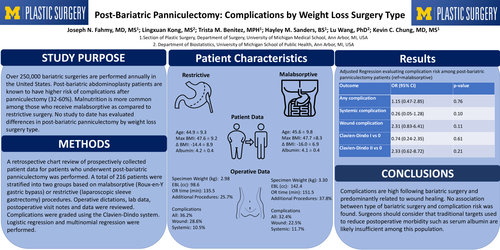
Over 250,000 bariatric surgeries are performed annually in the United States. Post-bariatric abdominoplasty patients are known to have higher risk of complications after panniculectomy (32-60%). Malnutrition is more common among those who receive malabsorptive as compared to restrictive surgery. No study to date has evaluated differences in post-bariatric panniculectomy by weight loss surgery type.
A retrospective chart review of prospectively collected patient data for patients who underwent post-bariatric panniculectomy was performed. A total of 216 patients were stratified into two groups based on malabsorptive (Roux-en-Y gastric bypass) or restrictive (laparoscopic sleeve gastrectomy) procedures. Operative dictations, lab data, postoperative visit notes and data were reviewed. Complications were graded using the Clavien-Dindo system. Logistic regression and multinomial regression were performed.
Complications are high following bariatric surgery and predominantly related to wound healing. No association between type of bariatric surgery and complication risk was found. Surgeons should consider that traditional targets used to reduce postoperative morbidity such as serum albumin are likely insufficient among this population.
Adjusted Regression evaluating complication risk among post-bariatric panniculectomy patients (ref=malabsorptive)