4,068 posters, 219 videos, 101 topics, 69 sessions, 14,365 authors, 6,128 institutions
ePostersLive by SciGen Technologies S.A. All rights reserved.
Alzheimer's Association International Conference 2026
July 12-15, 2026 | London, United Kingdom, and Online

1722
Traumatic Brain Injury, Educational Attainment, And Dementia Risk: A Systematic Review
Poster Presenter
Part of Topic
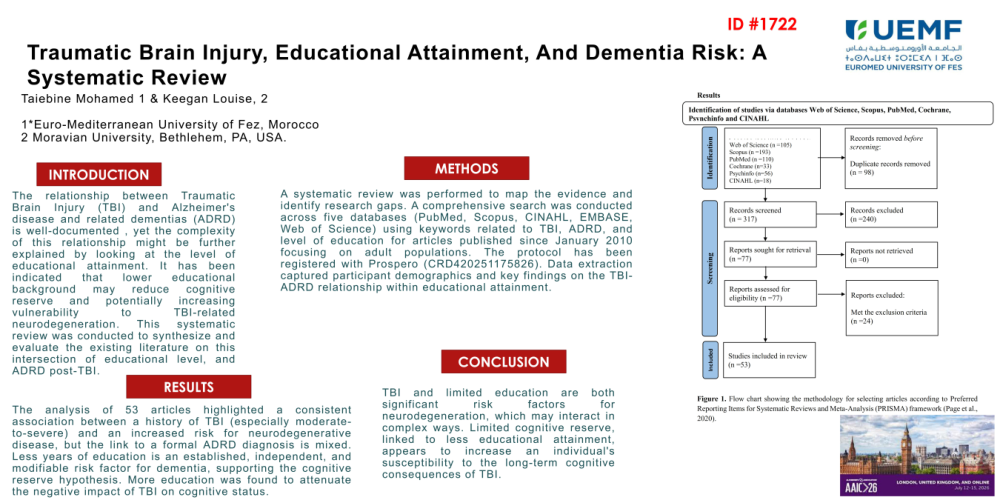
Background: The relationship between Traumatic Brain Injury (TBI) and Alzheimer's disease and related dementias (ADRD) is well-documented , yet the complexity of this relationship might be further explained by looking at the level of educational attainment. It has been indicated that lower educational background may reduce cognitive reserve and potentially increasing vulnerability to TBI-related neurodegeneration. This systematic review was conducted to synthesize and evaluate the existing literature on this intersection of educational level, and ADRD post-TBI.
Methods: A systematic review was performed to map the evidence and identify research gaps. A comprehensive search was conducted across five databases (PubMed, Scopus, CINAHL, EMBASE, Web of Science) using keywords related to TBI, ADRD, and level of education for articles published since January 2010 focusing on adult populations. The protocol has been registered with Prospero (CRD420251175826). Data extraction captured participant demographics and key findings on the TBI-ADRD relationship within educational attainment.
Results: The analysis of 53 articles highlighted a consistent association between a history of TBI (especially moderate-to-severe) and an increased risk for neurodegenerative disease, but the link to a formal ADRD diagnosis is mixed. Less years of education is an established, independent, and modifiable risk factor for dementia, supporting the cognitive reserve hypothesis. More education was found to attenuate the negative impact of TBI on cognitive status.
Conclusion: TBI and limited education are both significant risk factors for neurodegeneration, which may interact in complex ways. Limited cognitive reserve, linked to less educational attainment, appears to increase an individual's susceptibility to the long-term cognitive consequences of TBI.
Comments
Email is required but is not shown publicly.
Loading comments...