4,068 posters, 219 videos, 101 topics, 69 sessions, 14,365 authors, 6,128 institutions
ePostersLive by SciGen Technologies S.A. All rights reserved.
Alzheimer's Association International Conference 2026
July 12-15, 2026 | London, United Kingdom, and Online

10785
The Digital Divide And Cognition In Latin American Aging
Part of Topic
Video
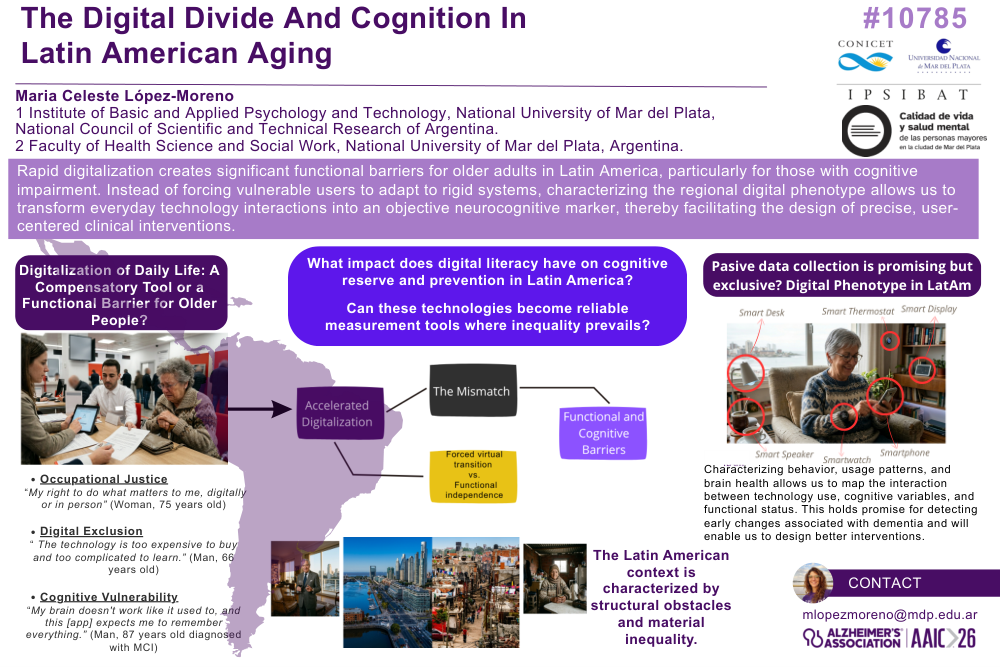
As an Occupational Therapist and Graduate Phd student working in the gerontological field, I have concern about the digitalization of our main full daily activities and its impact on our behavior, and brain health. Through pandemic and post-pandemic clinical practice, I identified a critical challenge: the impact of accelerated digitalization on the autonomy of older people.The forced transition toward virtual environments has created new landscapes of exclusion and dependency.
This phenomenon is particularly severe in populations with cognitive impairment, where technology—rather than acting as a compensatory tool—often emerges as a functional barrier.Currently, my research focuses on the redesign of everyday technologies using an older-user-centered approach, as well as evaluating the cognitive impact of Information and Communication Technologies (ICTs) and their potential as reliable sources for data collection.
In the Latin American context, this challenge is twofold: we face a scarcity of regional literature and a widening digital divide that disproportionately affects those with functional impairments.
It is imperative to characterize the digital phenotype and its correlation with the cognitive variables and functional status of our population to develop precise adaptations and interventions.While technology offers undeniable benefits—such as remote monitoring, cognitive stimulation, and support for functional independence—its implementation in our region faces structural obstacles.
My reflection invites a reimagining of research and professional intervention: What impact does learning to use technology have on cognitive reserve and the prevention of decline in our LatAm older population? Can these technologies become reliable measurement tools for us, where there exists a greater inequality of access and resources?
The future of cognitive and functional assessment through passive data collection is promising. However, for this to become an equitable reality in Latin America, we must first address the gaps in accessibility and universal design that currently marginalize individuals living with dementia and cognitive difficulties.
Comments
Email is required but is not shown publicly.
Loading comments...