4,068 posters, 219 videos, 101 topics, 69 sessions, 14,365 authors, 6,128 institutions
ePostersLive by SciGen Technologies S.A. All rights reserved.
Alzheimer's Association International Conference 2026
July 12-15, 2026 | London, United Kingdom, and Online

10984
Neurometabolic Reprogramming In Alzheimer’S Disease: Emerging Insights Into Metabolic Dysfunction And Therapeutic Opportunities
Poster Presenter
Authors
Part of Topic
Neurometabolic Reprogramming In Alzheimer's Disease: Emerging Insights Into Metabolic Dysfunction And Therapeutic Opportunities
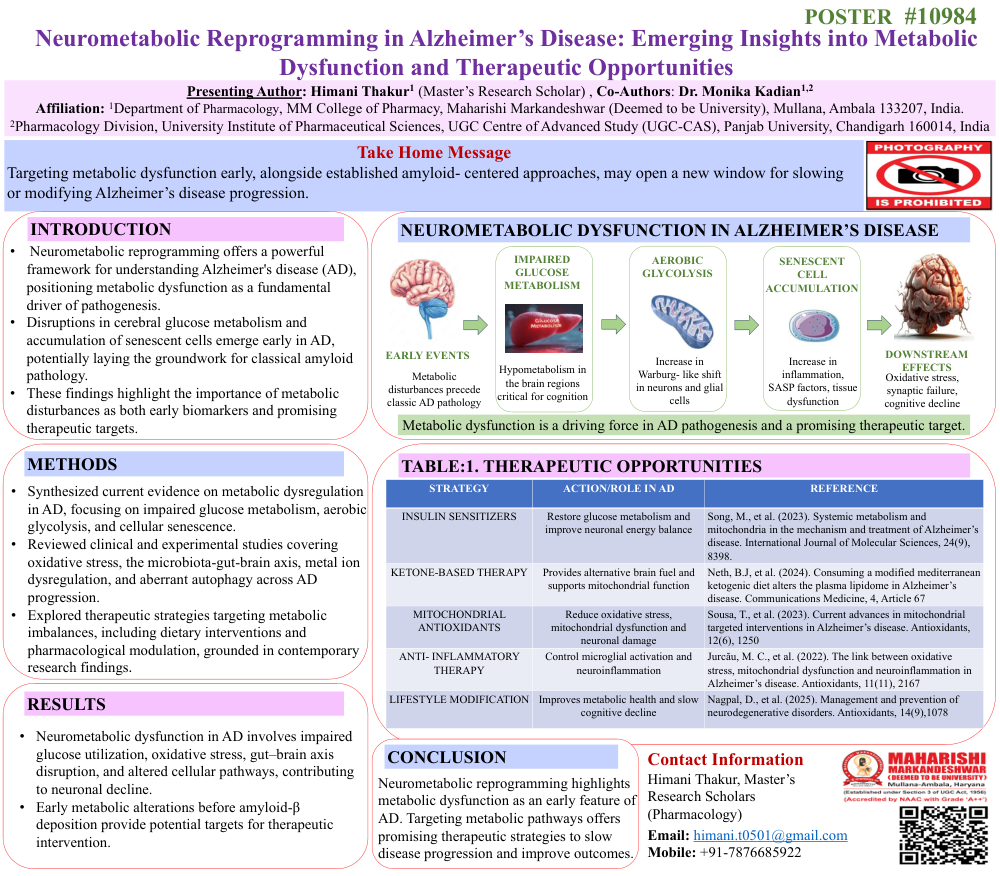
Background: Neurometabolic reprogramming has emerged as a fascinating framework for elucidating Alzheimer's disease (AD), emphasizing
metabolic dysfunction as a fundamental contributor to the pathogenesis of the ailment. A growing body of evidence suggests that disruptions in
cerebral glucose metabolism and the accumulation of senescent cells manifest early in AD, potentially laying the groundwork for the classical
amyloid pathology. These findings underscore the significance of investigating metabolic disturbances as both biomarkers andtherapeutic
targets.
Methods: This abstract summarizes findings on metabolic dysregulation in AD, focusing on impaired glucose metabolism, aerobic glycolysis, and
cellular senescence. It reviews pertinent clinical and experimental studies indicating that the progression of Alzheimer's Disease encompasses
oxidative stress, the microbiota-gut-brain axis, metal ion dysregulation, and aberrant autophagy. Furthermore, it explores therapeutic strategies
aimed at rectifying metabolicimbalances, which include dietary interventions and pharmacological modulation, grounded in contemporary
research findings.
Results: Impaired glucose use is a feature of AD, causing neuronal energy deficits and cognitive decline. Neurometabolic dysfunction is
characterized by oxidative stress, the microbiota-gut-brain axis, metal ions, and abnormal autophagy, which play critical roles in AD. As AD
neurons rely on aerobic glycolysis despite intact mitochondria, resembling a Warburg-like shift. Abnormal glucose metabolism and senescent
cells may appear before amyloid-ß, suggesting a window for early intervention. Furthermore, uncontrolled neuronal death drives synaptic failure
and cellular instability in AD. Therapies targeting neurometabolic dysfunction show promise. Ketogenic diets offer alternative energy to neurons,
possiblyrestoring metabolic balance and improving cognition. Pharmacological strategies, like insulin sensitizers and mitochondrial antioxidants,
are being explored to reduce metabolic stress and slow AD progression.
Conclusion: Neurometabolic reprogramming views metabolic dysfunction as an early, actionable aspect of AD. This offers new therapeutic
opportunities, but AD is still multifactorial. Integrating metabolic insights with existing hypotheses, such as amyloid pathology, is vital for
effective treatment strategies.
Comments
Email is required but is not shown publicly.
Loading comments...