4,068 posters, 219 videos, 101 topics, 69 sessions, 14,365 authors, 6,128 institutions
ePostersLive by SciGen Technologies S.A. All rights reserved.
Alzheimer's Association International Conference 2026
July 12-15, 2026 | London, United Kingdom, and Online

2533
Supporting Dementia Caregivers At Home: A Community Health Worker-led Intervention Integrating Wearable Technology
Part of Topic
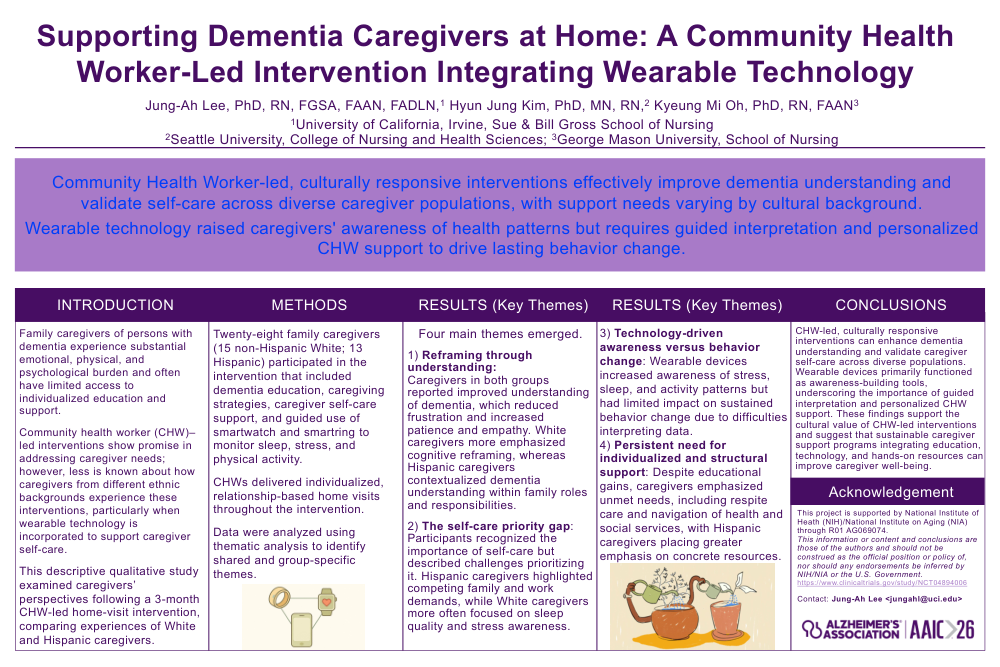
Background: Family caregivers of persons with dementia experience substantial emotional, physical, and psychological burden and often have limited access to individualized education and support. Community health worker (CHW)–led interventions show promise in addressing caregiver needs; however, less is known about how caregivers from different ethnic backgrounds experience these interventions, particularly when wearable technology is incorporated to support caregiver self-care. This descriptive qualitative study examined caregivers’ perspectives following a 3-month CHW-led home-visit intervention, comparing experiences of non-Hispanic White and Hispanic caregivers.
Methods: Twenty-eight family caregivers (15 White; 13 Hispanic) participated in the intervention that included dementia education, caregiving strategies, caregiver self-care support, and guided use of smartwatch and smartring to monitor sleep, stress, and physical activity. CHWs delivered individualized, relationship-based home visits throughout the intervention. At program completion, caregivers provided written responses describing their experiences and learning. Data were analyzed using thematic analysis to identify shared and group-specific themes.
Results: Four main themes emerged. (1) Reframing through understanding: Caregivers in both groups reported improved understanding of dementia, which reduced frustration and increased patience and empathy. White caregivers more emphasized cognitive reframing, whereas Hispanic caregivers contextualized dementia understanding within family roles and responsibilities. (2) The self-care priority gap: Participants recognized the importance of self-care but described challenges prioritizing it. Hispanic caregivers highlighted competing family and work demands, while White caregivers more often focused on sleep quality and stress awareness. (3) Technology-driven awareness versus behavior change: Wearable devices increased awareness of stress, sleep, and activity patterns but had limited impact on sustained behavior change due to difficulties interpreting data. (4) Persistent need for individualized and structural support: Despite educational gains, caregivers emphasized unmet needs, including respite care and navigation of health and social services, with Hispanic caregivers placing greater emphasis on concrete resources.
Conclusions: CHW-led, culturally responsive interventions can enhance dementia understanding and validate caregiver self-care across diverse populations. Wearable devices primarily functioned as awareness-building tools, underscoring the importance of guided interpretation and personalized CHW support. These findings support the cultural value of CHW-led interventions and suggest that sustainable caregiver support programs integrating education, technology, and hands-on resources can improve caregiver well-being.
Comments
Email is required but is not shown publicly.
Loading comments...