4,068 posters, 219 videos, 101 topics, 69 sessions, 14,365 authors, 6,128 institutions
ePostersLive by SciGen Technologies S.A. All rights reserved.
Alzheimer's Association International Conference 2026
July 12-15, 2026 | London, United Kingdom, and Online

4282
Hospitalization Outcomes In Alzheimer’S Disease In Brazil: A Nationwide Temporal Analysis From 2015 To 2025
Poster Presenter
Part of Topic
Hospitalization Outcomes In Alzheimer’S Disease In Brazil: A Nationwide Temporal Analysis From 2015 To 2025:
Author Block: Matheus Felipe Kuhn Urnau, Luiza Toscan.
Universidade de Passo Fundo, Passo Fundo, Brazil.
Abstract:
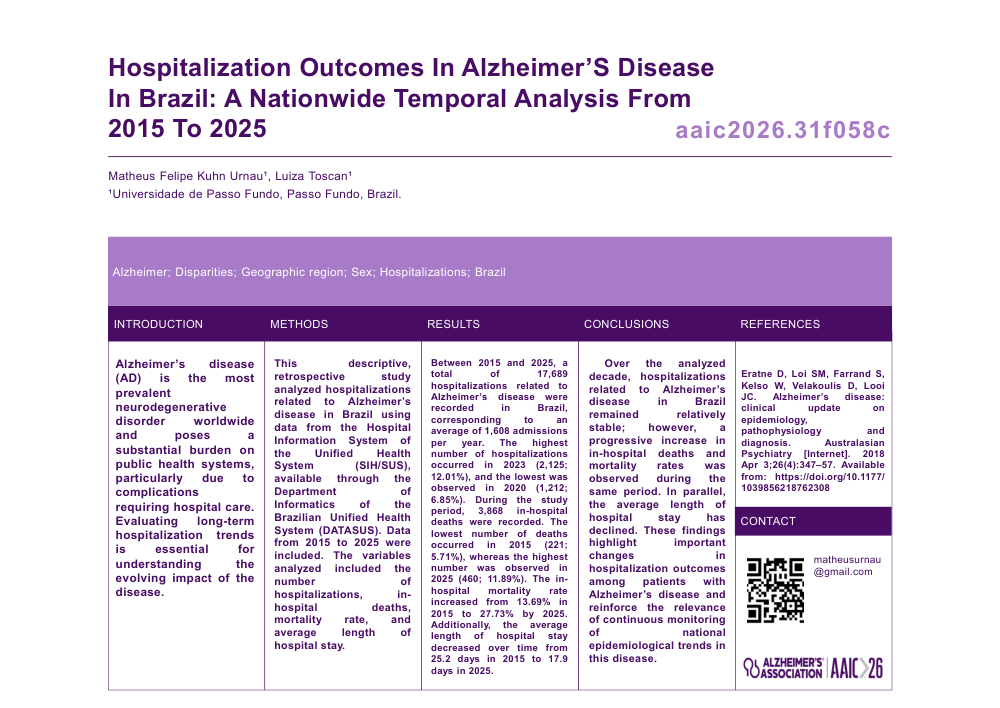
Background: Alzheimer’s disease (AD) is the most prevalent neurodegenerative disorder worldwide and poses a substantial burden on public health systems, particularly due to complications requiring hospital care. Evaluating long-term hospitalization trends is essential for understanding the evolving impact of the disease.
Methods: This descriptive, retrospective study analyzed hospitalizations related to Alzheimer’s disease in Brazil using data from the Hospital Information System of the Unified Health System (SIH/SUS), available through the Department of Informatics of the Brazilian Unified Health System (DATASUS). Data from 2015 to 2025 were included. The variables analyzed included the number of hospitalizations, in-hospital deaths, mortality rate, and average length of hospital stay.
Results: Between 2015 and 2025, a total of 17,689 hospitalizations related to Alzheimer’s disease were recorded in Brazil, corresponding to an average of 1,608 admissions per year. The highest number of hospitalizations occurred in 2023 (2,125; 12.01%), and the lowest was observed in 2020 (1,212; 6.85%). During the study period, 3,868 in-hospital deaths were recorded. The lowest number of deaths occurred in 2015 (221; 5.71%), whereas the highest number was observed in 2025 (460; 11.89%). The in-hospital mortality rate increased from 13.69% in 2015 to 27.73% by 2025. Additionally, the average length of hospital stay decreased over time from 25.2 days in 2015 to 17.9 days in 2025.
Conclusion: Over the analyzed decade, hospitalizations related to Alzheimer’s disease in Brazil remained relatively stable; however, a progressive increase in in-hospital deaths and mortality rates was observed during the same period. In parallel, the average length of hospital stay has declined. These findings highlight important changes in hospitalization outcomes among patients with Alzheimer’s disease and reinforce the relevance of continuous monitoring of national epidemiological trends in this disease.
Comments
Email is required but is not shown publicly.
Loading comments...