4,068 posters, 219 videos, 101 topics, 69 sessions, 14,365 authors, 6,128 institutions
ePostersLive by SciGen Technologies S.A. All rights reserved.
Alzheimer's Association International Conference 2026
July 12-15, 2026 | London, United Kingdom, and Online

9743
Exploring Dementia Care Needs And Preferences Among Persons With Dementia And Family Caregivers In Malaysia
Poster Presenter
Authors
Sharifah Munirah Syed Elias, Nur Fatihah Shuhada Ismail, Aniawanis Makhtar, Mohd Aznan Md. Aris
Affiliations
null,
Part of Topic
Background:
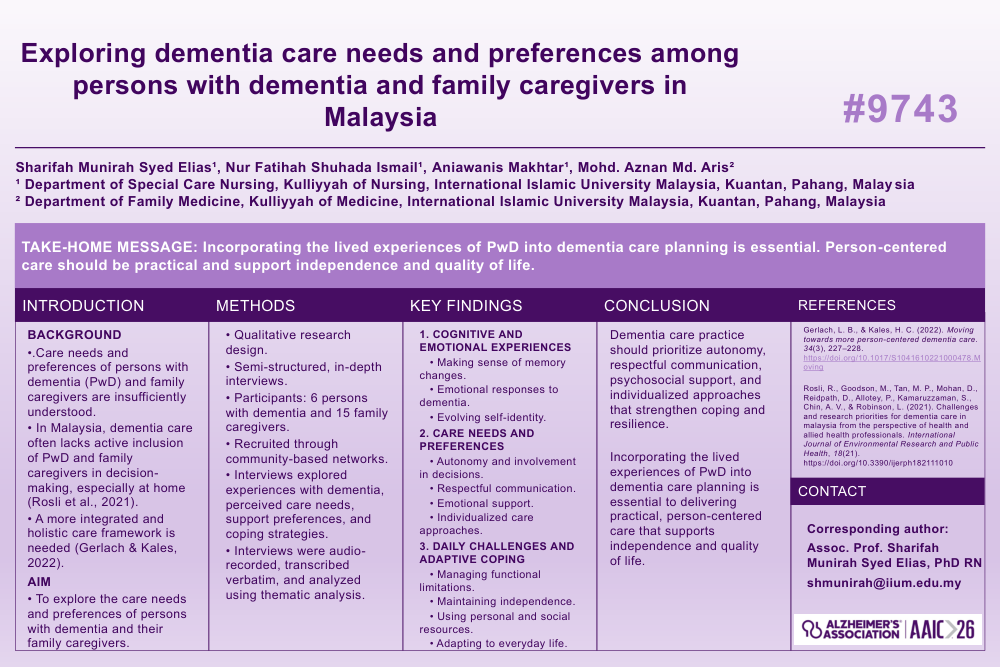
Dementia is a debilitating condition that affects millions worldwide, and the need for high-quality dementia care has never been more urgent. Dementia care needs and preferences based on the experiences of both PwD and family caregivers are not sufficiently understood, and it is uncertain whether dementia care meets their needs and preferences. In Malaysia, the current management of dementia often lacks mechanisms for the active inclusion of PwD and family caregivers in decision-making processes, particularly within home settings. Many experts have argued for a more integrated and holistic dementia care framework that accommodates the unique needs and preferences of PwD and their family caregivers. Therefore, this study aimed to explore the care needs and preferences of PwD and their family caregivers.
Methods:
A qualitative research design was adopted. Semi-structured, in-depth interviews were conducted with six PwD and fifteen family caregivers recruited through community-based networks. Interviews explored participants’ experiences with dementia, perceived care needs, preferences for support, and strategies used to manage everyday challenges. All interviews were audio-recorded, transcribed verbatim, and analyzed using thematic analysis. Focus group discussions were subsequently conducted with PwD and family caregivers to validate the merging themes and refine the conceptual framework.
Results:
Three overarching themes emerged from the analysis. The first theme, cognitive and emotional experiences, captured how PwD made sense of memory changes, emotional responses, and evolving self-identity. The second theme, care needs and preferences, highlighted the importance of autonomy, respectful communication, emotional support, and individualized care approaches. The third theme, daily challenges and adaptive coping, described strategies used by PwD and family caregivers to manage functional limitations, maintain independence, and draw on personal and social resources to cope with daily life.
Conclusion:
Dementia care practice should prioritize autonomy, respectful communication, psychosocial support, and individualized approaches that strengthen coping and resilience. Incorporating the lived experiences of PwD into dementia care planning is essential to delivering practical, person-centered care that supports independence and quality of life.
Comments
Email is required but is not shown publicly.
Loading comments...