4,068 posters, 219 videos, 101 topics, 69 sessions, 14,365 authors, 6,128 institutions
ePostersLive by SciGen Technologies S.A. All rights reserved.
Alzheimer's Association International Conference 2026
July 12-15, 2026 | London, United Kingdom, and Online

3884
The Journey Of Older Vietnamese Immigrants Seeking Care For Cognitive Impairments In The United States
Poster Presenter
Authors
Kris Pui Kwan Ma, Kim Lundgreen, Angella Kim, Maria Prado, Anh Dao, Asmeret Tesfalem, Jacqueline Raetz, Annette Fitzpatrick, Kari Stephens
Affiliations
, Department of Family Medicine, University of Washington, Department of Health Systems and Population Health, University of Washington, Community House Calls, Interpreter Services Department, Harborview Medical Center
Part of Topic
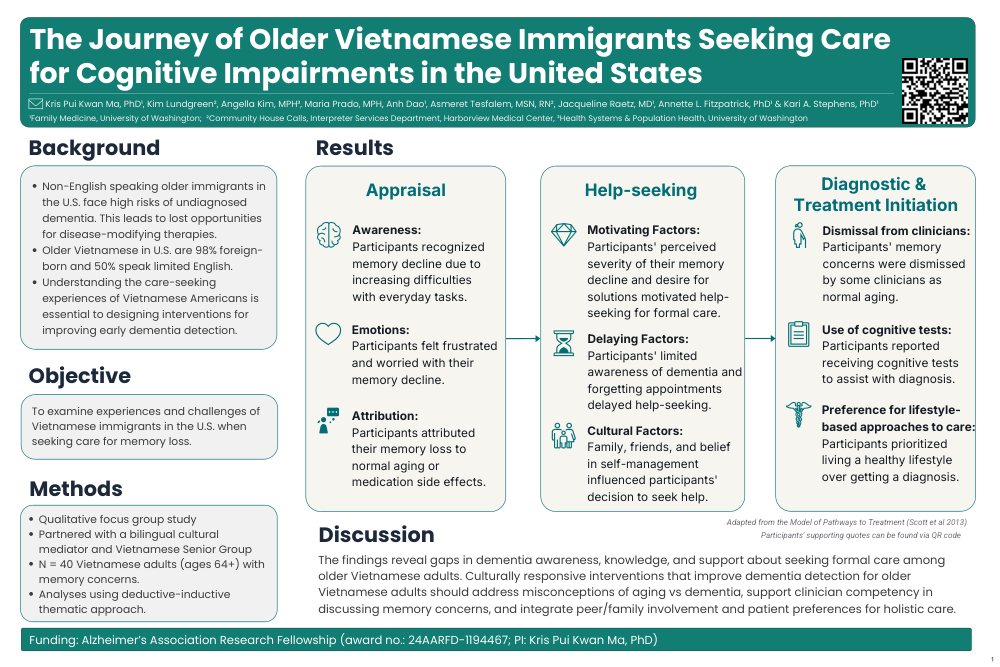
Background:Foreign-born older adults with limited English proficiency, including Vietnamese immigrants in the U.S., often experience delayed/missed diagnoses of dementia. Language and sociocultural barriers have hindered them from receiving timely and optimal care for cognition. The study aimed to examine the experiences and challenges of Vietnamese immigrants in the U.S. when seeking care for memory loss, with the goal of designing interventions to improve early detection of cognitive impairments in primary care.
Methods:We partnered with a bilingual/bicultural caseworker-cultural mediator and a local Vietnamese Senior Association to conduct a qualitative study. We recruited 40 older Vietnamese adults and completed seven Vietnamese-language focus groups. Participants were aged ≥ 65, had been diagnosed with mild cognitive impairment or mild dementia, or had sought care for memory impairments.Thematic content analysis was conducted.
Results: The themes are organized around the four stages in the Model of Pathways to Treatment. During Appraisal stage, older Vietnamese adults recognized their increasing memory impairments and felt frustrated and worried, but did not consider their memory loss could be due to dementia. DuringHelp-seeking stage, participants described their decision to seek help was influenced by motivating factors (i.e., perceived symptom severity, desire for answers and medications ) and delaying factors (i.e., attributing memory loss to normal aging, and difficulty remembering to schedule appointments). During Diagnostic and Pre-treatment Initiation stages, participants described receiving varying responses from clinicians to their memory concerns, ranging from no intervention to cognitive testing, specialist referrals, and counseling. Participants reported mixed levels of satisfaction with the care they received. Two themes – family involvement and belief in self-management for health – cut cross all four stages, reflecting cultural influences on older Vietnamese adults’ care-seeking decisions.
Conclusions:These findings reveal gaps in dementia awareness and knowledge about seeking formal care among older Vietnamese adults, alongside culturally shaped models of health that emphasize self-reliance, family support, and lifestyle-based approaches to brain health. A culturally responsive intervention that improve dementia detection for older Vietnamese adults should address misconceptions of aging vs dementia, support clinician competency in discussing memory concerns, and integrate family involvement and patient preferences for holistic health.
Comments
Email is required but is not shown publicly.
Loading comments...