4,068 posters, 219 videos, 101 topics, 69 sessions, 14,365 authors, 6,128 institutions
ePostersLive by SciGen Technologies S.A. All rights reserved.
Alzheimer's Association International Conference 2026
July 12-15, 2026 | London, United Kingdom, and Online

1820
Assessing Alzheimer’s Disease Knowledge In Rural Communities Before And After A Family-based Focus Group With Tailored Resource Sharing
Poster Presenter
Part of Topic
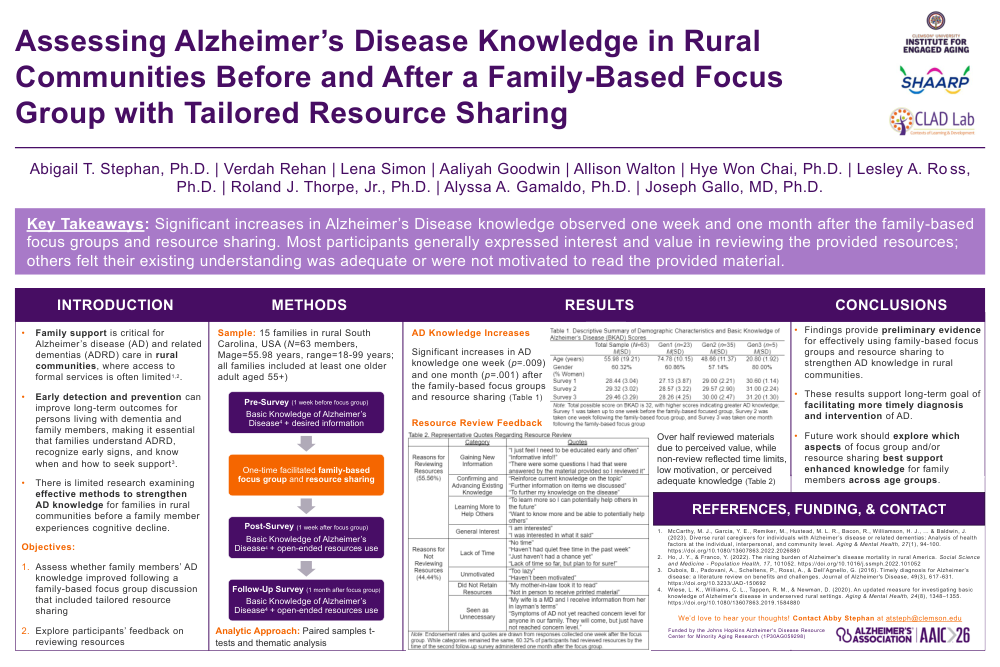
Background: Family support is critical for Alzheimer’s disease (AD) and related dementias (ADRD) care in rural communities, where access to formal services is often limited. In rural settings, early detection and prevention can improve long-term outcomes for persons living with dementia and their family members, making it essential that families understand AD, recognize early signs, and know when and how to seek support. Despite this, there is limited research examining effective methods to strengthen AD knowledge among older adults and possible caregivers in rural communities before a family member begins experiencing cognitive decline. Thus, this work assesses whether the AD knowledge of family members across age groups in rural communities in the southeastern United States improved following a family-based focus group discussion that included tailored resource sharing.
Method: Fifteen families (N=63 members, Mage=55.98 years, range=18=99 years) based in rural South Carolina communities participated in one-time facilitated focus groups about their experiences with aging, family function, and communication and planning around ADRD care. Following the discussions, we shared relevant Alzheimer’s Association and National Institute on Aging resources in-person and by email. Family members individually completed an online survey containing the Basic Knowledge of Alzheimer’s Disease (Wiese et al., 2020) questionnaire (1) before, (2) one week after, and (3) one month after the focus group; surveys also contained open-ended items about resource use. We conducted paired samples t-tests to assess changes in AD knowledge and thematically analyzed responses to provide depth.
Result: There were significant increases in AD knowledge one week (p=.009) and one month (p=.001) after the family-based focus groups and resource sharing (Table 1 contains descriptive summary). While participants generally expressed interest in reviewing the provided resources, others felt their existing understanding was adequate or were not interested in reading the material (Table 2).
Conclusion: These findings provide preliminary evidence for effectively using family-based focus groups and resource sharing to strengthen AD knowledge in rural communities to ultimately facilitate more timely diagnosis and intervention. Future work should explore which aspects of the focus group and/or resource sharing best support enhanced knowledge for family members across age groups.
Comments
Email is required but is not shown publicly.
Loading comments...