4,068 posters, 219 videos, 101 topics, 69 sessions, 14,365 authors, 6,128 institutions
ePostersLive by SciGen Technologies S.A. All rights reserved.
Alzheimer's Association International Conference 2026
July 12-15, 2026 | London, United Kingdom, and Online

855
Technology-based Dyadic Interventions For Persons Living With Dementia And Caregivers: Systematic Review Of Literature
Poster Presenter
Authors
Part of Topic
INTRO
• Integrating technology into dementia care is essential to improve
safety, independence, medication management, and cognitive
function of persons living with dementia.
• Technology can also support caregivers in care coordination and
organization, health monitoring for patients, and emotional support.
• This systematic review aimed to identify and synthesize the current
evidence of the effectiveness of interventions using technology for
persons living with dementia and their caregivers as a dyad.
METHODS
• Six databases were searched for interventions using any technology
(CINAHL, PubMed, Web of Science, APA PsycINFO, IEEE Xplore,
and Dissertations and Theses Global).
• Search terms included but not limited to mobile phone, telehealth,
video game, wearable device, social robots, virtual reality,
simulation, and artificial intelligence, from their inception to February
2025.
• Title/abstract screening, full text review were completed using
Covidence based on PICO model (Population, Intervention,
Comparator, Outcome).
• The total of five reviewers reviewed and compared their results until
consensus.
• Risk of Bias was assessed using Cochrane quality assessment
template.
• Registered to PROSPERO (CRD42022380937).
RESULTS
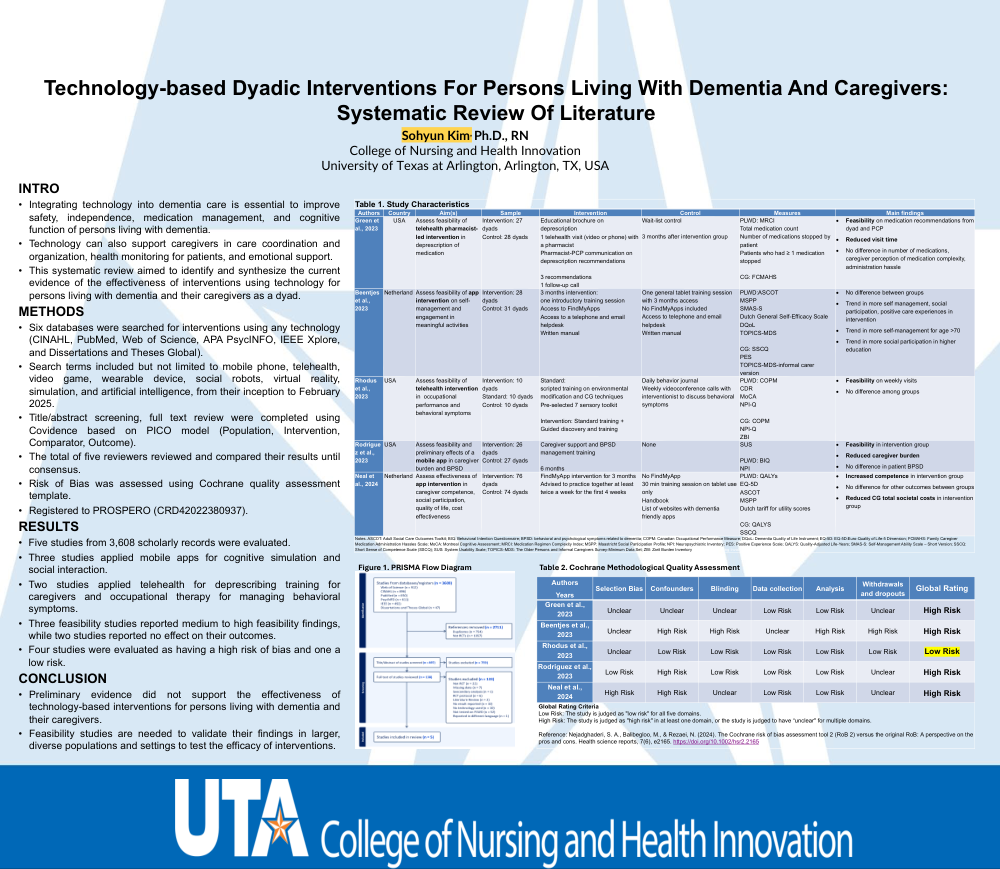
• Five studies from 3,608 scholarly records were evaluated.
• Three studies applied mobile apps for cognitive simulation and
social interaction.
• Two studies applied telehealth for deprescribing training for
caregivers and occupational therapy for managing behavioral
symptoms.
• Three feasibility studies reported medium to high feasibility findings,
while two studies reported no effect on their outcomes.
• Four studies were evaluated as having a high risk of bias and one a
low risk.
CONCLUSION
• Preliminary evidence did not support the effectiveness of
technology-based interventions for persons living with dementia and
their caregivers.
• Feasibility studies are needed to validate their findings in larger,
diverse populations and settings to test the efficacy of interventions.
Comments
Email is required but is not shown publicly.
Loading comments...