4,068 posters, 219 videos, 101 topics, 69 sessions, 14,365 authors, 6,128 institutions
ePostersLive by SciGen Technologies S.A. All rights reserved.
Alzheimer's Association International Conference 2026
July 12-15, 2026 | London, United Kingdom, and Online

9770
Seizures In A Memory Clinic Cohort: Prevalence, Risk Factors, And Impact
Poster Presenter
Part of Topic
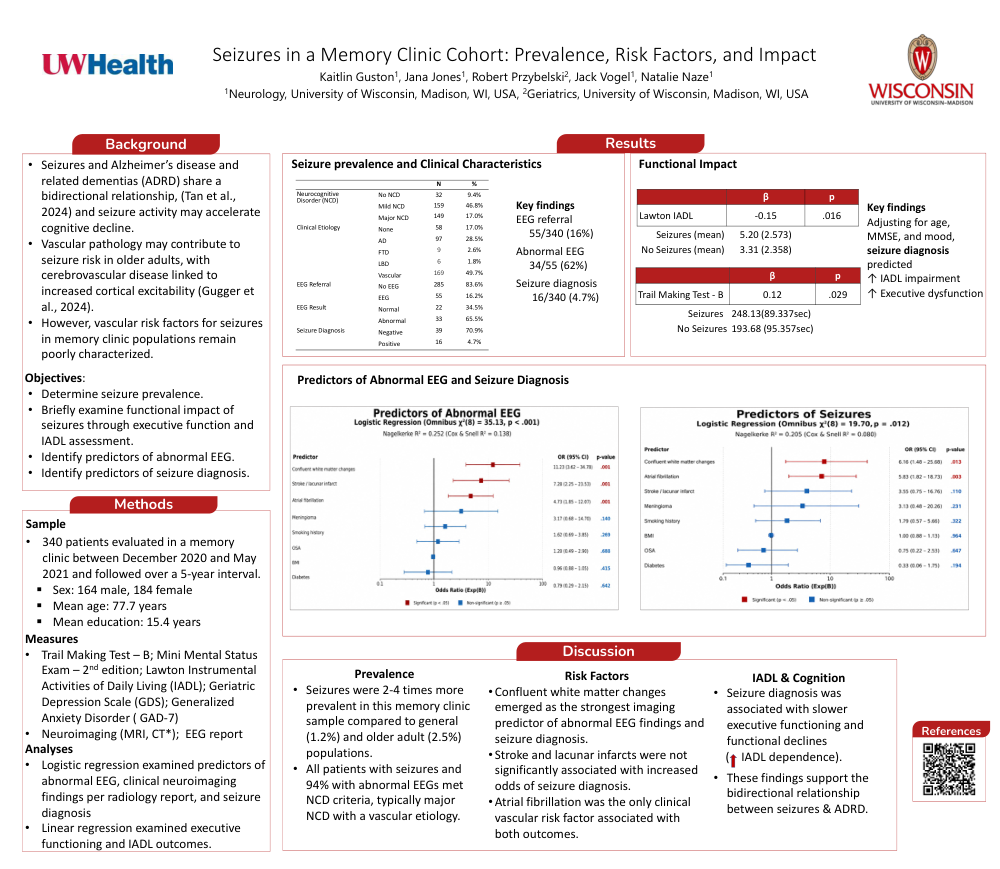
Background: Seizures and Alzheimer’s disease and related dementias (ADRD) share a bidirectional relationship, and seizure activity may accelerate functional decline. We aimed to characterize seizure prevalence, identify clinical and neuroimaging predictors of abnormal EEG and seizure diagnosis, and examine the functional impact of seizures through executive function and IADL assessment.
Methods: We followed 340 consecutively referred adults (aged 65–94 years; M = 77.67) evaluated in a memory clinic between December 2020 and May 2021. As part of the clinical evaluation. All patients completed a neuropsychological battery and geriatric assessment. Informants completed the Lawton Instrumental Activities of Daily Living (IADL) Scale. Medical record review over the subsequent five years captured EEG referrals, new seizure diagnoses, neuroimaging findings (MRI, CT), vascular risk factors, and neurocognitive etiologies.
Results: Fifty-five patients underwent EEG, of whom 34 (61.8%) demonstrated abnormalities, and 16 (4.7%) were subsequently diagnosed with epilepsy. Confluent white matter changes, stroke/lacunar infarcts, and atrial fibrillation independently predicted abnormal EEG findings (p ≤ .001). Confluent white matter changes and atrial fibrillation also independently predicted seizure diagnosis (p ≤ .013), whereas stroke/lacunar infarcts were no longer significant. Other vascular risk factors, including diabetes, obstructive sleep apnea, body mass index, and smoking history, were not associated with either outcome. Functionally, individuals with seizures performed more slowly on the Trail Making Test Part B (p = .029). Greater functional impairment was independently associated with seizure diagnosis (p = .016), even after adjusting for age, global cognition, and mood.
Conclusions: Seizures were common in this memory clinic cohort and were associated with cerebrovascular disease. Confluent white matter changes and atrial fibrillation emerged as the strongest predictors of seizure-related outcomes, suggesting that both structural and clinical vascular markers may help identify patients at increased risk. Seizure diagnosis was also associated with greater executive dysfunction and functional dependence. Incorporating seizure screening into routine memory clinic evaluations may improve epilepsy detection and identify patients at risk for accelerated cognitive decline.
Comments
Email is required but is not shown publicly.
Loading comments...