4,068 posters, 219 videos, 101 topics, 69 sessions, 14,365 authors, 6,128 institutions
ePostersLive by SciGen Technologies S.A. All rights reserved.
Alzheimer's Association International Conference 2026
July 12-15, 2026 | London, United Kingdom, and Online

9172
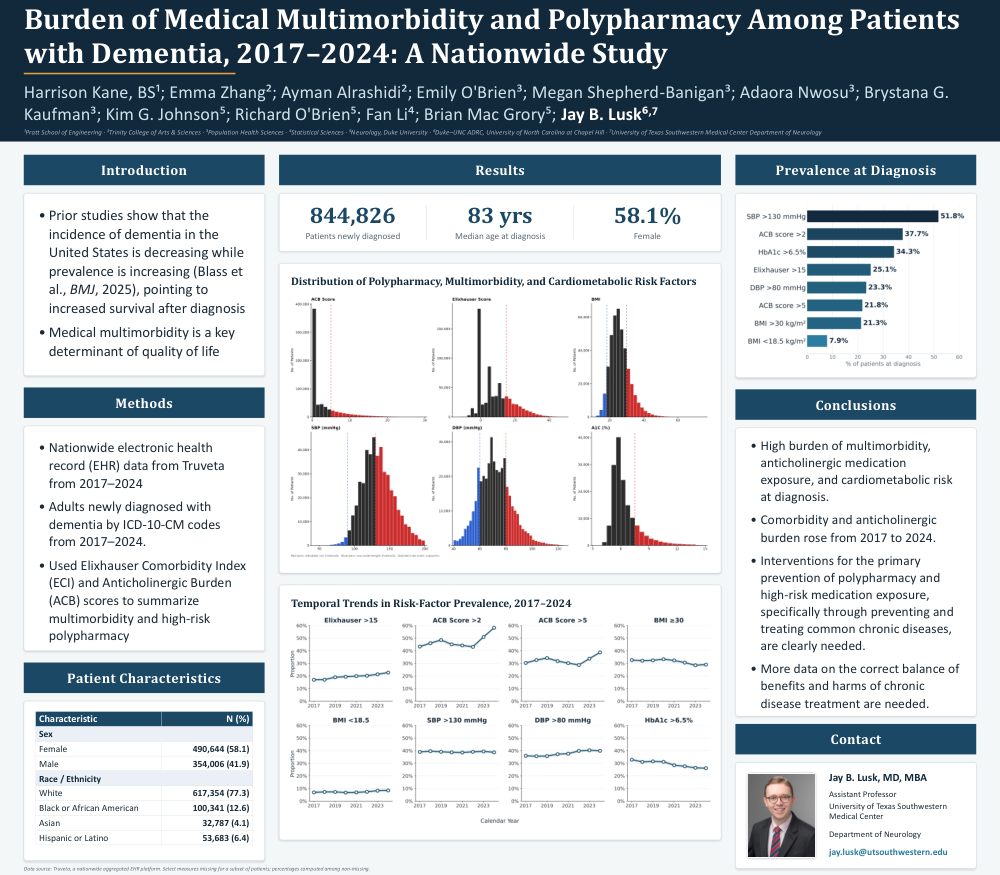
Burden Of Medical Multimorbidity And Polypharmacy Among Patients With Dementia, 2017-2024: A Nationwide Study
Part of Topic
Introduction: Prior studies show that the incidence of dementia in the United States is decreasing while prevalence is increasing (Blass et al., BMJ, 2025), pointing to increased survival after diagnosis. Medical multimorbidity is a key determinant of quality of life.
Methods: Nationwide electronic health record (EHR) data from Truveta from 2017–2024. Adults newly diagnosed with dementia by ICD-10-CM codes from 2017–2024. Used Elixhauser Comorbidity Index (ECI) and Anticholinergic Burden (ACB) scores to summarize multimorbidity and high-risk polypharmacy
Results: 844,827 patients newly diagnosed, median age 83 years, 58.1% female. The distribution of polypharmacy, multimorbidity, and cardiometabolic risk factors are shown as well as temporal trends in the prevalence of these factors from 2017-2024.
Conclusions: High burden of multimorbidity, anticholinergic medication exposure, and cardiometabolic risk at diagnosis. Comorbidity and anticholinergic burden rose from 2017 to 2024. Interventions for the primary prevention of polypharmacy and high-risk medication exposure, specifically through preventing and treating common chronic diseases, are clearly needed. More data on the correct balance of benefits and harms of chronic disease treatment are needed.
Contact: Jay B. Lusk, MD, MBA, Assistant Professor of Neurology, University of Texas Southwestern Medical Center, jay.lusk@utsouthwestern.edu.
Comments
Email is required but is not shown publicly.
Loading comments...