4,068 posters, 219 videos, 101 topics, 69 sessions, 14,365 authors, 6,128 institutions
ePostersLive by SciGen Technologies S.A. All rights reserved.
Alzheimer's Association International Conference 2026
July 12-15, 2026 | London, United Kingdom, and Online

9924
Time To Diagnosis Of Primary Progressive Aphasia In High- And Upper-middle-income Countries: Preliminary Results
Poster Presenter
Authors
Affiliations
Part of Topic
Time to Diagnosis of Primary Progressive Aphasia in High- and Upper-middle-Income Countries: preliminary results
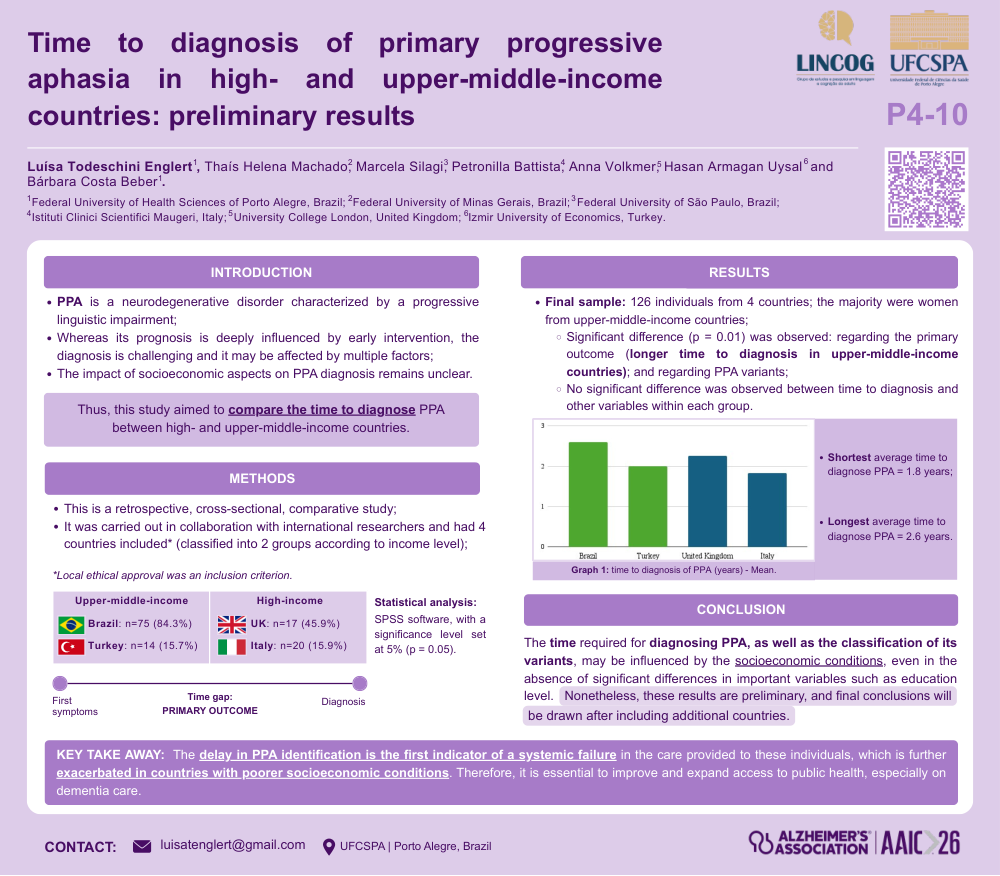
Background: Primary Progressive Aphasia (PPA) is a neurodegenerative disorder characterized by a progressive impairment of linguistic abilities. Despite its prognosis being deeply influenced by early intervention, the diagnostic process is frequently challenging and it may be affected by multiple factors. Nevertheless, the impact of socioeconomic aspects on PPA diagnosis remains unclear. Thus, this study aimed to compare the time to diagnose PPA between high- and upper-middle-income countries. Methods: We conducted a retrospective, cross-sectional, comparative study, which was carried out in collaboration with international researchers. The countries included were classified into 2 groups according to income level, and the primary outcome was the time to diagnosis of PPA. Statistical analysis was performed using the SPSS software, with a significance level set at 5%. Results: The final sample included 126 individuals from 4 different countries, and a statistically significant difference was observed regarding the primary outcome (p = 0.01), indicating a longer time to diagnosis in upper-middle-income countries (Table 1). The shortest average time to diagnose PPA was 1.8 years, whereas the longest was 2.6 (Graph 1). In addition, a significant difference regarding PPA variants was observed (Table 1). Simultaneously, no significant difference was found between time to diagnosis and other variables within each group (Table 2). Conclusion: Our results suggest that the time required for diagnosing PPA, as well as the classification of its variants, are influenced by the socioeconomic conditions of countries, even in the absence of significant differences in important variables such as education level. This indicates that the complexity of diagnosis depends not only on clinical factors but also on socioeconomic determinants. Since the longer the delay in diagnosis, the later the treatment begins and the worse the prognosis, it becomes evident that the delay in PPA identification is the first indicator of a systemic failure in the care provided to these individuals, which is further exacerbated in countries with poorer socioeconomic conditions. Therefore, it is essential to improve and expand access to public health, especially on dementia care. Nonetheless, these results are preliminary, and final conclusions will be drawn after including additional countries
Comments
Email is required but is not shown publicly.
Loading comments...