4,068 posters, 219 videos, 101 topics, 69 sessions, 14,365 authors, 6,128 institutions
ePostersLive by SciGen Technologies S.A. All rights reserved.
Alzheimer's Association International Conference 2026
July 12-15, 2026 | London, United Kingdom, and Online

2431
Health System Readiness For Anti-amyloid Therapies In Alzheimer’s Disease: A South American Physician Survey
Poster Presenter
Authors
Belen Custodio, Paulo Caramelli, Ricardo Allegri, Carolina Delgado, Lissette Duque, Maria Cusicanqui, Francesca Mariani, Nilton Custodio
Affiliations
Part of Topic
BACKGROUND
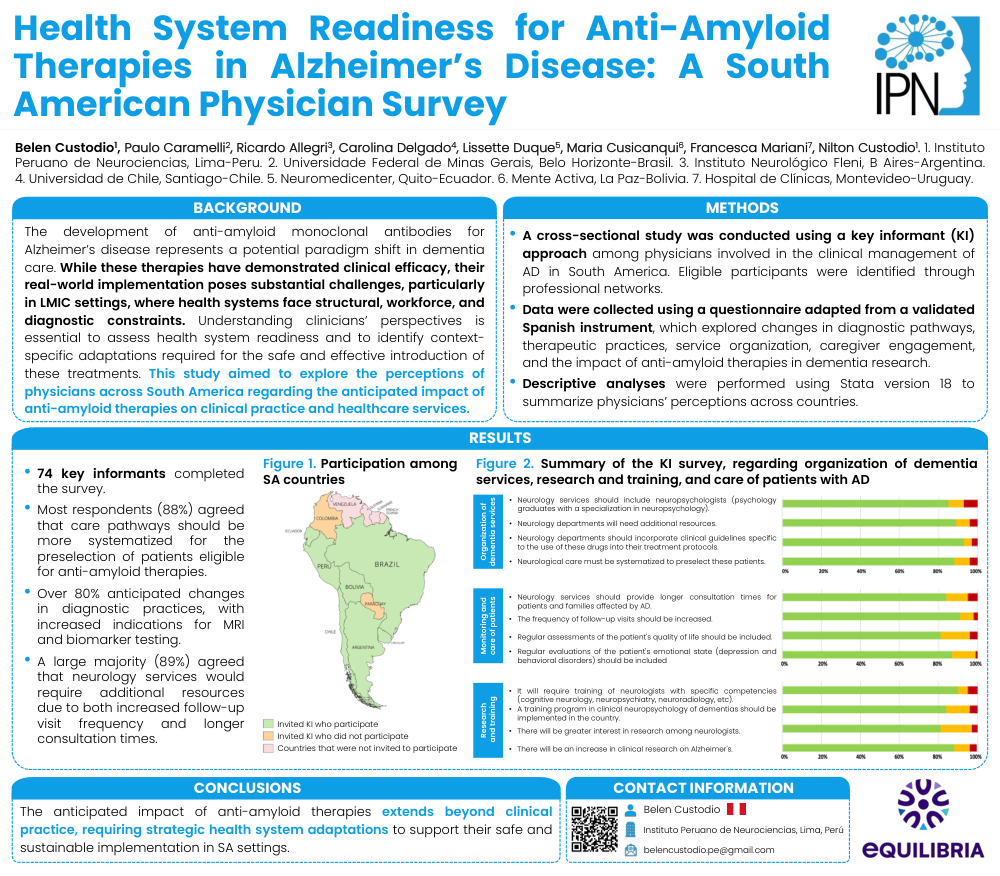
The development of anti-amyloid monoclonal antibodies for Alzheimer’s disease represents a potential paradigm shift in dementia care. While these therapies have demonstrated clinical efficacy, their real-world implementation poses substantial challenges, particularly in LMIC settings, where health systems face structural, workforce, and diagnostic constraints. Understanding clinicians’ perspectives is essential to assess health system readiness and to identify context-specific adaptations required for the safe and effective introduction of these treatments. This study aimed to explore the perceptions of physicians across South America regarding the anticipated impact of anti-amyloid therapies on clinical practice and healthcare services.
METHODS
• A cross-sectional study was conducted using a key informant (KI) approach among physicians involved in the clinical management of AD in South America. Eligible participants were identified through professional networks.
• Data were collected using a questionnaire adapted from a validated Spanish instrument, which explored changes in diagnostic pathways, therapeutic practices, service organization, caregiver engagement, and the impact of anti-amyloid therapies in dementia research.
• Descriptive analyses were performed using Stata version 18 to summarize physicians’ perceptions across countries.
RESULTS
• 74 key informants completed the survey.
• Most respondents (88%) agreed that care pathways should be more systematized for the preselection of patients eligible for anti-amyloid therapies.
• Over 80% anticipated changes in diagnostic practices, with increased indications for MRI and biomarker testing.
• A large majority (89%) agreed that neurology services would require additional resources due to both increased follow-up visit frequency and longer consultation times.
CONCLUSIONS
The anticipated impact of anti-amyloid therapies extends beyond clinical practice, requiring strategic health system adaptations to support their safe and sustainable implementation in SA settings.
Comments
Email is required but is not shown publicly.
Loading comments...