4,068 posters, 219 videos, 101 topics, 69 sessions, 14,365 authors, 6,128 institutions
ePostersLive by SciGen Technologies S.A. All rights reserved.
Alzheimer's Association International Conference 2026
July 12-15, 2026 | London, United Kingdom, and Online

959
Factors Influencing Performance On A Novel Computerised IADL Tool In Older Adults: A Pilot Study
Poster Presenter
Part of Topic
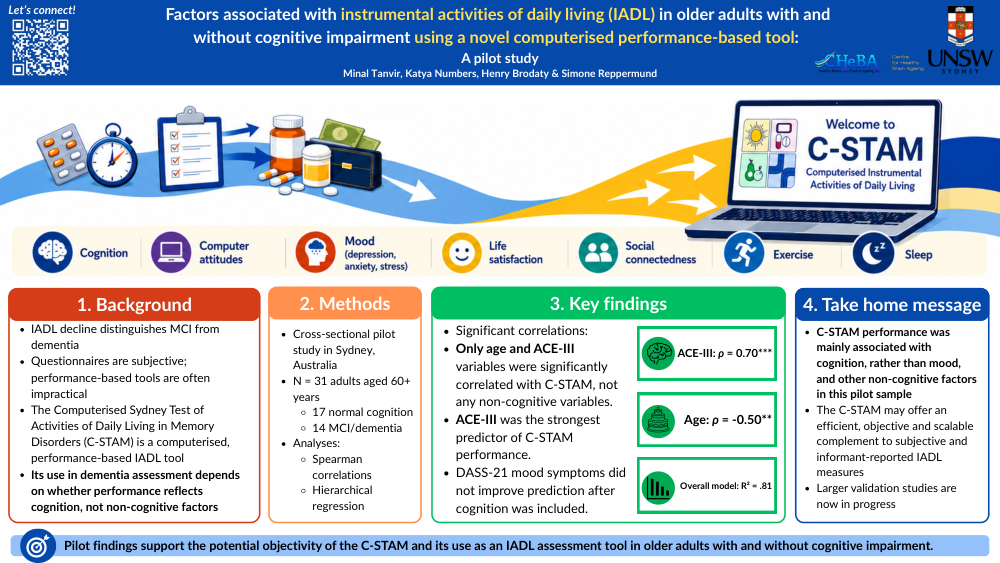
1. Background
- IADL decline distinguishes MCI from dementia
- Questionnaires are subjective;
performance-based tools are often impractical - The Computerised Sydney Test of Activities of Daily Living in Memory
Disorders (C-STAM) is a computerised, performance-based IADL tool - Its use in dementia assessment depends on whether performance reflects cognition, not non-cognitive factors
2. Methods
- Cross-sectional pilot study in Sydney.
Australia - N = 31 adults aged 60+ years
- 17 normal cognition
- 14 MCl/dementia
- Analyses:
- Spearman correlations
- Hierarchical regression
3. Key findings
- Significant correlations:
- Only age and ACE-III
variables were significantly correlated with C-STAM, not any non-cognitive variables. - ACE-I was the strongest predictor of C-STAM performance.
- DASS-21 mood symptoms did not improve prediction after cognition was included.
ACE-III: p = 0.70***
Age: p = -0.50**
Overall model: R' = 81
4. Take home message
- C-STAM performance was mainly associated with cognition, rather than mood, and other non-cognitive factors in this pilot sample
- The C-STAM may offer an efficient, objective and scalable complement to subjective and informant-reported IADL measures
- Larger validation studies are now in progress
Pilot findings support the potential objectivity of the C-STAM and its use as an IADL assessment tool in older adults with and without cognitive impairment.
Comments
Email is required but is not shown publicly.
Loading comments...