4,068 posters, 219 videos, 101 topics, 69 sessions, 14,365 authors, 6,128 institutions
ePostersLive by SciGen Technologies S.A. All rights reserved.
Alzheimer's Association International Conference 2026
July 12-15, 2026 | London, United Kingdom, and Online

6880
Systematic Review Of Neurodegenerative Disease Biomarkers In Very Late Onset Psychosis
Poster Presenter
Authors
Part of Topic
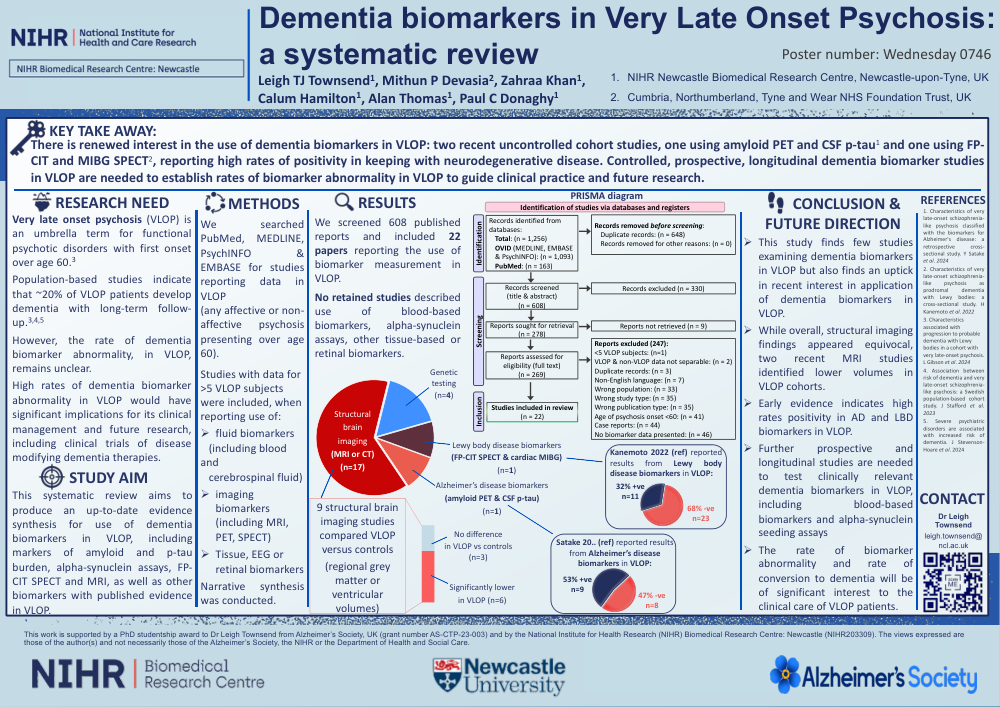
Dementia biomarkers in Very Late Onset Psychosis: a systematic review
KEY TAKE AWAY: There is renewed interest in the use of dementia biomarkers in VLOP: two recent uncontrolled cohort studies, one using amyloid PET and CSF p-tau and one using FP-CIT and MIBG SPECT, report high rates of positivity in keeping with neurodegenerative disease. Controlled, prospective, longitudinal dementia biomarker studies in VLOP are needed to establish rates of biomarker abnormality in VLOP to guide clinical practice and future research.
INTRODUCTION: Very late onset psychosis (VLOP) is an umbrella term for functional psychotic disorders with first onset over age 60. Population-based studies indicate that ~20% of VLOP patients develop dementia with long-term follow-up. However, the rate of dementia biomarker abnormality, in VLOP, remains unclear. High rates of dementia biomarker abnormality in VLOP would have significant implications for its clinical management and future research, including clinical trials of disease modifying dementia therapies.
STUDY AIM: This systematic review aims to produce an up-to-date evidence synthesis for use of dementia biomarkers in VLOP, including markers of amyloid and p-tau burden, alpha-synuclein assays, FP-CIT SPECT and MRI, as well as other biomarkers with published evidence in VLOP.
METHODS: We searched PubMed, MEDLINE, PsychINFO & EMBASE for studies reporting data in VLOP (any affective or non-affective psychosis presenting over age 60). Studies with data for >5 VLOP subjects were included, when reporting use of: - fluid biomarkers (including blood and cerebrospinal fluid) - imaging biomarkers (including MRI, PET, SPECT) - tissue, EEG or retinal biomarkers. Narrative synthesis was conducted.
RESULTS: We screened 608 published reports and included 22 papers reporting the use of biomarker measurement in VLOP. No retained studies described use of blood-based biomarkers, alpha-synuclein assays, other tissue-based or retinal biomarkers. 9 structural brain imaging studies compared VLOP versus controls (regional grey matter or ventricular volumes) with 6 reporting significantly lower grey matter regional volumes or ventricular volumes in VLOP, while 3 reported no significant differences between VLOP and controls. 1 study reported use of Lewy body disease biomarkers (FP-CIT SPECT & cardiac MIBG) in VLOP with positive results in 32% (11/34) and negative results in 68% (23/34). 1 study reported use of Alzheimer's disease biomarkers (amyloid PET & CSF p-tau) in VLOP with positive results in 53% (9/17) and negative results in 47% (8/17).
CONCLUSION & FUTURE DIRECTION: This study finds few studies examining dementia biomarkers in VLOP but also finds an uptick in recent interest in application of dementia biomarkers in VLOP. While overall, structural imaging findings appeared equivocal, two recent MRI studies identified lower volumes in VLOP cohorts. Early evidence indicates high rates positivity in AD and LBD biomarkers in VLOP. Further prospective and longitudinal studies are needed to test clinically relevant dementia biomarkers in VLOP, including blood-based biomarkers and alpha-synuclein seeding assays. The rate of biomarker abnormality and rate of conversion to dementia will be of significant interest to the clinical care of VLOP patients.
Comments
Email is required but is not shown publicly.
Loading comments...