Loading...

4,068 posters, 219 videos, 101 topics, 69 sessions, 14,365 authors, 6,128 institutions

ePostersLive by SciGen Technologies S.A. All rights reserved.

Alzheimer's Association International Conference 2026

July 12-15, 2026 | London, United Kingdom, and Online

Alzheimer's Association International Conference 2026 banner

6133

Altered Neurovascular Coupling Underlying Neuropsychiatric Symptoms In Elderly Patients With Long Covid
Part of Topic

Video

Title: Altered Neurovascular Coupling Underlying Neuropsychiatric Symptoms In Elderly Patients With Long Covid

Background:

•High Prevalence: Neuropsychiatric symptoms such as depression, anxiety, sleep disturbance, fatigue, and post-traumatic stress are highly prevalent in Long COVID.
•Clinical Parallels: These symptoms strongly resemble the early behavioral and affective changes observed in aging, vascular cognitive impairment, and Alzheimer’s disease.
•Knowledge Gap: Despite clinical significance, the neurovascular mechanisms underlying persistent neuropsychiatric symptoms in Long COVID remain poorly understood. 
 
Objectives:
1)To assess the link between Long COVID neuropsychiatric burden and neurovascular dysfunction.
2)To evaluate how these alterations contribute to vascular cognitive impairment.

Methods:

Participants

•65 individuals with Long COVID (age: 60.2 ± 11.0; 81.5% female) and 73 closely matched controls (age: 62.9 ± 8.2; 60.3% female).

Neuropsychiatric Symptoms

•Neuropsychiatric symptoms were measured using validated scales for insomnia, fatigue, post-traumatic stress, anxiety, and depression.

MRI acquisition

•3T MR scan (Signa Premier, GE Healthcare, Waukesha, WI) to assess resting-state functional MRI:
•Amplitude of Low-Frequency Fluctuations (ALFF) à Arterial spin labeling to quantify cerebral blood flow.
•Regional homogeneity (ReHo) à Neural synchronization.

Analyses

•T-tests, ANOVA, and multivariable analyses were conducted to compare the controls and Long COVID groups on ALFF, ReHo, and cognitive metrics.

Results:

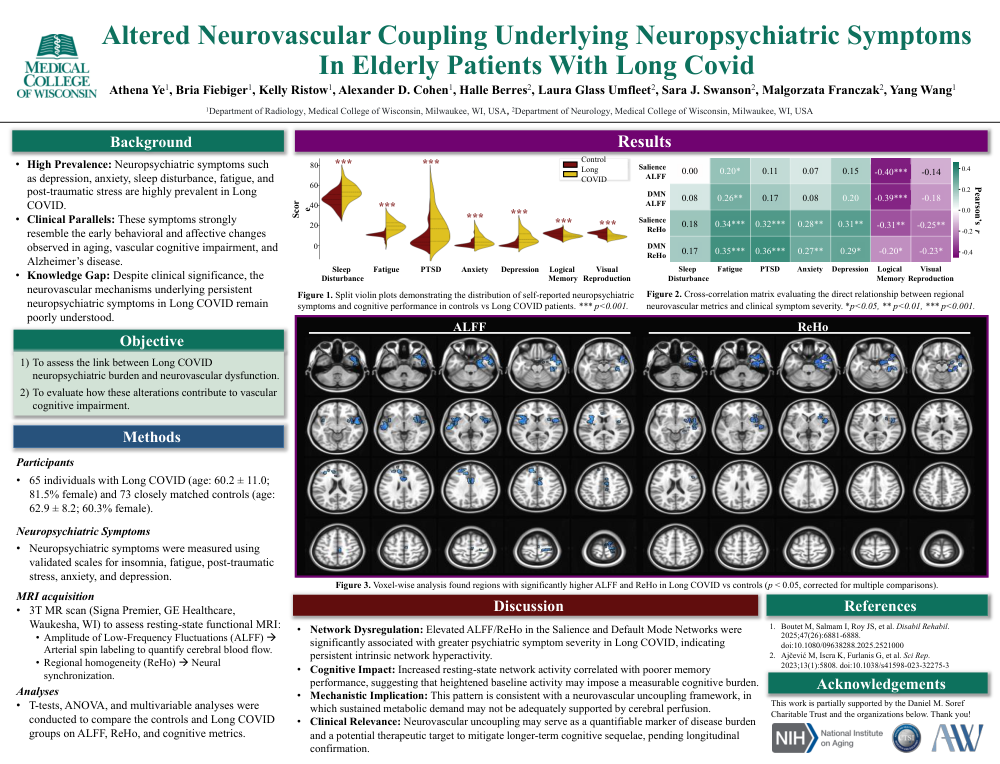
Figure 1. Split violin plots demonstrating the distribution of self-reported neuropsychiatric symptoms and cognitive performance in controls vs Long COVID patients. *** p<0.001.

Figure 2. Cross-correlation matrix evaluating the direct relationship between regional neurovascular metrics and clinical symptom severity. *p<0.05, ** p<0.01, *** p<0.001.

Figure 3. Voxel-wise analysis found regions with significantly higher ALFF and ReHo in Long COVID vs controls (p < 0.05, corrected for multiple comparisons).

Discussion:

•Network Dysregulation: Elevated ALFF/ReHo in the Salience and Default Mode Networks were significantly associated with greater psychiatric symptom severity in Long COVID, indicating persistent intrinsic network hyperactivity.
•Cognitive Impact: Increased resting-state network activity correlated with poorer memory performance, suggesting that heightened baseline activity may impose a measurable cognitive burden.
•Mechanistic Implication: This pattern is consistent with a neurovascular uncoupling framework, in which sustained metabolic demand may not be adequately supported by cerebral perfusion.
•Clinical Relevance: Neurovascular uncoupling may serve as a quantifiable marker of disease burden and a potential therapeutic target to mitigate longer-term cognitive sequelae, pending longitudinal confirmation.

References:

1.Boutet M, Salmam I, Roy JS, et al. DisabilRehabil. 2025;47(26):6881-6888. doi:10.1080/09638288.2025.2521000
2.Ajčević M, Iscra K, Furlanis G, et al. Sci Rep. 2023;13(1):5808. doi:10.1038/s41598-023-32275-3

Acknowledgements:

This work is partially supported by the Daniel M. Soref Charitable Trust and the organizations below (the NIA, AHW, and CTSI). Thank you!

Comments

Email is required but is not shown publicly.

Loading comments...

aaic2026 banner
Copyright © 2015-2026, ePostersLive® SciGen is a registered trademark of SciGen Technologies S.A. Patent pending.

This website and third-party tools we use rely on cookies for the best user experience. By selecting "I agree", you agree to cookie usage as described in our Privacy Policy.