4,068 posters, 219 videos, 101 topics, 69 sessions, 14,365 authors, 6,128 institutions
ePostersLive by SciGen Technologies S.A. All rights reserved.
Alzheimer's Association International Conference 2026
July 12-15, 2026 | London, United Kingdom, and Online

3216
Rates And Characteristics Of Amyloid Pet Negativity Among Patients Referred For New Alzheimer’s Disease Therapies
Part of Topic
BACKGROUND
Biomarker confirmation of brain amyloidosis is required for eligibility for new Alzheimer’s disease (AD) treatments (e.g., lecanemab and donanemab).
A proportion of individuals suspected clinically to have early symptomatic AD may ultimately be biomarker-negative and ineligible for anti-amyloid therapy.
Here, we characterized a cohort of patients referred for consideration of new AD treatments but determined to be amyloid PET negative.
METHODS
Retrospective chart review was completed for patients seen at a tertiary care AD Treatment Clinic.
Typical evaluations included:
A subset of patients had complementary plasma ptau217 or CSF ptau181/abeta42 ratio testing.
RESULTS
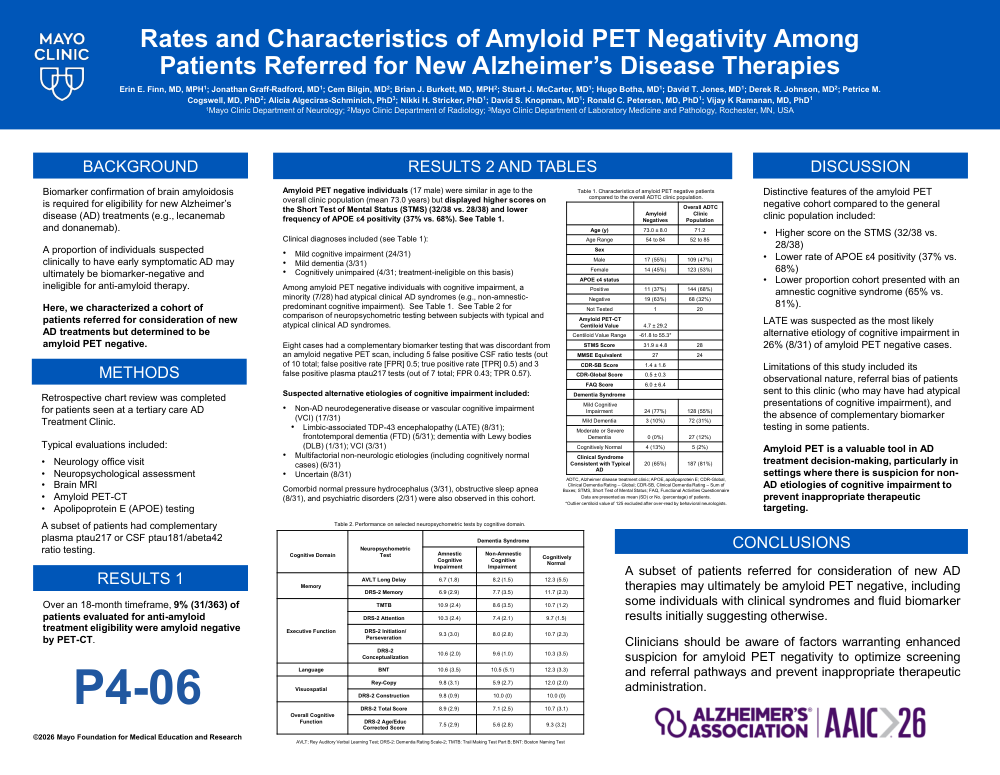
Over an 18-month timeframe, 9% (31/363) of patients evaluated for anti-amyloid treatment eligibility were amyloid negative by PET-CT.
Amyloid PET negative individuals (17 male) were similar in age to the overall clinic population (mean 73.0 years) but displayed higher scores on the Short Test of Mental Status (STMS) (32/38 vs. 28/38) and lower frequency of APOE ɛ4 positivity (37% vs. 68%). See Table 1.
Clinical diagnoses included (see Table 1):
Among amyloid PET negative individuals with cognitive impairment, a minority (7/28) had atypical clinical AD syndromes (e.g., non-amnestic-predominant cognitive impairment). See Table 1. See Table 2 for comparison of neuropsychometric testing between subjects with typical and atypical clinical AD syndromes.
Eight cases had a complementary biomarker testing that was discordant from an amyloid negative PET scan, including 5 false positive CSF ratio tests (out of 10 total; false positive rate [FPR] 0.5; true positive rate [TPR] 0.5) and 3 false positive plasma ptau217 tests (out of 7 total; FPR 0.43; TPR 0.57).
Suspected alternative etiologies of cognitive impairment included:
Comorbid normal pressure hydrocephalus (3/31), obstructive sleep apnea (8/31), and psychiatric disorders (2/31) were also observed in this cohort.
DISCUSSION
Distinctive features of the amyloid PET negative cohort compared to the general clinic population included:
LATE was suspected as the most likely alternative etiology of cognitive impairment in 26% (8/31) of amyloid PET negative cases.
Limitations of this study included its observational nature, referral bias of patients sent to this clinic (who may have had atypical presentations of cognitive impairment), and the absence of complementary biomarker testing in some patients.
Amyloid PET is a valuable tool in AD treatment decision-making, particularly in settings where there is suspicion for non-AD etiologies of cognitive impairment to prevent inappropriate therapeutic targeting.
CONCLUSIONS
A subset of patients referred for consideration of new AD therapies may ultimately be amyloid PET negative, including some individuals with clinical syndromes and fluid biomarker results initially suggesting otherwise.
Clinicians should be aware of factors warranting enhanced suspicion for amyloid PET negativity to optimize screening and referral pathways and prevent inappropriate therapeutic administration.
Comments
Email is required but is not shown publicly.
Loading comments...