4,068 posters, 219 videos, 101 topics, 69 sessions, 14,365 authors, 6,128 institutions
ePostersLive by SciGen Technologies S.A. All rights reserved.
Alzheimer's Association International Conference 2026
July 12-15, 2026 | London, United Kingdom, and Online

874
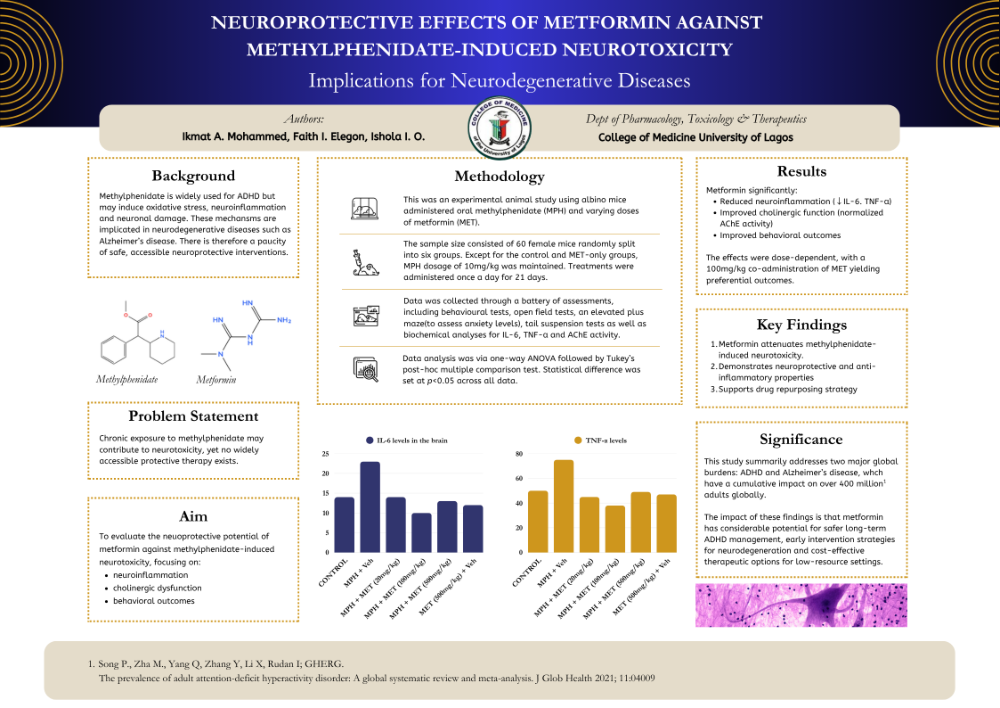
Neuroprotective Effects Of Metformin On Methylphenidate-induced Neuroinflammation And Cholinergic Dysfunction In Albino Mice
Poster Presenter
Authors
Affiliations
Part of Topic
Video
Methylphenidate (MPH), a first-line psychostimulant for attention deficit hyperactivity disorder (ADHD), has been linked to neuroinflammation and cholinergic dysregulation. Metformin (MET), an anti-diabetic agent with anti-inflammatory properties, is a potential neuroprotective candidate. This study investigated whether MET could attenuate MPH-induced neuroinflammatory and behavioral changes in mice. Sixty female albino mice were randomized into six groups (n=10). Group 1 received normal saline (0.2 mL), Group 2 received MPH (10 mg/kg), and Groups 3–5 received MET (20, 100, or 500 mg/kg) plus MPH (10 mg/kg). Treatments were administered orally. Neuroinflammation was assessed by quantifying brain interleukin-6 (IL-6) and tumor necrosis factor-alpha (TNF-α). Behavioral alterations were evaluated using the Open Field Test (OFT), Elevated Plus Maze (EPM), and Tail Suspension Test (TST). Acetylcholinesterase (AChE) activity was measured in the cortex, striatum, and hippocampus. MPH administration significantly increased IL-6 and TNF-α levels compared to controls, while MET co-treatment dose-dependently reduced these elevations. MPH also significantly increased AChE activity, indicative of cholinergic dysfunction. Unexpectedly, MET at 100 mg/kg combined with MPH produced a synergistic rise in AChE activity across all brain regions studied. Behavioral assays reflected corresponding neurochemical changes. MET exhibits dose-dependent neuroprotective effects against MPH-induced neuroinflammation. However, its co-administration with MPH may exacerbate cholinergic dysfunction through elevated AChE activity. These findings highlight the therapeutic potential and risks of MET as an adjunct to MPH, warranting further studies to clarify long-term cognitive outcomes.
Comments
Email is required but is not shown publicly.
Loading comments...