4,068 posters, 219 videos, 101 topics, 69 sessions, 14,365 authors, 6,128 institutions
ePostersLive by SciGen Technologies S.A. All rights reserved.
Alzheimer's Association International Conference 2026
July 12-15, 2026 | London, United Kingdom, and Online

9954
Integrating Lifestyle, Clinical Features, And Neuroinflammation In Alzheimer’s Disease And Related Disorders
Poster Presenter
Authors
Part of Topic
Integrating Lifestyle, Clinical Features, and Neuroinflammation in Alzheimer’s disease and Related Disorders
Bruna Seixas-Lima1, Pedro Rosa-Neto2, Cheryl Wellington3, Jennifer G. Cooper3, Durjoy Lahiri, MD, DM4, Tyler Roncero1, Dvir Dori1, Howard Chertkow1, and the CCNA study group.
1Baycrest Academy for Research and Education, Toronto, ON, Canada, 2McGill University, Montreal, ON, Canada, 3University of British Columbia, Vancouver, BC, Canada, 4Medicine, Queen's University, Kingston, ON, Canada
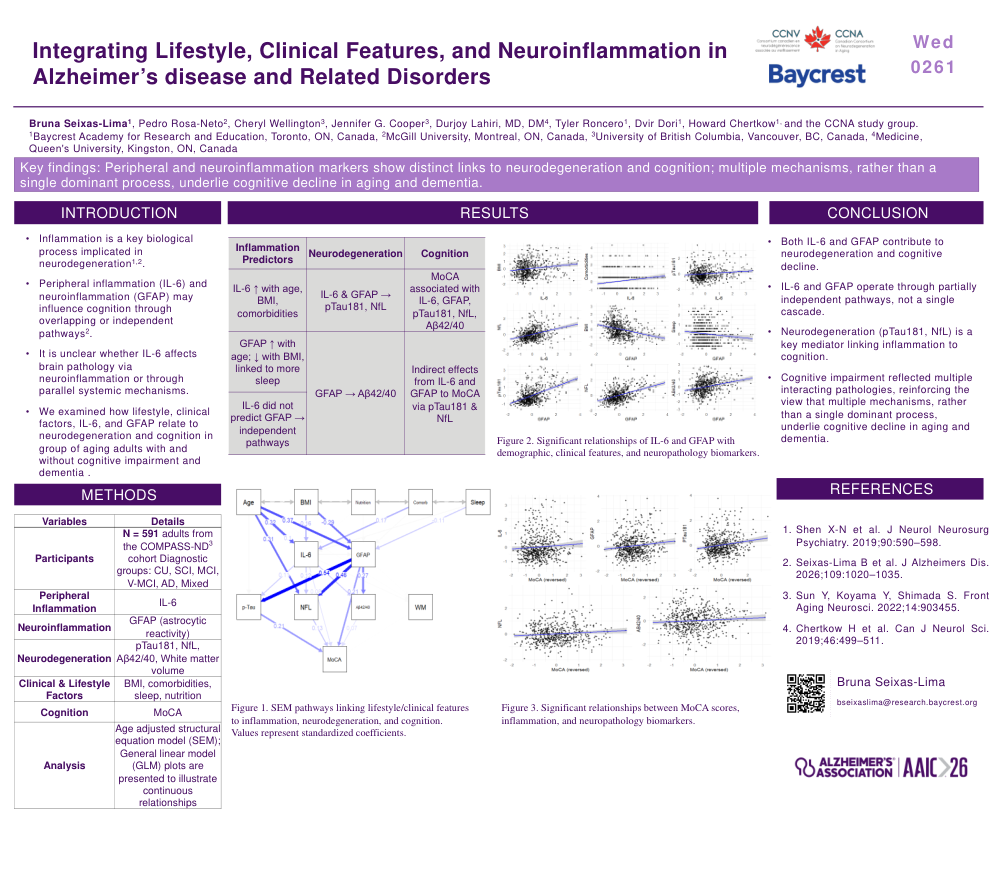
Key findings: Peripheral and neuroinflammation markers show distinct links to neurodegeneration and cognition; multiple mechanisms, rather than a single dominant process, underlie cognitive decline in aging and dementia.
Introduction:
|
Section |
Details |
|
Participants |
N = 591 adults from the COMPASS‑ND3 cohort Diagnostic groups: CU, SCI, MCI, V‑MCI, AD, Mixed |
|
Peripheral Inflammation |
IL‑6 |
|
Neuroinflammation |
GFAP (astrocytic reactivity) |
|
Neurodegeneration |
pTau181, NfL, Aβ42/40, White matter volume |
|
Clinical & Lifestyle Factors |
BMI, comorbidities, sleep, nutrition |
|
Cognition |
MoCA |
|
Analysis |
Age adjusted structural equation model (SEM); General linear model (GLM) plots are presented to illustrate continuous relationships |
|
Inflammation Predictors |
Neurodegeneration |
Cognition |
|
IL‑6 ↑ with age, BMI, comorbidities |
IL‑6 & GFAP → pTau181, NfL |
MoCA associated with IL‑6, GFAP, pTau181, NfL, Aβ42/40 |
|
GFAP ↑ with age; ↓ with BMI, linked to more sleep |
GFAP → Aβ42/40 |
Indirect effects from IL‑6 and GFAP to MoCA via pTau181 & NfL |
|
IL‑6 did not predict GFAP → independent pathways |
Comments
Email is required but is not shown publicly.
Loading comments...