4,068 posters, 219 videos, 101 topics, 69 sessions, 14,365 authors, 6,128 institutions
ePostersLive by SciGen Technologies S.A. All rights reserved.
Alzheimer's Association International Conference 2026
July 12-15, 2026 | London, United Kingdom, and Online

10022
Sex Differences In Susceptibility To Synapse Loss And Cognitive Decline After Immune Challenge In A Mouse Model Of Alzheimer’s Disease
Poster Presenter
Authors
Affiliations
Part of Topic
INTRODUCTION
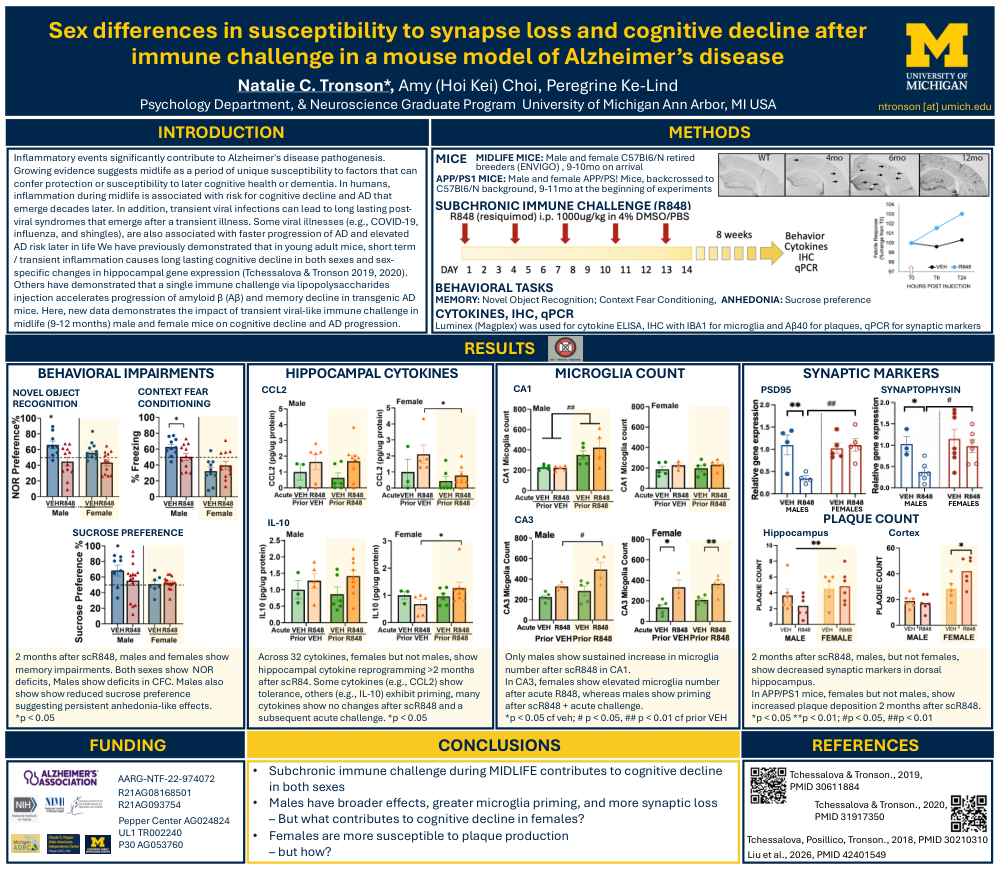
Inflammatory events significantly contribute to Alzheimer's disease pathogenesis. Growing evidence suggests midlife as a period of unique susceptibility to factors that can confer protection or susceptibility to later cognitive health or dementia. In humans, inflammation during midlife is associated with risk for cognitive decline and AD that emerge decades later. In addition, transient viral infections can lead to long lasting post-viral syndromes that emerge after a transient illness. Some viral illnesses (e.g., COVID-19, influenza, and shingles), are also associated with faster progression of AD and elevated AD risk later in life We have previously demonstrated that in young adult mice, short term / transient inflammation causes long lasting cognitive decline in both sexes and sex-specific changes in hippocampal gene expression (Tchessalova & Tronson 2019, 2020). Others have demonstrated that a single immune challenge via lipopolysaccharides injection accelerates progression of amyloid β (Aβ) and memory decline in transgenic AD mice. Here, new data demonstrates the impact of transient viral-like immune challenge in midlife (9-12 months) male and female mice on cognitive decline and AD progression.
Comments
Email is required but is not shown publicly.
Loading comments...