4,068 posters, 219 videos, 101 topics, 69 sessions, 14,365 authors, 6,128 institutions
ePostersLive by SciGen Technologies S.A. All rights reserved.
Alzheimer's Association International Conference 2026
July 12-15, 2026 | London, United Kingdom, and Online

2801
Adiponectin And Biomarker-confirmed Alzheimer’S Disease In A Tertiary Memory Clinic: A Cross-sectional Study
Poster Presenter
Authors
Part of Topic
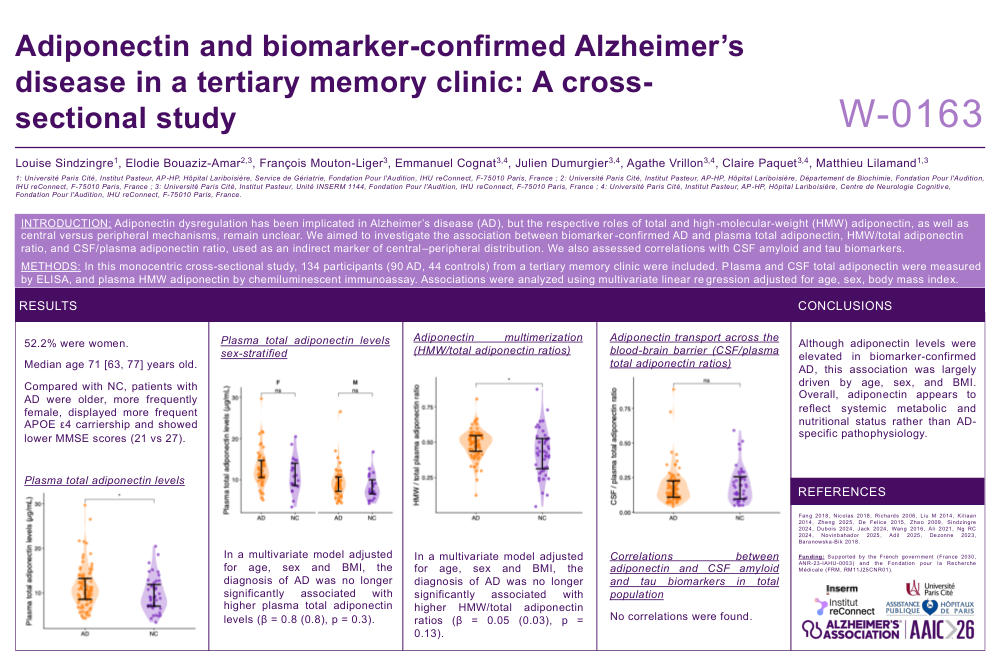
Background: Adiponectin dysregulation has been implicated in Alzheimer’s disease (AD), but the respective roles of total and high-molecular-weight (HMW) adiponectin, as well as central versus peripheral mechanisms, remain unclear. We aimed to investigate the association between biomarker-confirmed AD and plasma total adiponectin, HMW/total adiponectin ratio, and CSF/plasma adiponectin ratio, a proxy of blood–brain barrier transport. We also assessed correlations with CSF amyloid and tau biomarkers.
Methods: In this monocentric cross-sectional study, 134 participants (90 AD, 44 controls) from a tertiary memory clinic were included. Plasma and CSF total adiponectin were measured by ELISA, and plasma HMW adiponectin by chemiluminescent immunoassay. Associations were analyzed using multivariate linear regression adjusted for age, sex, and body mass index.
Results: Plasma total and HMW adiponectin levels were higher in AD than in controls (p<0.05 and p<0.005, respectively), but the association with was no longer significant after adjustment. The HMW/total ratio was higher in AD (0.50 vs. 0.43, p=0.02), whereas the CSF/plasma ratio did not differ between groups (p=0.69). No correlations were found between adiponectin (plasma total and HMW, and CSF total) and CSF amyloid or tau biomarkers.
Conclusion: Elevated adiponectin levels in AD are largely explained by demographic and metabolic factors. However, altered adiponectin multimerization may reflect disease-related metabolic changes.
Comments
Email is required but is not shown publicly.
Loading comments...