4,068 posters, 219 videos, 101 topics, 69 sessions, 14,365 authors, 6,128 institutions
ePostersLive by SciGen Technologies S.A. All rights reserved.
Alzheimer's Association International Conference 2026
July 12-15, 2026 | London, United Kingdom, and Online

3752
Repurposing Of Dual-target Ligands For Acetylcholinesterase And a7 Nicotinic Receptors In Alzheimer’s Disease
Poster Presenter
Authors
Part of Topic
INTRODUCTION
Alzheimer's disease (AD) is a multifactorial neurodegenerative disorder driven by cholinergic dysfunction.
Current FDA-approved acetylcholinesterase (AChE) inhibitors provide only symptomatic benefit and suffer from dose-dependent adverse effects.
The Solution: Dual targeting of AChE and the pro-cognitive a7 nicotinic acetylcholine receptor (a7 nAChR) enables broader, more balanced cholinergic engagement.
METHODS
Step 1: Target Preparation
* Retrieved high-resolution crystal structures for AChE (PDB ID: 4EY7) and a7 nAChR (PDB ID: 4F9W). Binding sites predicted via CB-Dock2.
Step 2: Ligand Repurposing
Identified 15 donepezil analogues via SwissSimilarity using E3FP-based searches of ChEMBL approved drugs.
Step 3: Docking & Profiling Pipeline
Prepared proteins (water removal, Kollman charges, PD8QT format via AutoDock Tools-1.5.7). Energy- minimized via Avogadro and docked using AutoDock Vina. Binding interactions visualized in Discovery Studio; ADME properties assessed via ADMETlab 2.0.
RESULTS
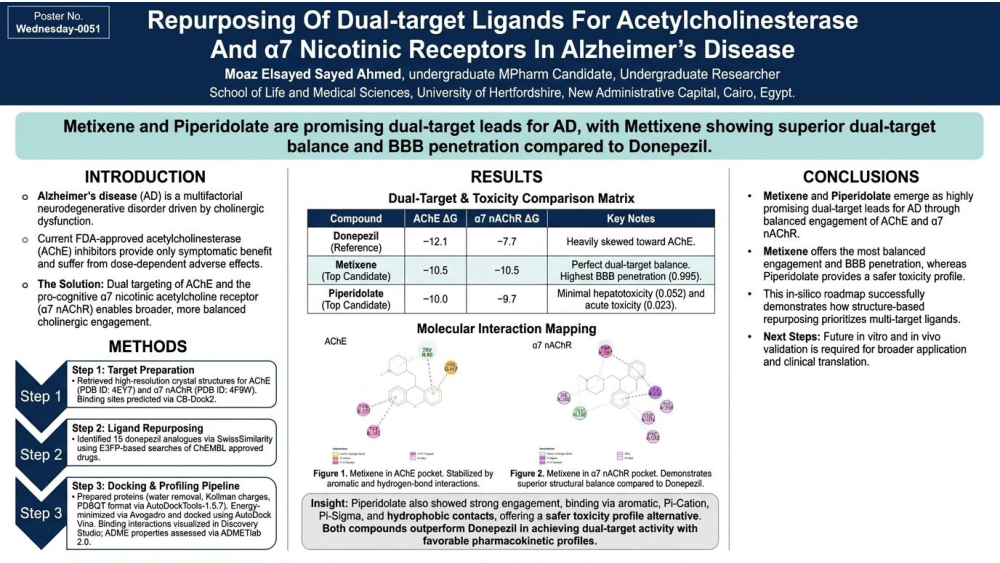
Figure 1. Metixene in AChE pocket. Stabilized by aromatic and hydrogen-bond interactions.
Figure 2. Metixene in a7 nAChR pocket. Demonstrates superior structural balance compared to Donepezil.
Dual-Target & Toxicity Comparison Matrix
CONCLUSIONS
Metixene and Piperidolate emerge as highly promising dual-target leads for AD through balanced engagement of AChE and a7nAChR.
Metixene offers the most balanced engagement and BBB penetration, whereas Piperidolate provides a safer toxicity profile.
This in-silico roadmap successfully demonstrates how structure-based repurposing prioritizes multi-target ligands.
Next Steps: Future in vitro and in vivo validation is required for broader application and clinical translation.
Comments
Email is required but is not shown publicly.
Loading comments...