4,068 posters, 219 videos, 101 topics, 69 sessions, 14,365 authors, 6,128 institutions
ePostersLive by SciGen Technologies S.A. All rights reserved.
Alzheimer's Association International Conference 2026
July 12-15, 2026 | London, United Kingdom, and Online

2644
Masupirdine (A Pure 5-HT6 Antagonist): Updates From The Phase-3 Clinical Trial Program Targeting Agitation In Alzheimer's Dementia
Poster Presenter
Part of Topic
Background:
Alzheimer's disease (AD) is a neurodegenerative disorder with widespread global prevalence. The clinical phase of Alzheimer’s disease is characterized by a spectrum of neuropsychiatric symptoms. These symptoms affect most individuals during the disease course, with agitation particularly contributing to early institutionalization, increased morbidity, and functional impairment. Current pharmacological options for managing agitation are limited, and the associated side effects are substantial, underscoring the urgent need for effective and safe treatments.
An imbalance in cortical control may underlie agitation symptoms. The serotonergic system plays a critical role in behavioral regulation. Blocking presynaptic 5-HT6 receptors reduces the inhibitory influence exerted by GABAergic interneurons and enhances monoaminergic neurotransmission. This mechanism may restore cortical balance and, consequently, alleviate agitation.
Methods:
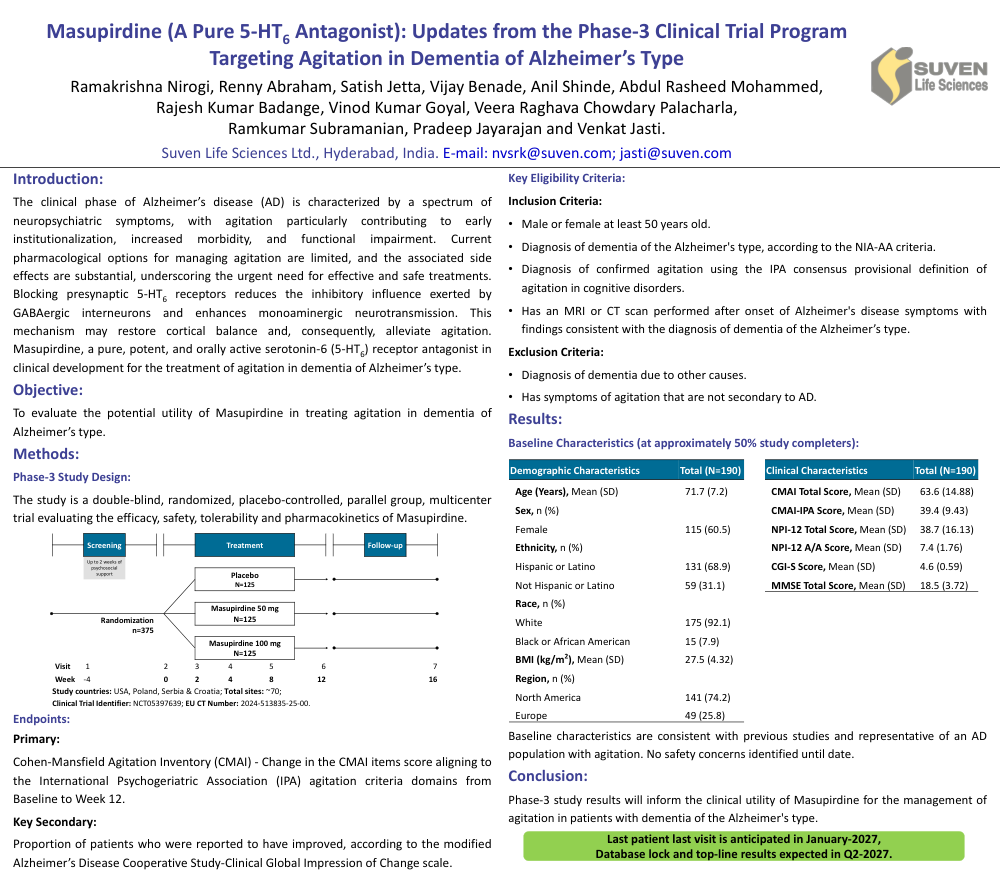
Masupirdine, a pure, potent, and selective 5-HT6 receptor antagonist, was evaluated for its effects on brain neurotransmitter modulation using the microdialysis technique in rats. It was also assessed in animal models of aggression. Additionally, subgroup analysis from a Phase-2 study targeting cognition in AD patients suggested that Masupirdine significantly reduces agitation associated with AD, warranting further investigation. Accordingly, a Phase-3 global study (NCT05397639; EudraCT: 2021-003405-22) evaluating Masupirdine for the treatment of agitation in patients with Alzheimer’s dementia is currently underway.
Results:
Signature neurotransmitter modulation supports the reduction of aggressive behaviors findings in animal models. Analyses from the Neuropsychiatric Inventory 12-item (NPI-12) scale used in the Phase-2 clinical trial supports the beneficial effects of Masupirdine on agitation. Furthermore, Masupirdine was found to be safe and well tolerated in AD patients. A global Phase-3, double-blind, randomized, placebo-controlled study to establish the efficacy, safety, tolerability, and pharmacokinetics of Masupirdine in patients with agitation in dementia of the Alzheimer’s type (NCT05397639; EudraCT: 2021‐003405‐22) is in progress. The demographic and baseline characteristics of the patients enrolled until date are consistent across regions and representative of the typical AD population experiencing agitation.
Conclusion:
Results from the Phase-3 study will inform the utility of Masupirdine in treating agitation in Alzheimer's dementia. Approximately 55% of the total study population have been enrolled.
Comments
Email is required but is not shown publicly.
Loading comments...