4,068 posters, 219 videos, 101 topics, 69 sessions, 14,365 authors, 6,128 institutions
ePostersLive by SciGen Technologies S.A. All rights reserved.
Alzheimer's Association International Conference 2026
July 12-15, 2026 | London, United Kingdom, and Online

9674
Representative Eligibility For UK Dementia Trials: Focus On Comorbid Chronic Conditions
Poster Presenter
Authors
Part of Topic
Background
The prevalence of multiple chronic conditions increases with age, meaning that most people who develop dementia have additional diagnoses. Comorbidities affect the clinical care of people with dementia, including their response to, and tolerance of, pharmacological treatment and the interpretation of blood-based biomarkers.
This study aimed to characterise the inclusion and exclusion of comorbidities in active UK dementia trials.
Methods
We searched the National Institute for Health and Care Research (NIHR) Clinical Research Network's Open Data Platform, International Standard Randomised Controlled Trial Number (ISRCTN) registry, and ClinicalTrials.gov registration database and included all active UK trials focusing on dementia of any subtype. Trials focusing only on mild cognitive impairment, preclinical dementia, delirium, or dementia prevention were excluded.
Data on the diagnosis, type of intervention, inclusion and exclusion criteria, and projected sample size were extracted from these registers, with additional information taken from study protocols where available.
Results
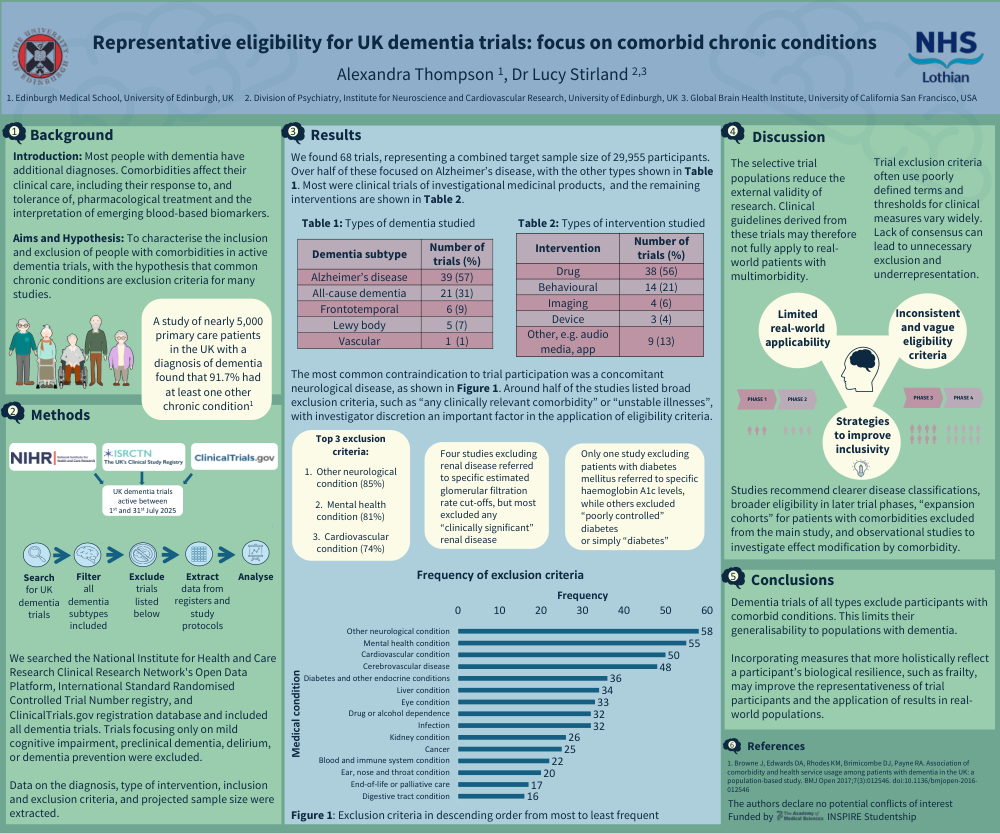
We found 68 trials, of which 38 (56%) examined drugs. The remaining interventions were behavioural (14), imaging (4), device (3), and other, such as apps (9). Dementia subtypes studied were Alzheimer’s (39 trials), all-cause dementia (21), frontotemporal (6), Lewy body (5), and vascular dementia (1). The trials represented a combined target sample size of 29,955 participants.
The most common exclusion criterion was other neurological conditions, seen in 58 (85.3%) trials. Other exclusion conditions are listed in Table 1.
Around half of the studies listed broad exclusion criteria, such as “any significant disease” or “clinically relevant comorbidity”, with investigator discretion an important factor in the application of eligibility criteria.
Conclusions
Dementia trials of all types exclude participants with comorbid conditions. This limits their generalisability to populations with dementia.
Incorporating measures that more holistically reflect a participant’s biological resilience, such as frailty, may improve the representativeness of trial participants and the application of results in real-world populations.
Comments
Email is required but is not shown publicly.
Loading comments...