4,068 posters, 219 videos, 101 topics, 69 sessions, 14,365 authors, 6,128 institutions
ePostersLive by SciGen Technologies S.A. All rights reserved.
Alzheimer's Association International Conference 2026
July 12-15, 2026 | London, United Kingdom, and Online

5540
Fear Of Dementia In Chinese Adults: Lived Experiences, Coping Strategies, And Person-centered Intervention Needs
Poster Presenter
Authors
Huohuo Dai, Anke Versluis, Ruijie Xu, Wilco Achterberg, Hongxia Shen, Niels Chavannes, Jiska Aardoom
Affiliations
National eHealth Living Lab, Department of Public Health and Primary Care, Leiden University Medical Center, Affiliated Drum Tower Hospital, Medical School of Nanjing University, Department of Public Health and Primary Care, Leiden University Medical Center, School of Nursing, Guangzhou Medical University
Part of Topic
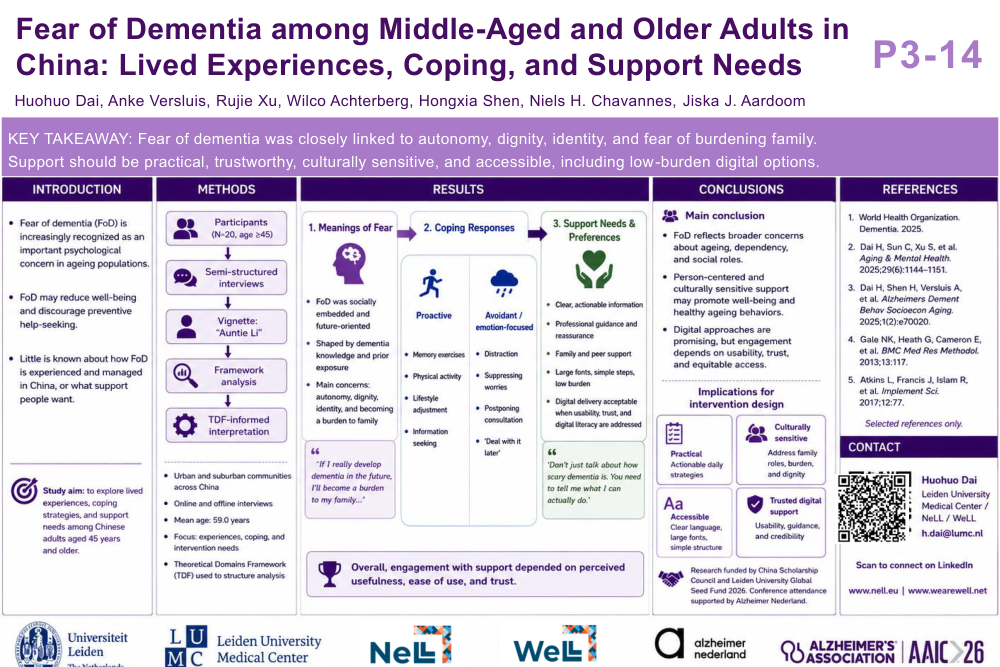
Background: Fear of dementia is increasingly recognized as an important psychological concern in ageing populations and may contribute to reduced well-being, avoidance of preventive health behaviors, and even higher amyloid burden. However, little is known about how fear of dementia is experienced and managed in non-Western settings, and individuals’ needs for potential support are poorly understood.
Methods: This qualitative study explored how middle-aged and older adults experience fear of dementia, cope with related concerns, and their needs regarding potential interventions. Semi-structured interviews were conducted with adults aged ≥45 years in China. A fictional third-person vignette was used in the interview guide to facilitate discussion of dementia-related concerns. Data were analyzed using framework analysis informed by the Theoretical Domains Framework.
Results: Twenty participants described fear of dementia as a socially embedded and future-oriented experience shaped by dementia-related knowledge, exposure, family roles, and concerns about autonomy, dignity, and burdening others. Coping strategies ranged from proactive self-management to avoidance and distraction, often supported by family members or peers. Participants consistently expressed a need for practical information, reassurance, and actionable strategies to maintain cognitive health. Preferred interventions were accessible, low-burden, and professionally guided. Although digital delivery was generally viewed as acceptable, engagement was perceived to depend on usability, trust, and digital literacy.
Conclusions: Fear of dementia among Chinese middle-aged and older adults reflects broader concerns about ageing, dependency, and social roles in later life. Person-centered, co-created, and culturally sensitive support approaches may help promote psychological well-being and engagement with healthy ageing behaviors.
Keywords: fear; dementia; digital inclusion; qualitative research; person-centered care; cognitive ageing
Comments
Email is required but is not shown publicly.
Loading comments...