4,068 posters, 219 videos, 101 topics, 69 sessions, 14,365 authors, 6,128 institutions
ePostersLive by SciGen Technologies S.A. All rights reserved.
Alzheimer's Association International Conference 2026
July 12-15, 2026 | London, United Kingdom, and Online

1552
Dementia Care In Nigeria: Knowledge, Attitudes, And Referral Practices Among Primary Health Care Workers
Poster Presenter
Authors
Part of Topic
Video
Dementia Care in Nigeria: Knowledge, Attitudes, and Referral Practices among Primary Health Care Workers
Proposed AAIC Track: Public Health, Health Services, and Health Systems
Background
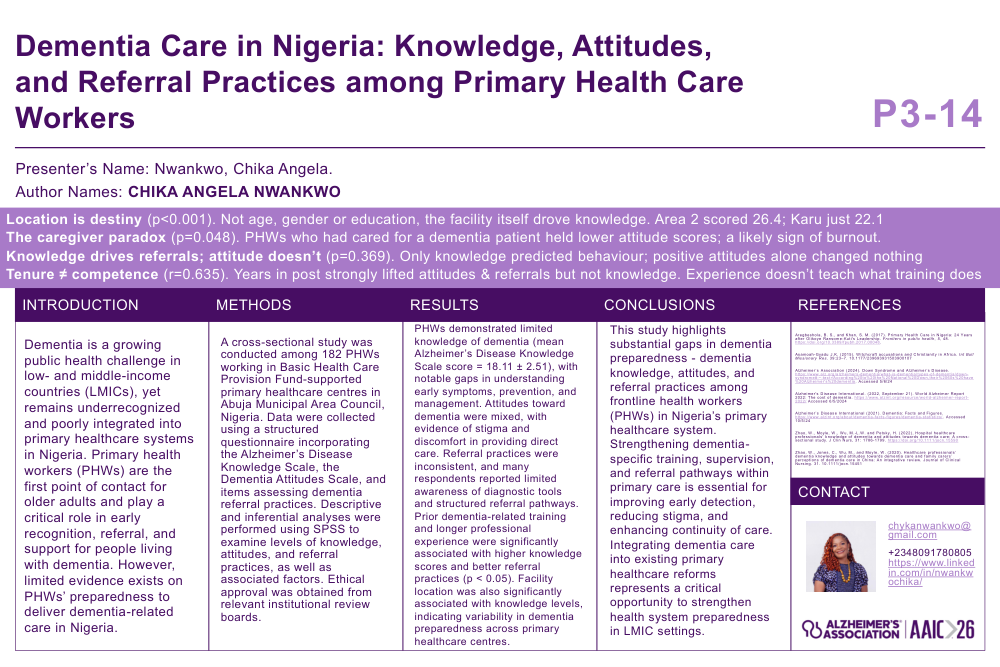
Dementia is a growing public health challenge in low- and middle-income countries (LMICs), yet remains underrecognized and poorly integrated into primary healthcare systems in Nigeria. Primary health workers (PHWs) are the first point of contact for older adults and play a critical role in early recognition, referral, and support for people living with dementia. However, limited evidence exists on PHWs’ preparedness to deliver dementia-related care in Nigeria.
Methods
A cross-sectional study was conducted among 182 PHWs working in Basic Health Care Provision Fund-supported primary healthcare centres in Abuja Municipal Area Council, Nigeria. Data were collected using a structured questionnaire incorporating the Alzheimer’s Disease Knowledge Scale, the Dementia Attitudes Scale, and items assessing dementia referral practices. Descriptive and inferential analyses were performed using SPSS to examine levels of knowledge, attitudes, and referral practices, as well as associated factors. Ethical approval was obtained from relevant institutional review boards.
Results
PHWs demonstrated limited knowledge of dementia (mean Alzheimer’s Disease Knowledge Scale score = 18.11 ± 2.51), with notable gaps in understanding early symptoms, prevention, and management. Attitudes toward dementia were mixed, with evidence of stigma and discomfort in providing direct care. Referral practices were inconsistent, and many respondents reported limited awareness of diagnostic tools and structured referral pathways. Prior dementia-related training and longer professional experience were significantly associated with higher knowledge scores and better referral practices (p < 0.05). Facility location was also significantly associated with knowledge levels, indicating variability in dementia preparedness across primary healthcare centres.
Conclusions
Our findings reveal critical gaps in dementia preparedness among frontline health workers, underscoring an urgent need to integrate dementia training and referral pathways into Nigeria’s primary healthcare reforms. Nigeria's primary health workers are willing and foundationally aware, but under-equipped. Knowledge gaps and broken referral pathways — not poor attitudes — are the real barrier. Closing them through training, tools and clear pathways is essential to integrate dementia care into Nigeria's primary health system before the burden triples.
Comments
Email is required but is not shown publicly.
Loading comments...