4,068 posters, 219 videos, 101 topics, 69 sessions, 14,365 authors, 6,128 institutions
ePostersLive by SciGen Technologies S.A. All rights reserved.
Alzheimer's Association International Conference 2026
July 12-15, 2026 | London, United Kingdom, and Online

339
Youth Sports To Alzheimer’S Prevention: Integrating Ola Findings With Exercise-related Brain Mechanisms
Poster Presenter
Authors
Part of Topic
Abstract:
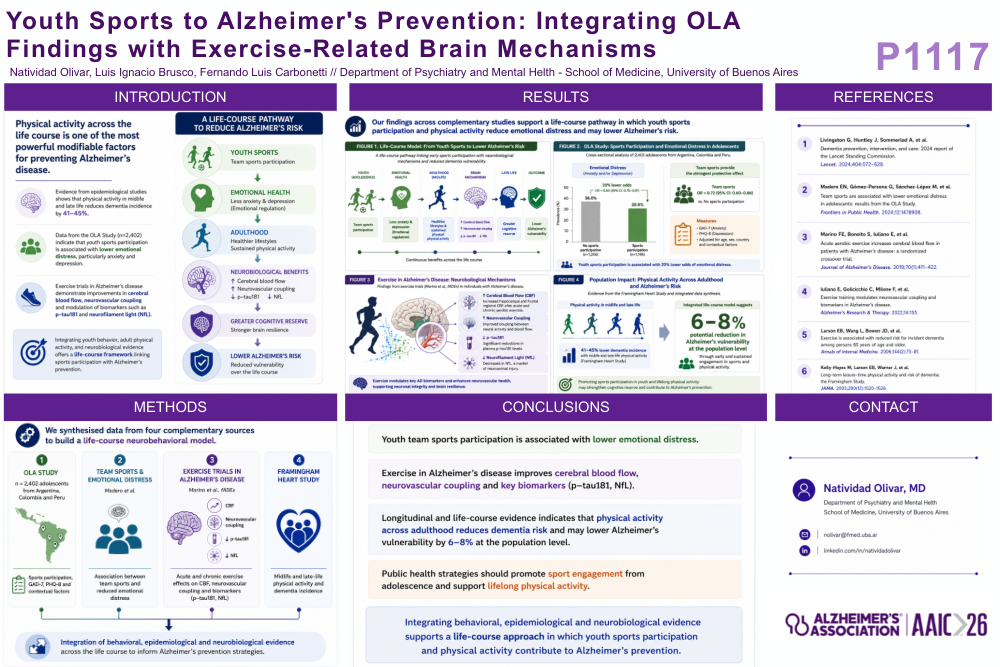
Background: Physical activity is one of the most powerful modifiable protective factors across the lifespan for reducing dementia risk. Evidence from the Framingham Heart Study shows that midlife and late-life physical activity lowers dementia incidence by 41-45%, while exercise trials in Alzheimer’s disease demonstrate improvements in cerebral blood flow (CBF), neurovascular coupling, and modulation of biomarkers such as Aβ42/40, p- tau181, and neurofilament light (NfL).At the opposite end of the life course, data from the OLA Study (n = 2,402) indicate that youth sports participation is associated with significantly lower emotional distress, particularly anxiety and depression (OR = 0.80).
Team-based sports provide the strongest protective e#ect, suggesting early contributions to emotional regulation and cognitive resilience. Emotional distress, sedentarism, and sleep instability—highly prevalent in youth—are recognized factors influencing cognitive aging trajectories. Integrating youth behavior, midlife epidemiology, and neurobiological evidence o#ers a life-course framework linking sports participation with Alzheimer’s prevention.
Methods: This study synthesizes four complementary data sources:
1. OLA Study: sports participation, anxiety/depression (GAD-7, PHQ-8), and contextual factors among adolescents in Argentina, Colombia, and Peru.
2. Madero et al.: associations between team sports and reduced emotional distress.
3. Exercise trials in Alzheimer’s disease (Marino; flADex): acute and chronic exercise effects on CBF, neurovascular coupling, and biomarkers.
4. Framingham Heart Study: associations of midlife and late-life physical activity with dementia incidence.
A life-course neurobehavioral model was constructed linking emotional health in youth,
adult physical activity, and AD-related neurobiological mechanisms.
Results: Sports participation in youth was associated with 20% lower odds of emotional distress, with team sports showing the strongest benefit. Exercise studies in Alzheimer’s disease demonstrated increased hippocampal and frontal CBF, improved neurovascular coupling, and modulation of p-tau181 and NfL following aerobic exercise. Population-based evidence indicates substantial dementia risk reduction when physical activity is maintained into midlife. Integrating these datasets suggests that early and sustained engagement in sports and physical activity may reduce Alzheimer’s vulnerability by 6-8% at the population level.
Conclusion: Youth sports participation, adult physical activity, and exercise-related neurobiological changes converge into a coherent life-course preventive pathway for Alzheimer’s disease. Promoting sports engagement across developmental stages may strengthen cognitive reserve, enhance neurovascular health, and contribute to long-term prevention strategies.
Comments
Email is required but is not shown publicly.
Loading comments...