4,068 posters, 219 videos, 101 topics, 69 sessions, 14,365 authors, 6,128 institutions
ePostersLive by SciGen Technologies S.A. All rights reserved.
Alzheimer's Association International Conference 2026
July 12-15, 2026 | London, United Kingdom, and Online

10380
Sociodemographic And Gender-based Analysis Of Dementia Patients At Santa Casa De Belo Horizonte
Poster Presenter
Authors
Rafael Tavares, Igor Oliveira, Cintia Hatasa, Thiago Ibiapino, Caio Cobucci, Luiza Oliveira, Antonio Neto
Affiliations
null,
Part of Topic
Background:
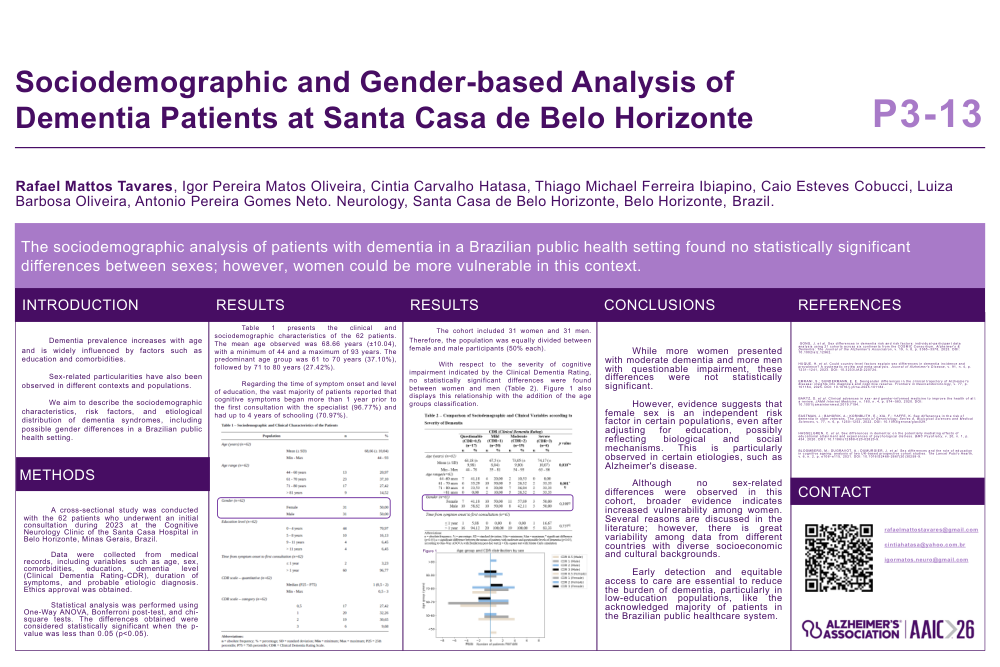
Dementia prevalence increases with age and is influenced by factors such as educationand comorbidities.We aim to describe the sociodemographic characteristics, risk factors, and etiological distribution of dementia syndromes, including possible gender differences.
Methods:
A cross-sectional study was conducted with 62 patients from a cognitive neurology center. Data were collected from medical records from 2023, including variables such as age, sex,comorbidities, education, dementia level (CDR), symptom duration, and diagnosis. Statistical analysis was performed using One-Way ANOVA, Bonferroni post-test, and chi-square tests (p < 0.05).
Results:
The sample included 31 women and 31 men. The mean age was 68.66 years (±10.04), rangingfrom 44 to 93 years. The most prevalent age group was 61-70 years (37.10%), followed by 71-80 years (27.42%). Most patients (70.97%) had only 1 to 4 years of schooling. Regarding symptom duration, 96.77% reported onset more than one year before the first specialist consultation.
Conclusion:
While more women presented with moderate dementia and more men with questionable impairment, these differences were not statistically significant. However, evidence suggests female sex is an independent risk factor,even after adjusting for education, possibly reflecting biological and social mechanisms. Although no sex-based differences were observed in this cohort, broader evidence indicates increased vulnerability among women. Early detection and equitable access to care areessential, particularly in low-education populations, to reduce the burden of dementia.
Comments
Email is required but is not shown publicly.
Loading comments...