4,068 posters, 219 videos, 101 topics, 69 sessions, 14,365 authors, 6,128 institutions
ePostersLive by SciGen Technologies S.A. All rights reserved.
Alzheimer's Association International Conference 2026
July 12-15, 2026 | London, United Kingdom, and Online

1099
Psychotherapy In Mild Cognitive Impairment: A Participatory Approach To Defining Patient-relevant Outcomes
Poster Presenter
Authors
Michelle Gerards, Hanna Gräfe, Julia Dickmeiß, Frank Jessen, Ayda Rostamzadeh
Affiliations
Department of Psychiatry and Psychotherapy, Medical Faculty, University of Cologne, Cologne, Germany, Department of Psychiatry and Psychotherapy, Medical Faculty, University of Cologne, Cologne, Germany; Deutsches Zentrum für Neurodegenerative Erkrankungen e. V. (DZNE) Bonn, Bonn, Germany; (3) Excellence Cluster on Cellular Stress Responses in Aging-Associated Diseases (CECAD)
Part of Topic
Background:
A diagnosis of mild cognitive impairment (MCI) is associated with an increased risk of Alzheimer's dementia. The approval of disease-modifying therapies has contributed to an increase in early Alzheimer’s disease diagnosis. However, the individual course of the disease is difficult to predict. This prognostic uncertainty and disease-related changes can lead to psychological stress. Despite its high prevalence, there are currently no specific psychotherapeutic concepts for this patient group. The MCI stage opens up a significant therapeutic window of opportunity, as cognitive resources are often still sufficient to effectively implement preventive and stabilizing interventions. The PsyActive-MCI project was implemented as part of a concept phase funded by the Federal Ministry of Research, Technology and Space (BMFTR) with the aim of defining and preparing patient-relevant endpoints for a planned psychotherapeutic intervention study.
Methods:
PsyActive-MCI pursued a participatory research approach in which MCI patients, relatives, and representatives of patient counseling services were actively involved as co-researchers. Qualitative and quantitative methods were used, including focus groups, photovoice, workshops, and questionnaire surveys. The data collected was evaluated using structured content analysis.
Results:
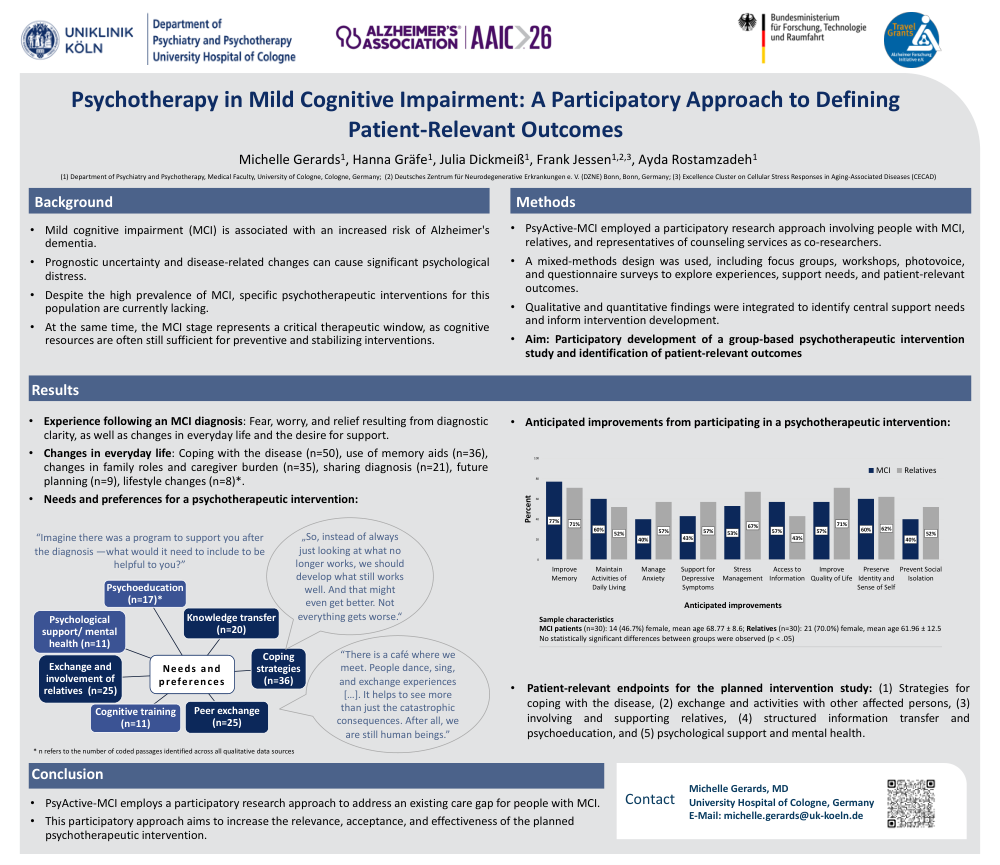
Results from focus groups and workshops identified experiences following an MCI diagnosis, including fear, worry, and relief, as well as changes in everyday life and the desire for support. MCI patients and their relatives highlighted the wish for coping strategies, knowledge transfer, exchange and involvement of relatives. The evaluation of the questionnaire highlighted a number of desired improvements, including maintaining activities of daily living, improving quality of life, and preserving identity. The following patient-relevant endpoints for the planned intervention study were derived and prioritized in a participatory process: (1) Strategies for coping with the disease, (2) exchange and activities with other affected persons, (3) involving and supporting relatives, (4) structured information transfer and psychoeducation, and (5) psychological support and mental health.
Discussion:
PsyActive-MCI implements a participatory research approach that addresses an existing care gap. The active involvement of those affected in the conceptual phase is intended to increase the relevance, acceptance, and effectiveness of the planned psychotherapeutic intervention.
Comments
Email is required but is not shown publicly.
Loading comments...