4,068 posters, 219 videos, 101 topics, 69 sessions, 14,365 authors, 6,128 institutions
ePostersLive by SciGen Technologies S.A. All rights reserved.
Alzheimer's Association International Conference 2026
July 12-15, 2026 | London, United Kingdom, and Online

1506
Dementia Care Gaps And Strengths In LMIC: Perspectives Of Brazilian People Living With Dementia, Caregivers, And Care Providers
Poster Presenter
Authors
Matheus Barbosa, Carolina Godoy, Lucas Teixeira, Marcelo Diniz, Andrew Miguel, Paula Vianna, Pedro Pinho, Ana Ágata Keinert, Fernanda Faria, Thais Suarez, Rosa Luccheta, Fabiana da Mata, Cleusa Ferri
Affiliations
1- Research Unit, Hospital Alemao Oswaldo Cruz, Sao Paulo, Brazil, 2- Psychiatry, Universidade Federal de Sao Paulo, Sao Paulo, Brazil., 1- Research Unit, Hospital Alemao Oswaldo Cruz, Sao Paulo, Brazil
Part of Topic
Introduction:
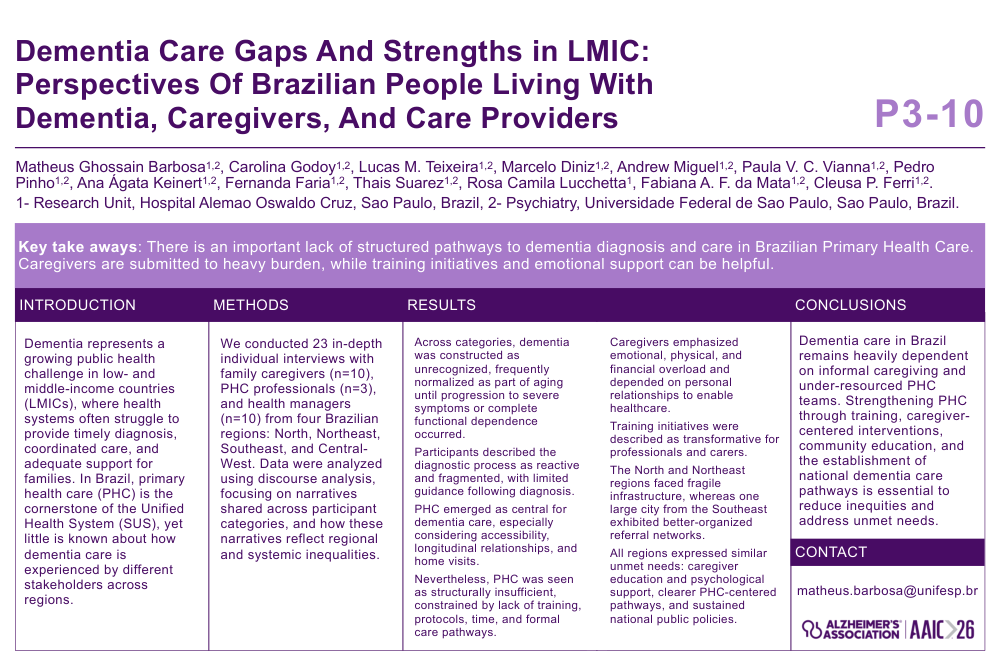
Dementia represents a growing public health challenge in low- and middle-income countries (LMICs), where health systems often struggle to provide timely diagnosis, coordinated care, and adequate support for families. In Brazil, primary health care (PHC) is the cornerstone of the Unified Health System (SUS), yet little is known about how dementia care is experienced by different stakeholders across regions.
Methods:
We conducted 23 in-depth individual interviews with family caregivers (n=10), PHC professionals (n=3), and health managers (n=10) from four Brazilian regions: North, Northeast, Southeast, and Central West. Data were analyzed using discourse analysis, focusing on narratives shared across participant categories, and how these narratives reflect regional and systemic inequalities.
Results:
Across categories, dementia was constructed as unrecognized, frequently normalized as part of aging until progression to severe symptoms or complete functional dependence occurred. Participants described the diagnostic process as reactive and fragmented, with limited guidance following diagnosis. PHC emerged as central for dementia care, especially considering accessibility, longitudinal relationships, and home visits. Nevertheless, PHC was seen as structurally insufficient, constrained by lack of training, protocols, time, and formal care pathways. Caregivers emphasized emotional, physical, and financial overload and depended on personal relationships to enable healthcare. Training initiatives were described as transformative for professionals and carers. The North and Northeast regions faced fragile infrastructure, whereas one large city from the Southeast exhibited better-organized referral networks. All regions expressed similar unmet needs: caregiver education and psychological support, clearer PHC-centered pathways, and sustained national public policies.
Conclusions:
Dementia care in Brazil remains heavily dependent on informal caregiving and under-resourced PHC teams. Strengthening PHC through training, caregiver-centered interventions, community education, and the establishment of national dementia care pathways is essential to reduce inequities and address unmet needs.
Comments
Email is required but is not shown publicly.
Loading comments...