4,068 posters, 219 videos, 101 topics, 69 sessions, 14,365 authors, 6,128 institutions
ePostersLive by SciGen Technologies S.A. All rights reserved.
Alzheimer's Association International Conference 2026
July 12-15, 2026 | London, United Kingdom, and Online

3612
Clinical And Neuropsychological Profile Of Posterior Cortical Atrophy: A Case Series In A Peruvian Specialized Center
Poster Presenter
Part of Topic
BACKGROUND
• Posterior Cortical Atrophy (PCA) is a clinical-radiological syndrome characterized by a progressive decline in visuospatial and visual processing abilities.
• Accurate characterisation requires informant-based reports and standardized neuropsychological batteries alongside brief cognitive screening tools (BCS).
• We describe the demographic, clinical, and neuropsychological profile of a PCA case series from a specialized cognitive impairment center.
METHODS
• Eleven patients (mean age: 60.7 ± 7.5 years) with a clinical diagnosis of PCA were included.
• Clinical staging and functional impact were assessed using the Clinical Dementia Rating (CDR) scale and the Pfeffer Functional Activities Questionnaire (PFAQ). The BCS tools included the Mini-Mental State Examination (MMSE) and the Rowland Universal Dementia Assessment Scale (RUDAS).
• A comprehensive neuropsychological assessment was performed using the Uniform Data Set Version 3 Neuropsychological Battery.
RESULTS
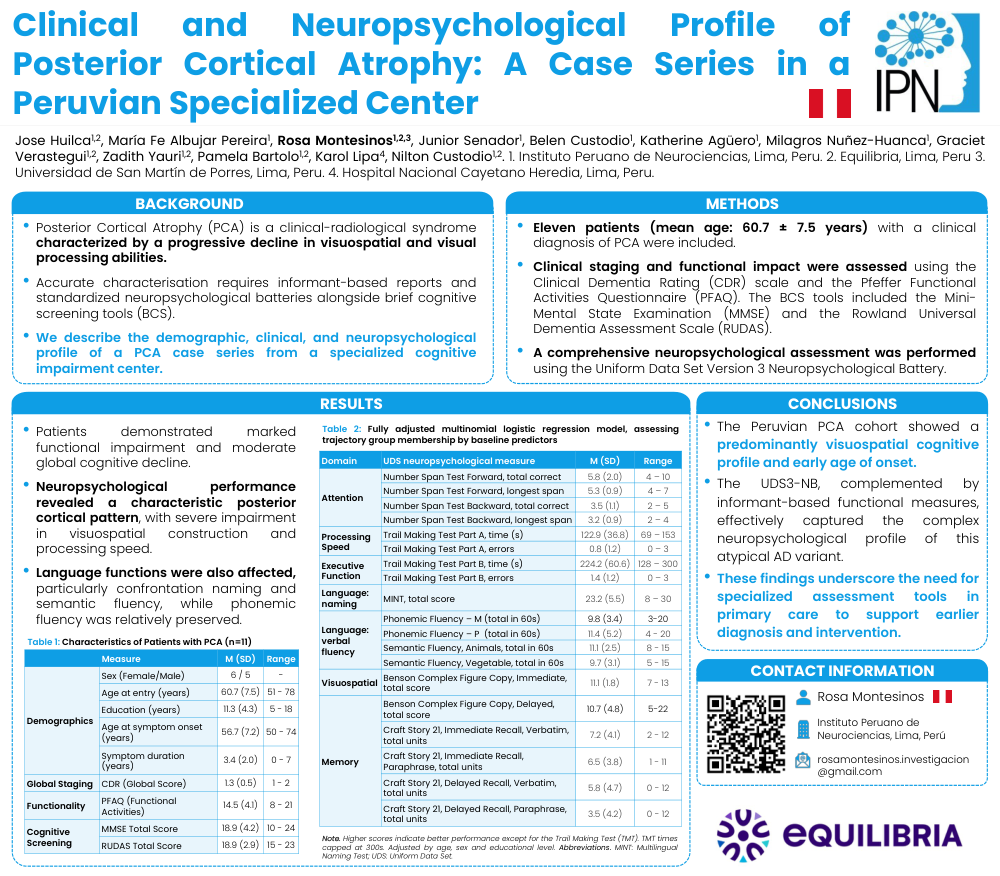
• Patients demonstrated marked functional impairment and moderate global cognitive decline.
• Neuropsychological performance revealed a characteristic posterior cortical pattern, with severe impairment in visuospatial construction and processing speed.
• Language functions were also affected, particularly confrontation naming and semantic fluency, while phonemic fluency was relatively preserved.
CONCLUSIONS
• The Peruvian PCA cohort showed a predominantly visuospatial cognitive profile and early age of onset.
• The UDS3-NB, complemented by informant-based functional measures, effectively captured the complex neuropsychological profile of this atypical AD variant.
• These findings underscore the need for specialized assessment tools in primary care to support earlier diagnosis and intervention.
Comments
Email is required but is not shown publicly.
Loading comments...