4,068 posters, 219 videos, 101 topics, 69 sessions, 14,365 authors, 6,128 institutions
ePostersLive by SciGen Technologies S.A. All rights reserved.
Alzheimer's Association International Conference 2026
July 12-15, 2026 | London, United Kingdom, and Online

4898
Chronic Cerebral Deterioration - A New Comprehensive View Of Old-age Dementia
Poster Presenter
Authors
Part of Topic
Background: Current definitions of old-age dementia remain largely one-dimensional, requiring cognitive decline resulting in activities of daily living (ADL) deficits for diagnosis. This model neglects the multifaceted, non-cognitive symptoms associated with gradually accumulating cerebral deterioration. These early signs frequently precede cognitive decline, suggesting that the current cognitively oriented model is incomplete. We aimed to collate and synthesize the evidence on non-cognitive symptoms preceding dementia to develop a comprehensive framework of early symptoms of late-life dementia.
Methods: High-quality evidence from systematic reviews, meta-analyses, and large-scale longitudinal cohort studies regarding the associations between non-cognitive symptoms and incident dementia was collated and synthesized and results integrated into an overarching framework.
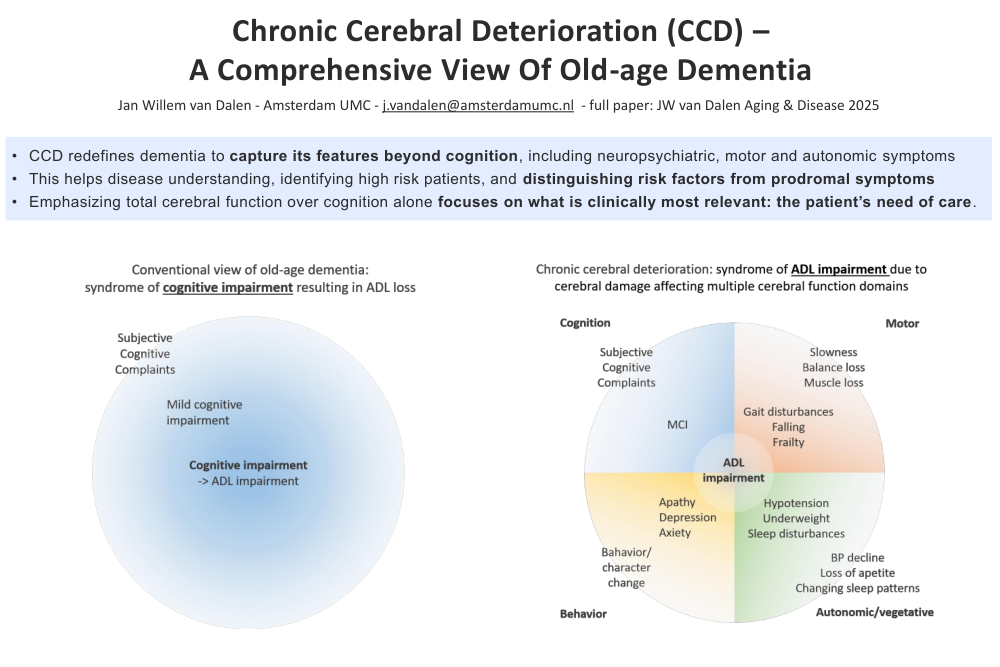
Results: Non-cognitive symptoms preceding dementia can be distinguished across three major domains (Figure 1). Neuropsychiatric symptoms including apathy, anxiety and late-life depression in cognitively healthy older people increase future dementia risk by 30-90%. Motor symptoms like gait disturbances, loss of balance, and reduced grip strength are associated with a two- to threefold increase in incident dementia risk. Finally, in the autonomic/vegetative domain, sleep disturbances increase dementia risk by 55-110%, and significant declines in blood pressure, BMI, and serum cholesterol are observable 5-15 years before diagnosis. All these symptoms are often preceded by milder forms generally associated with “normal” ageing (Table 1).
Conclusion: To capture this multifaceted decline, we propose the concept of Chronic Cerebral Deterioration (CCD). CCD shifts the focus from cognition to a more comprehensive syndrome of ADL impairment caused by gradual cerebral decline affecting multiple function domains (Figure 2). Cognitive impairment is merely one pillar of this broader condition that includes motor, neuropsychiatric, and autonomic dysfunction. By reclassifying alleged "risk factors" as prodromal signs of deterioration, CCD provides a more realistic understanding of the disease course. For research, this may reduce wasted efforts on dementia prevention efforts that target prodromal symptoms and help identify people at the highest risk of developing dementia. Clinically, CCD improves counselling of symptomatic patients who do not meet cognitive criteria. By emphasizing total cerebral function over cognition alone, the CCD framework focuses on what is clinically most relevant: the patient’s need of care.
Comments
Email is required but is not shown publicly.
Loading comments...