4,068 posters, 219 videos, 101 topics, 69 sessions, 14,365 authors, 6,128 institutions
ePostersLive by SciGen Technologies S.A. All rights reserved.
Alzheimer's Association International Conference 2026
July 12-15, 2026 | London, United Kingdom, and Online

4849
Dementia Subtypes And Their Association With Survival And Causes Of Death In Nursing Home Residents
Poster Presenter
Authors
Madeleine Åkerman, Hong Xu, Sara Garcia-Ptacek, Anders Sköldunger, Anders Wimo, Dorota Religa, Maria Eriksdotter
Affiliations
Part of Topic
ABSTRACT
Background: Dementia includes several subtypes with distinct clinical and pathological characteristics, yet all are progressive and in late stages often lead to nursing home placement. While survival have been studied in community-dwelling dementia populations, less is known about how disease progression and causes of death vary by dementia subtype among nursing home residents. We compared survival and causes of death in nursing home residents with different dementia subtypes.
Methods: We studied a nursing home cohort from the Swedish registry for cognitive/dementia disorders (SveDem) and included 5,322 residents with dementia registered between 2012-2021. Dementia subtypes included Alzheimer’s Disease (n=2,523), unspecified dementia (n=1,350), vascular dementia (n=1,072), Lewy body dementia (n=160), frontotemporal dementia (n=65) and other dementia types (n=152). Associations between mortality and age, sex, comorbidity burden, and medication use were examined using Cox proportional hazards models with 95% confidence intervals (CIs).
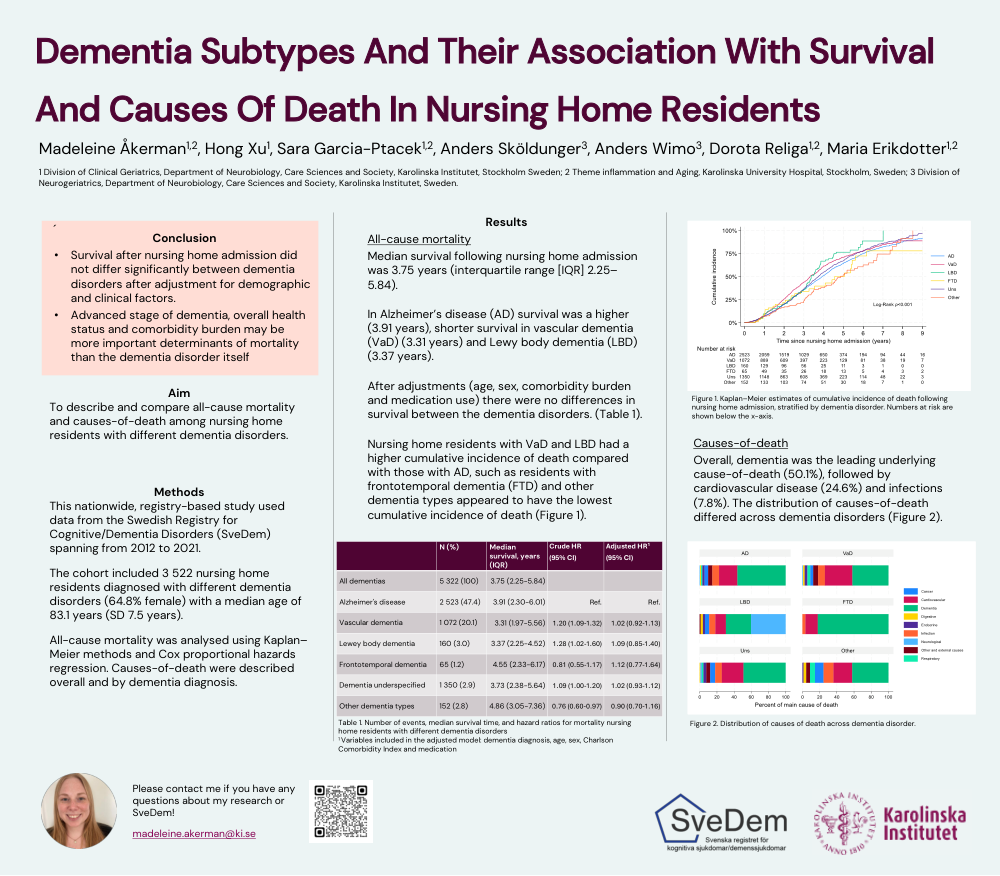
Results: Mean age at nursing home admission was 83.1 years (SD 7.6), and 64.8% of residents with dementia were women. Median survival for the whole cohort was 3.7 years (IQR 2.2–6.0), for Alzheimer’s disease it was a bit higher (3.9 years), and slightly shorter survival in vascular dementia (3.3 years) and Lewy body dementia (3.4 years). In the adjusted analyses, there were no differences in survival between the dementia disorders. The most common main causes of death overall were dementia (50.1%) and cardiovascular disease (24.6%). Among persons with Lewy body dementia, neurological causes were more frequent (40.2%).
Conclusion: This large cohort of nursing home residents shows only a modest difference between dementia subtypes, suggesting that factors beyond subtype may play a greater role in late-stage survival. Future research should explore how care practices, comorbidity management, and end-of-life decision-making influence survival and causes of death in advanced dementia.
Comments
Email is required but is not shown publicly.
Loading comments...