4,068 posters, 219 videos, 101 topics, 69 sessions, 14,365 authors, 6,128 institutions
ePostersLive by SciGen Technologies S.A. All rights reserved.
Alzheimer's Association International Conference 2026
July 12-15, 2026 | London, United Kingdom, and Online

3621
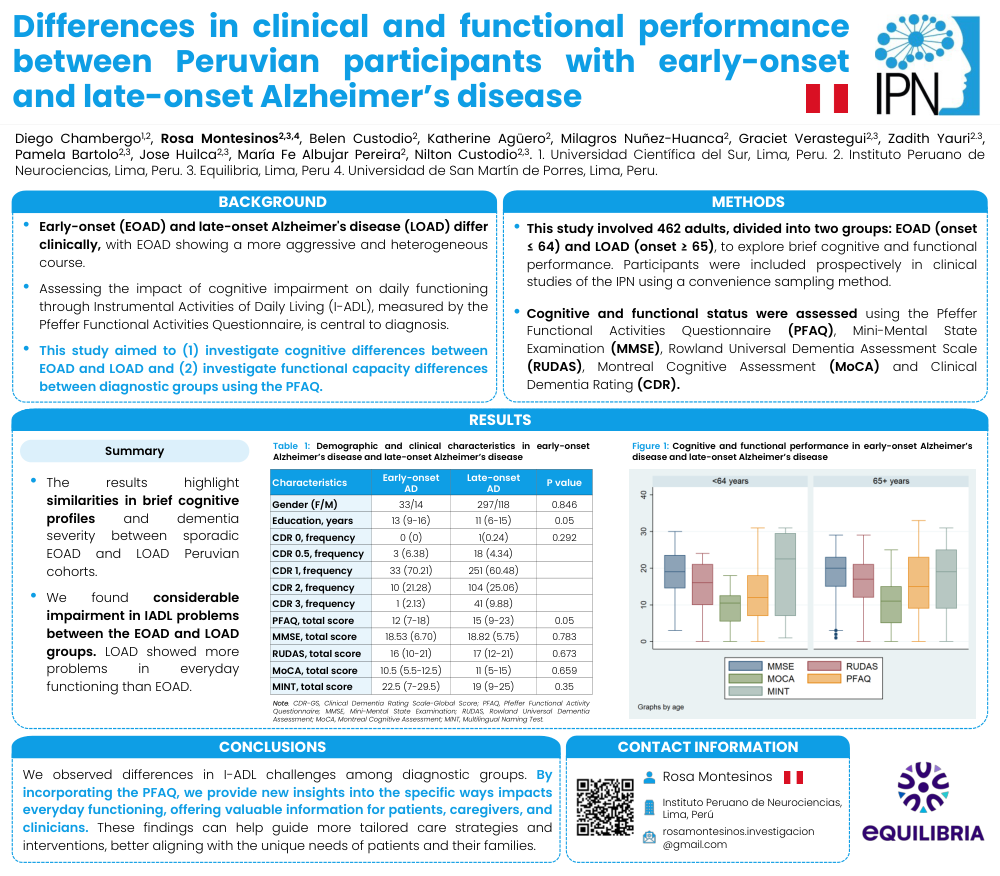
Differences In Clinical And Functional Performance Between Peruvian Participants With Early-onset And Late-onset Alzheimer’S Disease
Poster Presenter
Part of Topic
BACKGROUND
• Early-onset (EOAD) and late-onset Alzheimer's disease (LOAD) differ clinically, with EOAD showing a more aggressive and heterogeneous course.
• Assessing the impact of cognitive impairment on daily functioning through Instrumental Activities of Daily Living (I-ADL), measured by the Pfeffer Functional Activities Questionnaire, is central to diagnosis.
• This study aimed to (1) investigate cognitive differences between EOAD and LOAD and (2) investigate functional capacity differences between diagnostic groups using the PFAQ.
METHODS
• This study involved 462 adults, divided into two groups: EOAD (onset ≤ 64) and LOAD (onset ≥ 65), to explore brief cognitive and functional performance. Participants were included prospectively in clinical studies of the IPN using a convenience sampling method.
• Cognitive and functional status were assessed using the PfefferFunctional Activities Questionnaire (PFAQ), Mini-Mental State Examination (MMSE), Rowland Universal Dementia Assessment Scale (RUDAS), Montreal Cognitive Assessment (MoCA)and Clinical Dementia Rating (CDR).
RESULTS
• The results highlight similarities in brief cognitive profiles and dementia severity between sporadic EOAD and LOAD Peruvian cohorts.
• We found considerable impairment in IADL problems between the EOAD and LOAD groups. LOAD showed more problems in everyday functioning than EOAD.
CONCLUSIONS
We observed differences in I-ADL challenges among diagnostic groups. By incorporating the PFAQ, we provide new insights into the specific ways impacts everyday functioning, offering valuable information for patients, caregivers, and clinicians. These findings can help guide more tailored care strategies and interventions, better aligning with the unique needs of patients and their families.
Comments
Email is required but is not shown publicly.
Loading comments...