4,068 posters, 219 videos, 101 topics, 69 sessions, 14,365 authors, 6,128 institutions
ePostersLive by SciGen Technologies S.A. All rights reserved.
Alzheimer's Association International Conference 2026
July 12-15, 2026 | London, United Kingdom, and Online

4158
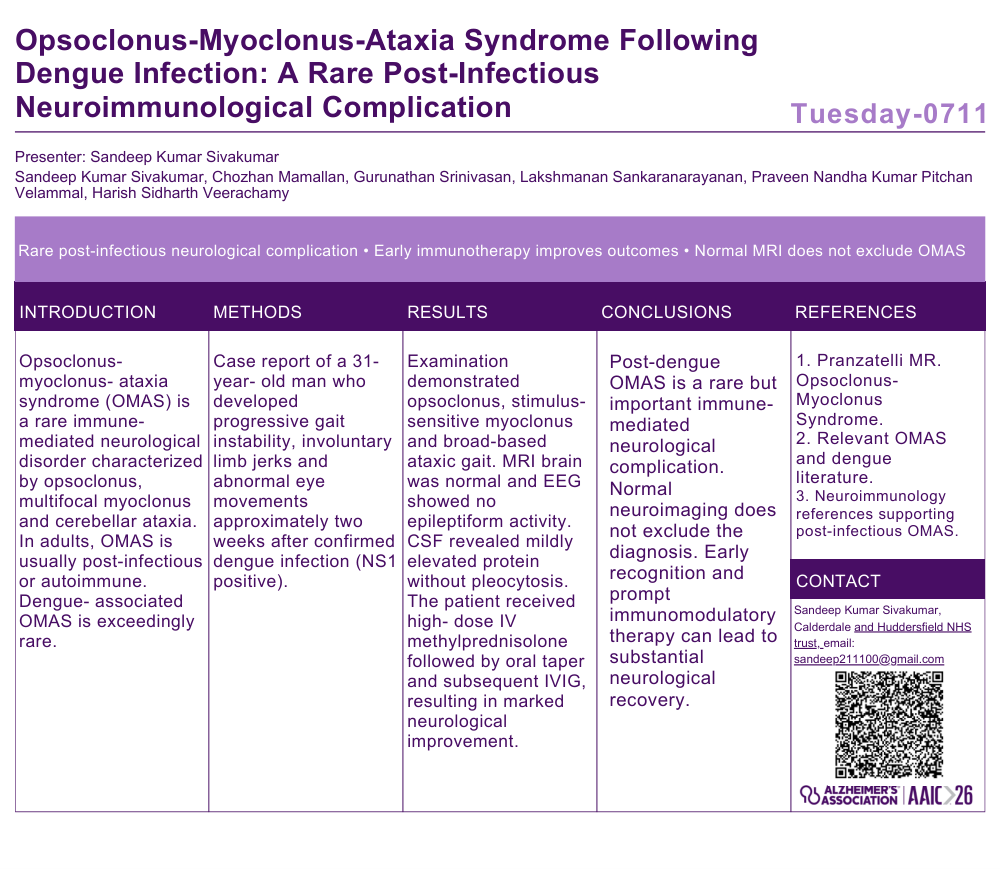
Opsoclonus-Myoclonus-Ataxia Syndrome Following Dengue Infection: A Rare Post-Infectious Neuroimmunological Complication
Poster Presenter
Authors
Part of Topic
Opsoclonus-Myoclonus-Ataxia Syndrome Following Dengue Infection: A Rare Post-Infectious Neuroimmunological Complication
Presenter: Sandeep Kumar Sivakumar
Authors:
Sandeep Kumar Sivakumar, Chozhan Mamallan, Gurunathan Srinivasan, Lakshmanan Sankaranarayanan, Praveen Nandha Kumar Pitchan Velammal, Harish Sidharth Veerachamy
Introduction
Opsoclonus-myoclonus-ataxia syndrome (OMAS) is a rare immune-mediated neurological disorder characterized by opsoclonus, multifocal myoclonus, and cerebellar ataxia. In adults, OMAS is most commonly associated with post-infectious or autoimmune mechanisms. Dengue-associated OMAS is exceedingly rare, with only a limited number of cases reported in the literature.
Methods
We present the case of a 31-year-old man who developed progressive gait instability, involuntary limb jerks, and abnormal eye movements approximately two weeks after laboratory-confirmed dengue infection (NS1 positive).
Results
Neurological examination demonstrated opsoclonus, stimulus-sensitive myoclonus, and broad-based ataxic gait. MRI of the brain was normal, and EEG showed no epileptiform activity. Cerebrospinal fluid analysis revealed mildly elevated protein without pleocytosis.
The patient was treated with high-dose intravenous methylprednisolone followed by an oral steroid taper and subsequent intravenous immunoglobulin (IVIG), resulting in marked neurological improvement.
Conclusions
Post-dengue OMAS is a rare but important immune-mediated neurological complication. Normal neuroimaging does not exclude the diagnosis. Early recognition and prompt immunomodulatory therapy can result in substantial neurological recovery and should be considered in patients presenting with characteristic neurological features following dengue infection.
Keywords
Opsoclonus-Myoclonus-Ataxia Syndrome (OMAS); Dengue; Post-infectious Neurological Syndrome; Neuroimmunology; Autoimmune Neurology; IVIG; Methylprednisolone; Case Report.
Comments
Email is required but is not shown publicly.
Loading comments...