4,068 posters, 219 videos, 101 topics, 69 sessions, 14,365 authors, 6,128 institutions
ePostersLive by SciGen Technologies S.A. All rights reserved.
Alzheimer's Association International Conference 2026
July 12-15, 2026 | London, United Kingdom, and Online

3047
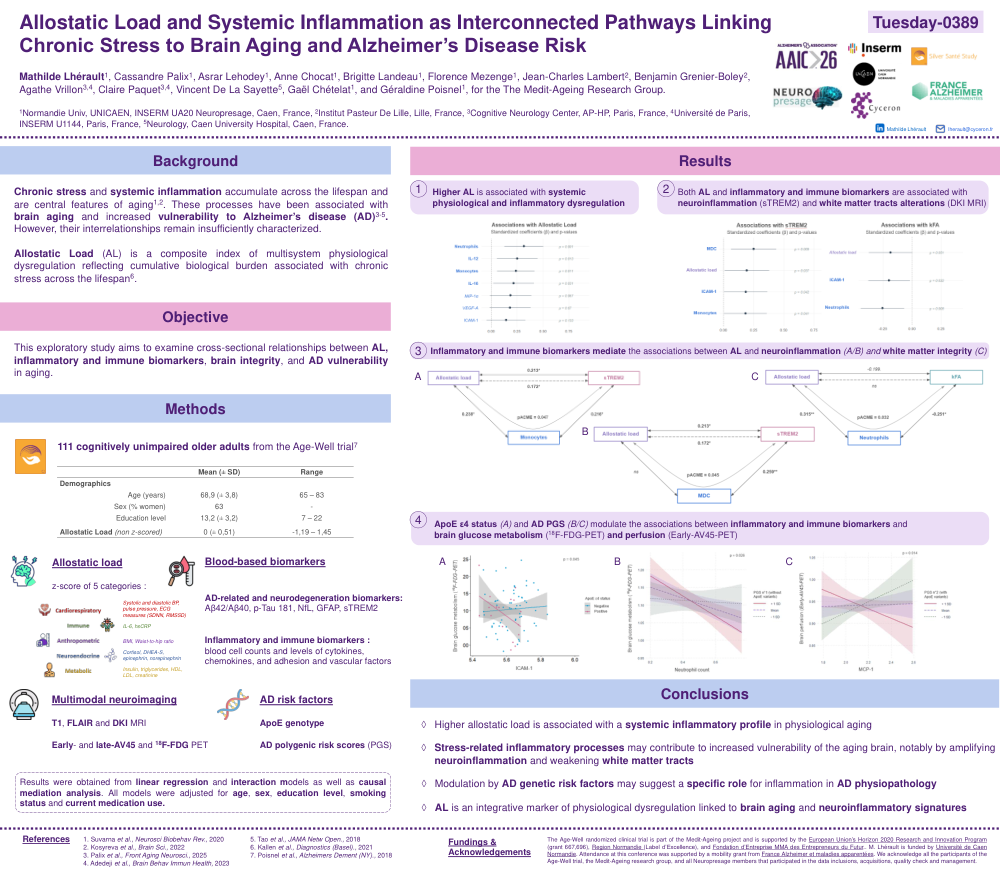
Allostatic Load And Systemic Inflammation As Interconnected Pathways Linking Chronic Stress To Brain Aging And Alzheimer’s Disease Risk
Poster Presenter
Part of Topic
Background: Chronic stress and systemic inflammation accumulate across the lifespan and are central features of aging. These processes have been associated with brain aging and increased vulnerability to Alzheimer’s disease (AD). However, their interrelationships remain insufficiently characterized. Allostatic Load (AL), a composite index of multisystem lifelong physiological dysregulation, reflects cumulative biological burden across systems, positioning itself as a global index of chronic stress in aging, and has been associated with brain aging markers. This study aimed to examine the relationships between AL, systemic inflammation, brain integrity, and AD vulnerability in aging.
Methods: Using a cross-sectional design, we studied 111 cognitively unimpaired older adults from the Age-Well trial. We combined AL index with blood-based biomarkers of systemic inflammation and neurodegeneration (e.g. pro-inflammatory cytokines, neuroinflammation biomarkers, amyloid and tau proteins) and with multimodal neuroimaging measures of brain structure, and genetic and biological markers of AD risk. The associations and biological pathways were assessed using regression and mediation models, and interaction analyses were conducted to explore the modifying effects of AD-related factors.
Results: Higher AL was associated with elevated leukocyte, monocyte, and neutrophil counts, reflecting a profile of systemic physiological and inflammatory dysregulation. Higher AL was also associated with increased plasma soluble TREM2 levels, indicating microglial activation. This association was partially mediated by monocyte count and ICAM-1 levels, suggesting links between peripheral immunity and neuroinflammatory processes. Both AL and systemic inflammatory biomarkers were associated with reduced white matter integrity in AD-vulnerable tracts, notably the corona radiata and the superior longitudinal fasciculus. These associations were mediated by monocyte count and further modulated by AD-related factors, including genetic factors (i.e. APOE ε4 genotype, AD polygenic risk score) and pathophysiological hallmarks (i.e. cerebral amyloid load, plasma pTau181 levels).
Conclusions: In aging, higher chronic stress, reflected by elevated AL, is associated with a systemic inflammatory profile and white matter alterations in regions vulnerable to AD, suggesting that this stress-related inflammation may contribute to the vulnerability of the aging brain. These findings support the relevance of AL as an integrative marker of physiological dysregulation linked to brain aging and neuroinflammatory signatures, while highlighting interactions with AD-related risk factors.
Keywords: Aging, Alzheimer's Disease, Inflammation, Stress, Blood-based biomarkers
Comments
Email is required but is not shown publicly.
Loading comments...